
溶质载体家族38成员9(SLC38A9)直接参与了由反式激活转录蛋白(Tat)诱导的星形胶质细胞内溶酶体功能障碍和衰老过程。
SLC38A9 is directly involved in Tat-induced endolysosome dysfunction and senescence in astrocytes.
作者信息
Rezagholizadeh Neda, Datta Gaurav, Hasler Wendie A, Nguon Erica C, Smokey Elise V, Khan Nabab, Chen Xuesong
机构信息
Department of Biomedical Sciences, University of North Dakota School of Medicine and Health Sciences, Grand Forks, ND, USA.
Department of Biomedical Sciences, University of North Dakota School of Medicine and Health Sciences, Grand Forks, ND, USA
出版信息
Life Sci Alliance. 2025 May 5;8(7). doi: 10.26508/lsa.202503231. Print 2025 Jul.
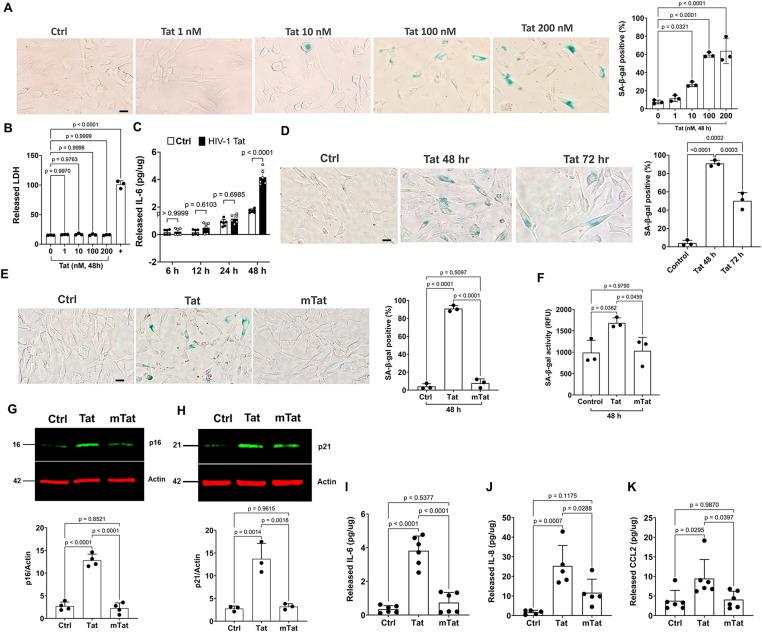
Cellular senescence contributes to accelerated aging and the development of various neurodegeneration disorders including HIV-associated neurocognitive disorders. The development of HIV-associated neurocognitive disorders is attributed, at least in part, to the CNS persistence of HIV-1 transactivator of transcription (Tat), an essential protein for viral transcription that is actively secreted from HIV-1-infected cells. Secreted Tat enters cells via receptor-mediated endocytosis and induces endolysosome dysfunction and cellular senescence in CNS cells. Given that endolysosome dysfunction represents an early step in exogenous Tat-induced cellular senescence, we tested the hypothesis that Tat induces cellular senescence via an endolysosome-dependent mechanism in human astrocytes. We demonstrated that internalized Tat interacts with an endolysosome-resident arginine sensor SLC38A9 via the arginine-rich basic domain. Such an interaction between Tat and SLC38A9 leads to endolysosome dysfunction, enhanced HIV-1 LTR transactivation, and cellular senescence. These findings suggest that endolysosome dysfunction drives the development of senescence and highlight the novel role of SLC38A9 in Tat-induced endolysosome dysfunction and astrocyte senescence.
细胞衰老促进加速衰老以及包括HIV相关神经认知障碍在内的各种神经退行性疾病的发展。HIV相关神经认知障碍的发展至少部分归因于HIV-1转录反式激活因子(Tat)在中枢神经系统中的持续存在,Tat是一种对病毒转录至关重要的蛋白质,由HIV-1感染细胞主动分泌。分泌的Tat通过受体介导的内吞作用进入细胞,并诱导中枢神经系统细胞内溶酶体功能障碍和细胞衰老。鉴于内溶酶体功能障碍是外源性Tat诱导细胞衰老的早期步骤,我们测试了Tat通过内溶酶体依赖性机制在人星形胶质细胞中诱导细胞衰老的假设。我们证明内化的Tat通过富含精氨酸的碱性结构域与内溶酶体驻留的精氨酸传感器SLC38A9相互作用。Tat与SLC38A9之间的这种相互作用导致内溶酶体功能障碍、HIV-1长末端重复序列(LTR)转录激活增强和细胞衰老。这些发现表明内溶酶体功能障碍驱动衰老的发展,并突出了SLC38A9在Tat诱导的内溶酶体功能障碍和星形胶质细胞衰老中的新作用。



 Zotero 插件