Mangiola S, Brown R, Zhan C, Berthelet J, Guleria S, Liyanage C, Ostrouska S, Wilcox J, Merdas M, Fuge-Larsen P, Bell C, Schröder J, Mielke L A, Mariadason J M, Tsao S Chang-Hao, Chen Y, Yadav V K, Vodala S, Anderson R L, Merino D, Behren A, Yeo B, Papenfuss A T, Pal B
The Walter and Eliza Hall Institute of Medical Research, Parkville, VIC, 3052, Australia.
Department of Medical Biology, University of Melbourne, Parkville, VIC, 3052, Australia.
Breast Cancer Res. 2025 May 8;27(1):73. doi: 10.1186/s13058-025-01982-2.
Circulating immune cells play a crucial role in the anti-tumour immune response, yet the systemic immune system in metastatic breast cancers is not fully characterised. Investigating the cellular and molecular changes in peripheral blood mononuclear cells (PBMCs) from breast cancer patients could elucidate the role of circulating immune cells in metastasis and aid in identifying biomarkers for disease burden and progression.
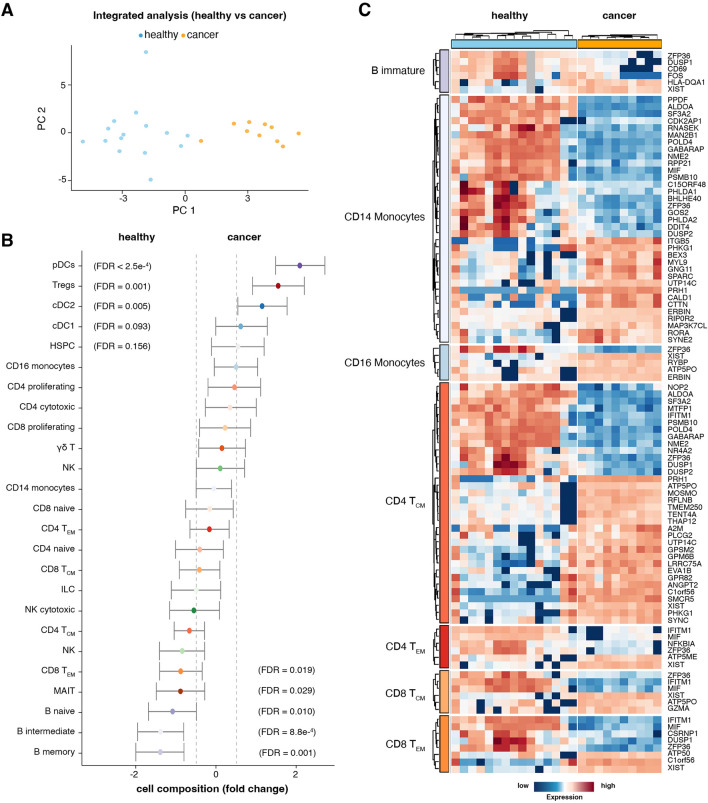
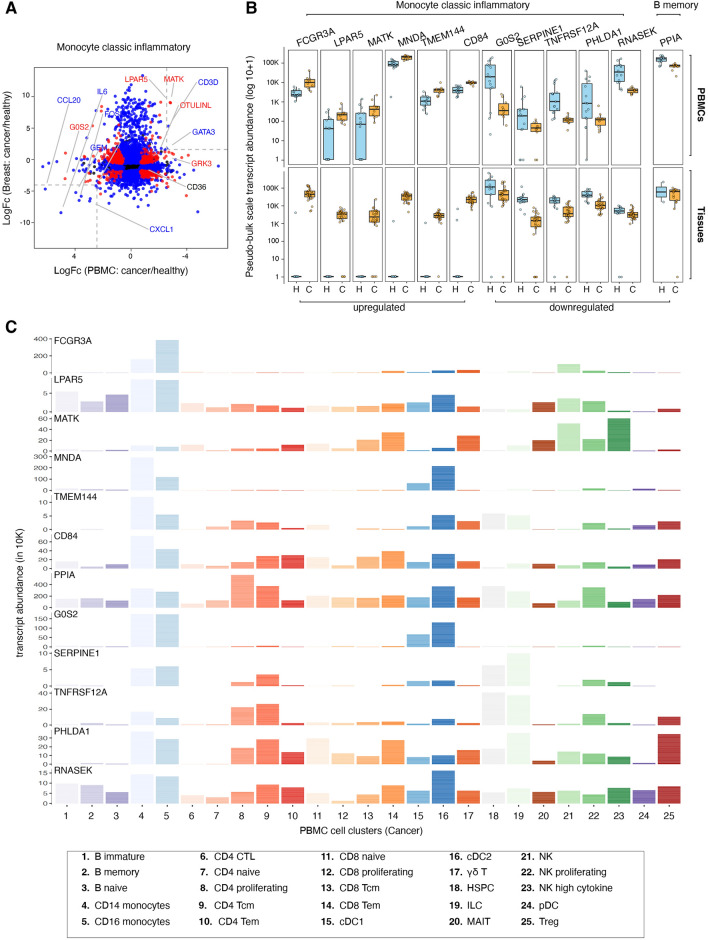
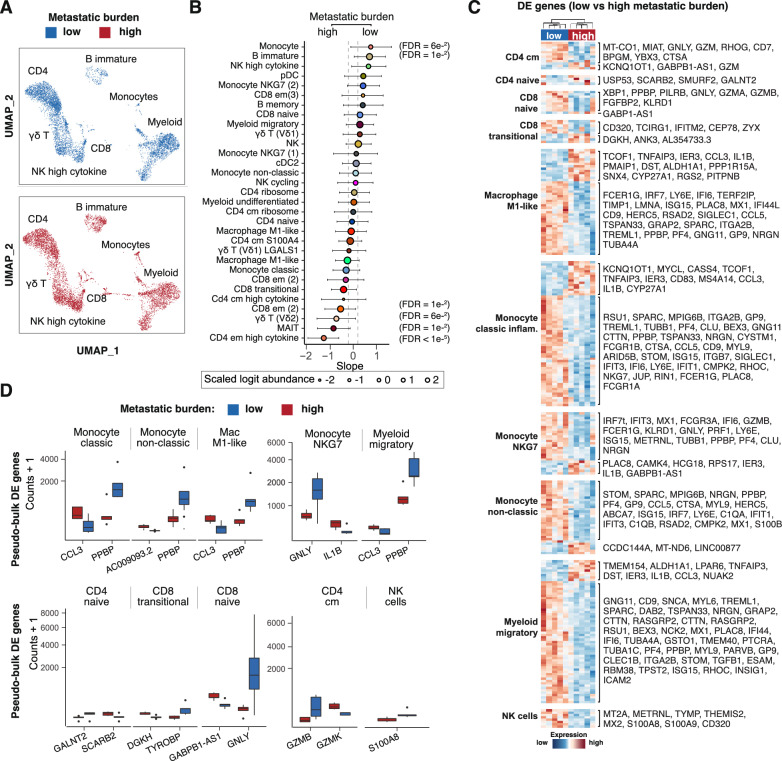
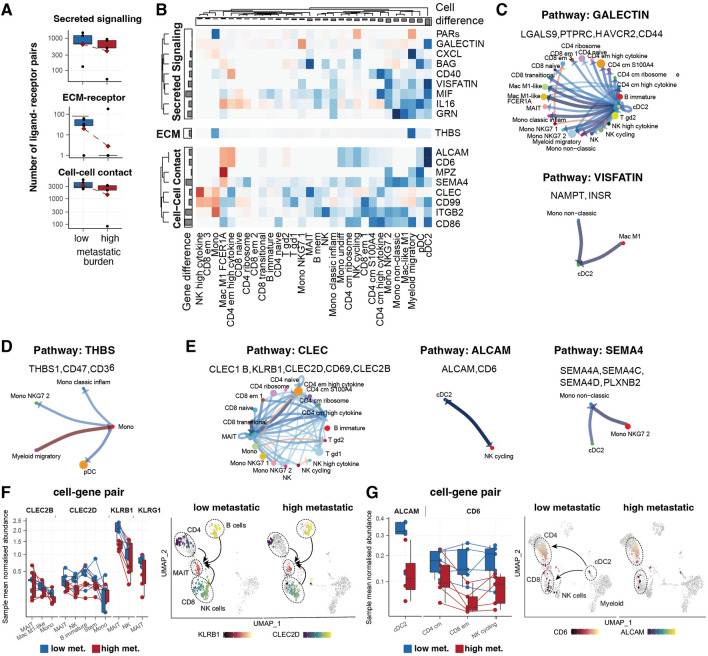
In this study, we characterised the systemic immune landscape associated with varying levels of metastatic burden by analysing the single-cell transcriptomes of PBMCs from breast cancer patients and healthy controls. Our research focused on identifying changes in immune cell composition, transcriptional programs, and immune-cell communication networks linked to metastatic burden. Additionally, we compared these PBMC features onto a single-cell atlas of primary breast tumours to study corresponding traits in tumour-infiltrating immune cells.
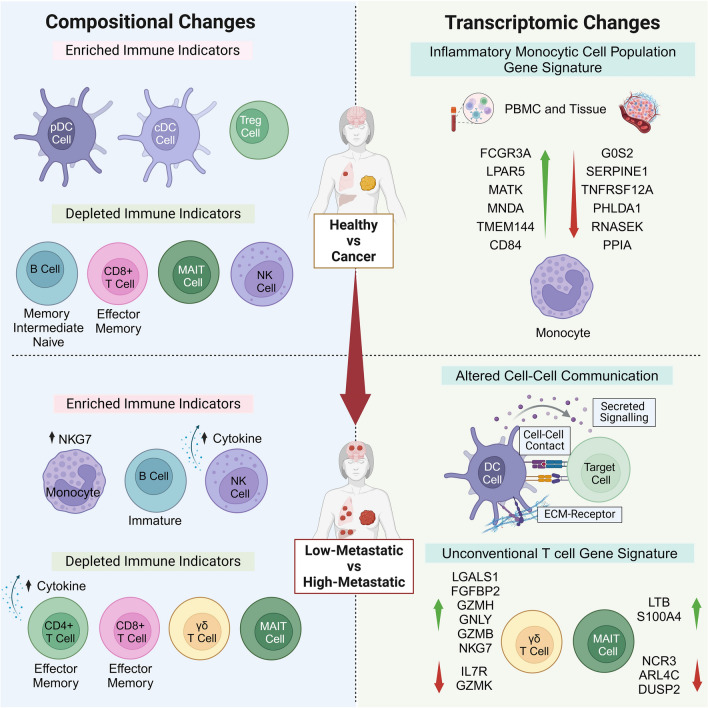
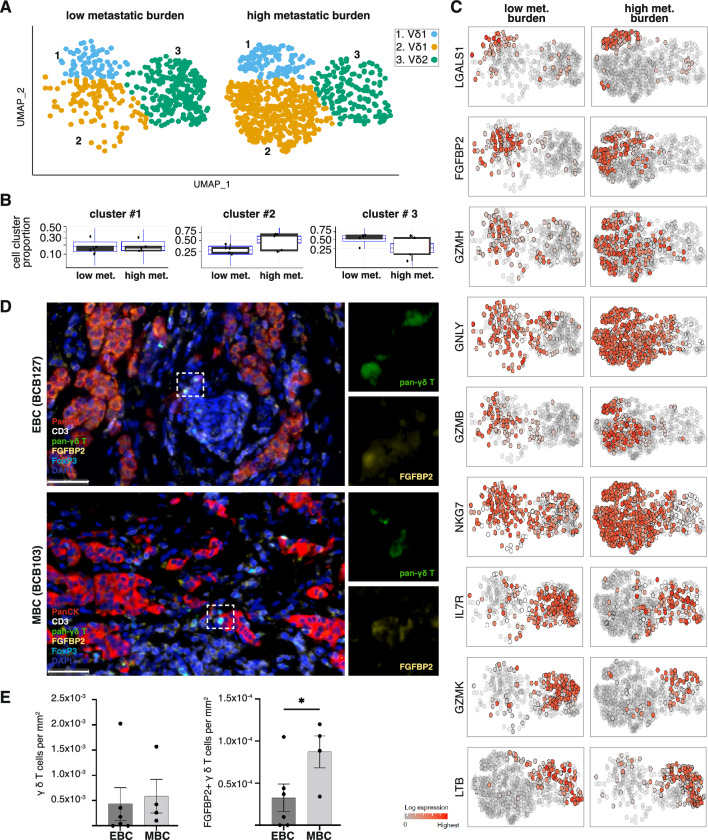
In metastatic breast cancer, PBMCs exhibit a significant downregulation of the adaptive immune system and a decreased number and activity of unconventional T cells, such as γδ T cells. Additionally, metastatic burden is associated with impaired cell communication pathways involved in immunomodulatory functions. We also identified a gene signature derived from myeloid cells shared between tumour immune infiltrates and circulating immune cells in breast cancer patients.
Our study provides a comprehensive single-cell molecular profile of the peripheral immune system in breast cancer, offering a valuable resource for understanding metastatic disease in terms of tumour burden. By identifying immune traits linked to metastasis, we have unveiled potential new biomarkers of metastatic disease.
循环免疫细胞在抗肿瘤免疫反应中发挥关键作用,但转移性乳腺癌的全身免疫系统尚未得到充分表征。研究乳腺癌患者外周血单个核细胞(PBMC)中的细胞和分子变化,有助于阐明循环免疫细胞在转移中的作用,并有助于识别疾病负担和进展的生物标志物。
在本研究中,我们通过分析乳腺癌患者和健康对照者PBMC的单细胞转录组,对与不同转移负担水平相关的全身免疫格局进行了表征。我们的研究重点是确定与转移负担相关的免疫细胞组成、转录程序和免疫细胞通讯网络的变化。此外,我们将这些PBMC特征与原发性乳腺肿瘤的单细胞图谱进行比较,以研究肿瘤浸润免疫细胞中的相应特征。
在转移性乳腺癌中,PBMC表现出适应性免疫系统的显著下调,以及非常规T细胞(如γδT细胞)数量和活性的降低。此外,转移负担与参与免疫调节功能的细胞通讯途径受损有关。我们还在乳腺癌患者的肿瘤免疫浸润和循环免疫细胞之间鉴定出一种源自髓样细胞的基因特征。
我们的研究提供了乳腺癌外周免疫系统的全面单细胞分子图谱,为从肿瘤负担角度理解转移性疾病提供了宝贵资源。通过识别与转移相关的免疫特征,我们揭示了转移性疾病潜在的新生物标志物。