Alsousli Mais, Maire Cecile L, Piffko Andras, Matschke Jakob, Glau Laura, Reetz Merle, Schneegans Svenja, Emurlai Gresa, Asey Benedikt, Rünger Alessandra, Peine Sven, Kropidlowski Jolanthe, Gempt Jens, Glatzel Markus, Westphal Manfred, Tolosa Eva, Lamszus Katrin, Pantel Klaus, Joosse Simon A, Mohme Malte, Wikman Harriet
Department of Tumor Biology, University Medical Center, Hamburg-Eppendorf, Hamburg, Germany.
Department of Neurosurgery, University Medical Center Hamburg-Eppendorf, Hamburg, Germany.
Acta Neuropathol Commun. 2025 May 9;13(1):95. doi: 10.1186/s40478-025-02011-1.
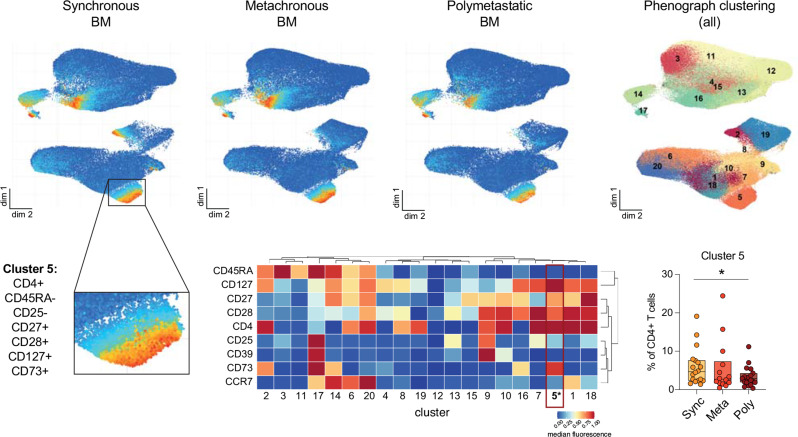
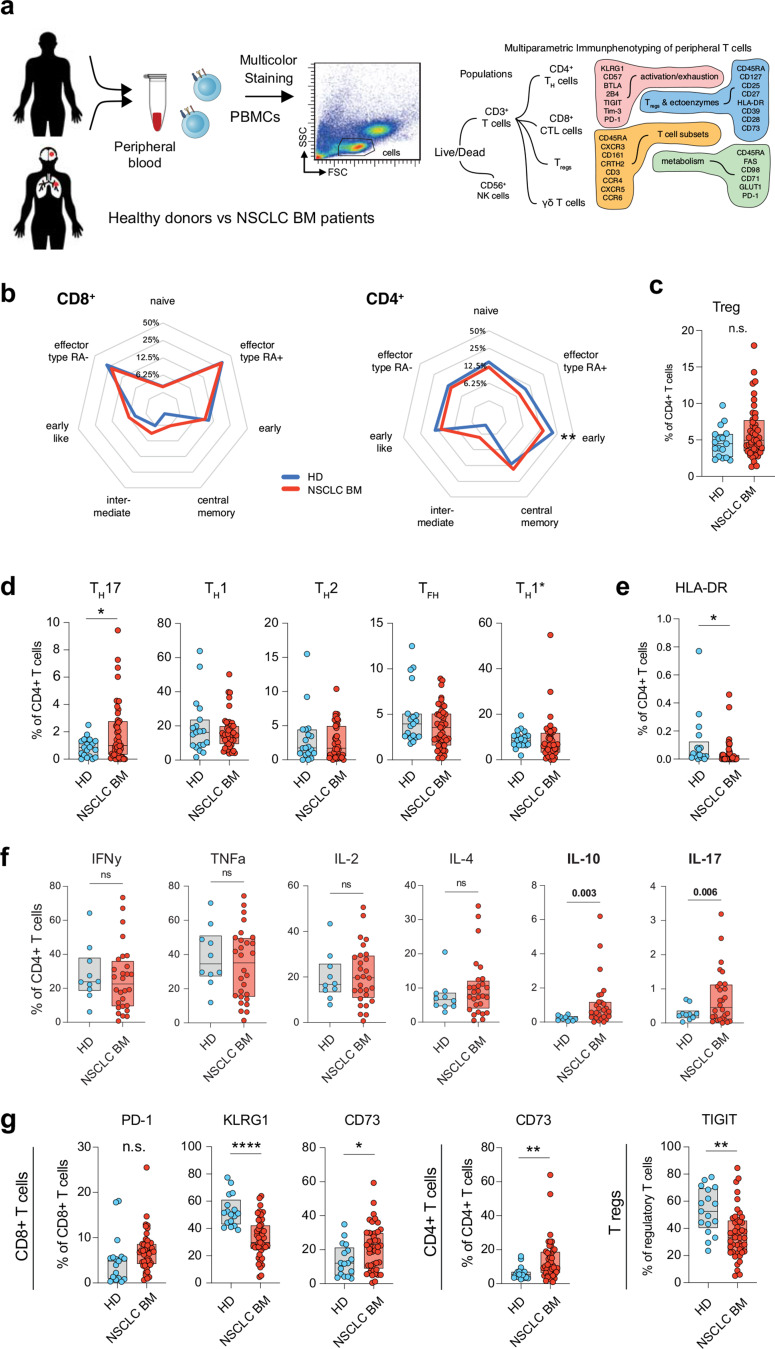
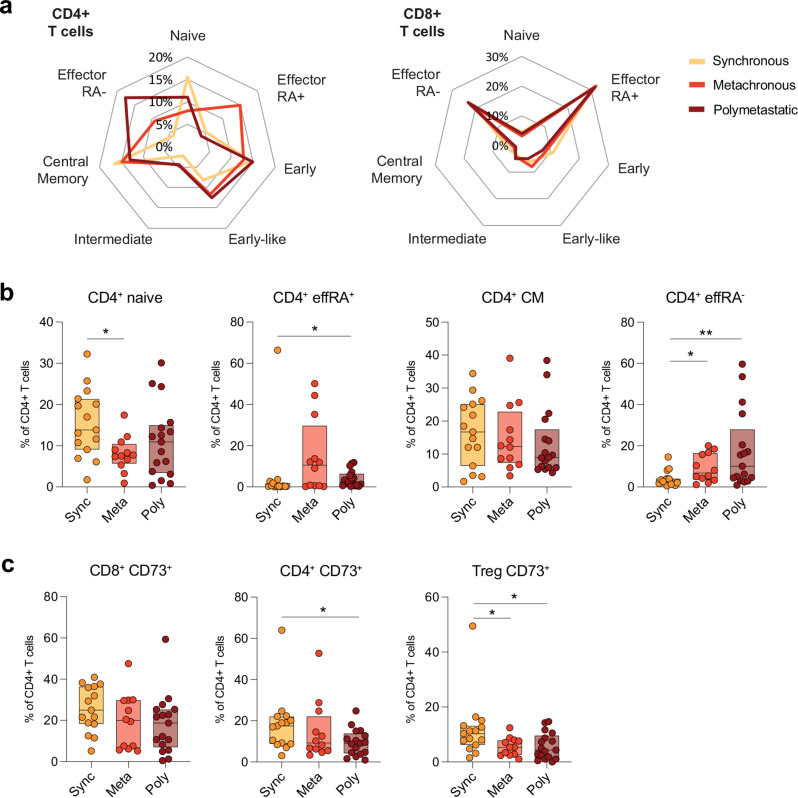
Lung cancer is the leading cause of cancer mortality globally, with brain metastasis (BM) in 40% of advanced non-small-cell lung cancer (NSCLC) cases. In 15% of these cases, the brain is the sole affected organ (oligometastasis), which correlates with a better prognosis compared to widespread disease. It remains unclear if brain-only metastasis without systemic spread is due to the immune system's ability to control systemic tumor progression. We studied the immune cell compositions in NSCLC patients with BM, identifying novel patterns associated with BM, and specifcally with either oligo- or polymetastatic spread. Multi-parametric immune phenotyping of peripheral blood primarily showed alterations in the CD4 T cell compartment, with increased CD4 T17 cells, and higher IL-17 levels in NSCLC BM patients compared to healthy individuals. Furthermore, CD4 T cells in BM patients exhibited lower CD73 expression and reduced effector memory differentiation. There was also decreased intratumoral infiltration and a distinct CD4 T cell profile in oligo-synchronous BM, both in the tumor microenvironment and peripheral blood, compared to polymetastatic BM patients. Additionally, CD73 was significantly upregulated in CD4 and T regulatory cells of oligo-synchronous (BM simulantously with primary-tumor diagnosis) BM. These findings suggest that CD4 T cells play a crucial role in the biology of NSCLC BM and potentially contribute to differences in metastatic patterns, as oligo-synchronous BM shows a more significant alteration in the CD4 T cell immune profile, both locally at the tumor site and systemically.
肺癌是全球癌症死亡的主要原因,在40%的晚期非小细胞肺癌(NSCLC)病例中会发生脑转移(BM)。在这些病例中,15%的患者脑是唯一受影响的器官(寡转移),与广泛转移的疾病相比,其预后较好。目前尚不清楚仅脑转移而无全身扩散是否归因于免疫系统控制全身肿瘤进展的能力。我们研究了伴有脑转移的NSCLC患者的免疫细胞组成,确定了与脑转移相关的新模式,特别是与寡转移或多转移扩散相关的模式。外周血的多参数免疫表型分析主要显示CD4 T细胞区室发生改变,与健康个体相比,NSCLC脑转移患者的CD4 T17细胞增加,IL-17水平更高。此外,脑转移患者的CD4 T细胞表现出较低的CD73表达和效应记忆分化降低。与多转移脑转移患者相比,寡转移同步脑转移患者在肿瘤微环境和外周血中的肿瘤内浸润也减少,并且具有独特的CD4 T细胞谱。此外,在寡转移同步(与原发性肿瘤诊断同时发生脑转移)脑转移患者的CD4和调节性T细胞中,CD73显著上调。这些发现表明,CD4 T细胞在NSCLC脑转移的生物学过程中起关键作用,并可能导致转移模式的差异,因为寡转移同步脑转移在肿瘤局部和全身的CD4 T细胞免疫谱中显示出更显著的改变。