Awunyo Wise, Agbleta David Gameli, Udeoha Mary Adaeze, Kodjo Matilda Mawusi, Afaya Agani
Department of Nursing, School of Nursing and Midwifery, University of Health and Allied Sciences, Ho, Ghana.
Trop Med Health. 2025 May 9;53(1):66. doi: 10.1186/s41182-025-00739-z.
Despite mosquito bed net use being among the many evidence-based safe and successful interventions to avert plasmodium infection during pregnancy, its use remains low among pregnant women due to various barriers. This study, therefore, examined the factors associated with mosquito bed net utilization and ownership among pregnant women in Ghana.
Data from the 2022 Ghana Demographic and Health Survey were analyzed for this cross-sectional study. A representative sample of 1111 pregnant women from the 16 regions of Ghana were included in the study. Multivariate logistic regression analysis was used to determine the factors associated with mosquito bed net ownership and utilization among pregnant women of reproductive age.
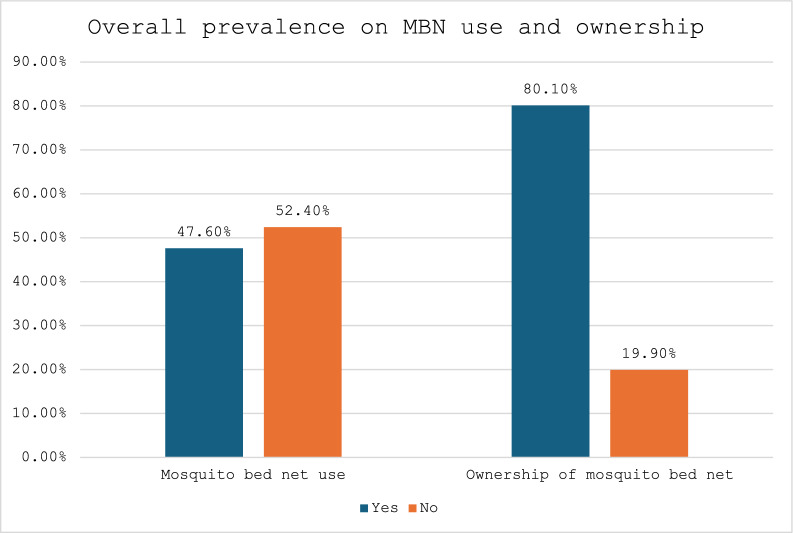
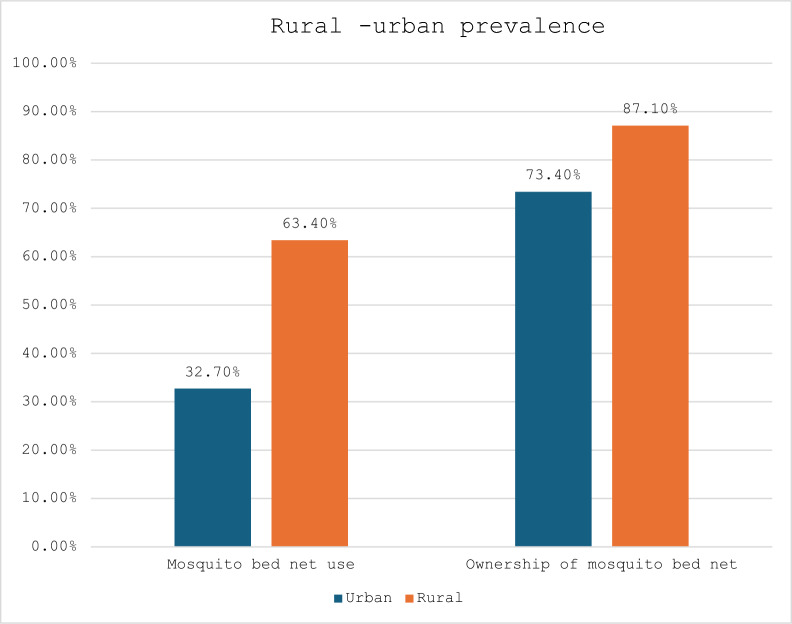
The prevalence of mosquito bed net ownership among pregnant women was 80.1% [CI 76.8-83.0] and that of mosquito bed net utilization was 47.6% [CI 43.9-51.4]. We also found that pregnant women with 1-3 children [aOR = 2.07, 95% CI 1.25-3.43] and 4 or more children [aOR = 2.52, 95% CI 1.38-4.59], had a partner with secondary level education [aOR = 2.11, 95% CI 1.10-4.06] and higher educational status [aOR = 2.47, 95% CI 1.06-5.74] had higher odds of mosquito bed net use. However, pregnant women who belonged to middle wealth quintiles [aOR = 0.41, 95% CI 0.21-0.82], richer wealth quintiles [aOR = 0.19, 95% CI 0.09-0.41], and richest wealth quintiles [aOR = 0.09, 95% CI 0.03-0.25] had decreased odds of mosquito bed net use. In addition, pregnant women who had female household heads [aOR = 1.73, 95% CI 1.03-2.91], resided in the rural areas [aOR = 1.97, 95% CI 1.12-3.49], had 1-3 children [aOR = 1.65, 95% CI 1.05-2.58] and 4 or more children [aOR = 2.08, 95% CI 1.03-4.20] had higher odds of mosquito bed net ownership. Meanwhile, pregnant women with active health insurance [aOR = 0.29, 95% CI 0.10-0.80] had lesser odds of mosquito bed net ownership.
The rate of mosquito bed net ownership was high among pregnant women. However, the effective utilization of mosquito bed net among pregnant women was low. Considering the low utilization of mosquito bed nets, public health practitioners and clinicians should develop awareness and educational interventions tailored toward improving mosquito bed net use among pregnant women.
尽管使用蚊帐是众多基于证据的、安全且成功的预防孕期疟原虫感染的干预措施之一,但由于各种障碍,孕妇中蚊帐的使用率仍然很低。因此,本研究调查了加纳孕妇中与蚊帐使用和拥有情况相关的因素。
对2022年加纳人口与健康调查的数据进行分析,以开展这项横断面研究。研究纳入了来自加纳16个地区的1111名孕妇的代表性样本。采用多因素logistic回归分析来确定育龄孕妇中与蚊帐拥有和使用情况相关的因素。
孕妇中蚊帐拥有率为80.1%[置信区间76.8 - 83.0],蚊帐使用率为47.6%[置信区间43.9 - 51.4]。我们还发现,有1 - 3个孩子的孕妇[aOR = 2.07,95%置信区间1.25 - 3.43]和有4个或更多孩子的孕妇[aOR = 2.52,95%置信区间1.38 - 4.59]、伴侣具有中等教育水平的孕妇[aOR = 2.11,95%置信区间1.10 - 4.06]以及教育程度较高的孕妇[aOR = 2.47,95%置信区间1.06 - 5.74]使用蚊帐的几率更高。然而,属于中等财富五分位数的孕妇[aOR = 0.41,95%置信区间0.21 - 0.82]、较富裕财富五分位数的孕妇[aOR = 0.19,95%置信区间0.09 - 0.41]和最富裕财富五分位数的孕妇[aOR = 0.09,95%置信区间0.03 - 0.25]使用蚊帐的几率降低。此外,女性为户主的孕妇[aOR = 1.73,95%置信区间1.03 - 2.91]、居住在农村地区的孕妇[aOR = 1.97,95%置信区间1.12 - 3.49]、有1 - 3个孩子的孕妇[aOR = 1.65,95%置信区间1.05 - 2.58]和有4个或更多孩子的孕妇[aOR = 2.08,95%置信区间1.03 - 4.20]拥有蚊帐的几率更高。同时,拥有有效医疗保险的孕妇[aOR = 0.29,95%置信区间0.10 - 0.80]拥有蚊帐的几率较低。
孕妇中蚊帐拥有率较高。然而,孕妇对蚊帐的有效使用率较低。鉴于蚊帐使用率较低,公共卫生从业者和临床医生应开展针对性的宣传和教育干预措施,以提高孕妇对蚊帐的使用。