Lan Baoliang, Zhang Shuhao, Chen Kai, Dai Shengjie, Fei Jiaqi, Gao Kaixuan, Sun Xiaoou, Lin Bin, Liu Xiangyu
State Key Laboratory of Membrane Biology, Tsinghua-Peking Center for Life Sciences, School of Pharmaceutical Sciences, Tsinghua University, Beijing, China.
Beijing Frontier Research Center for Biological Structure, Tsinghua University, Beijing, China.
Cell Discov. 2025 May 13;11(1):47. doi: 10.1038/s41421-025-00797-x.
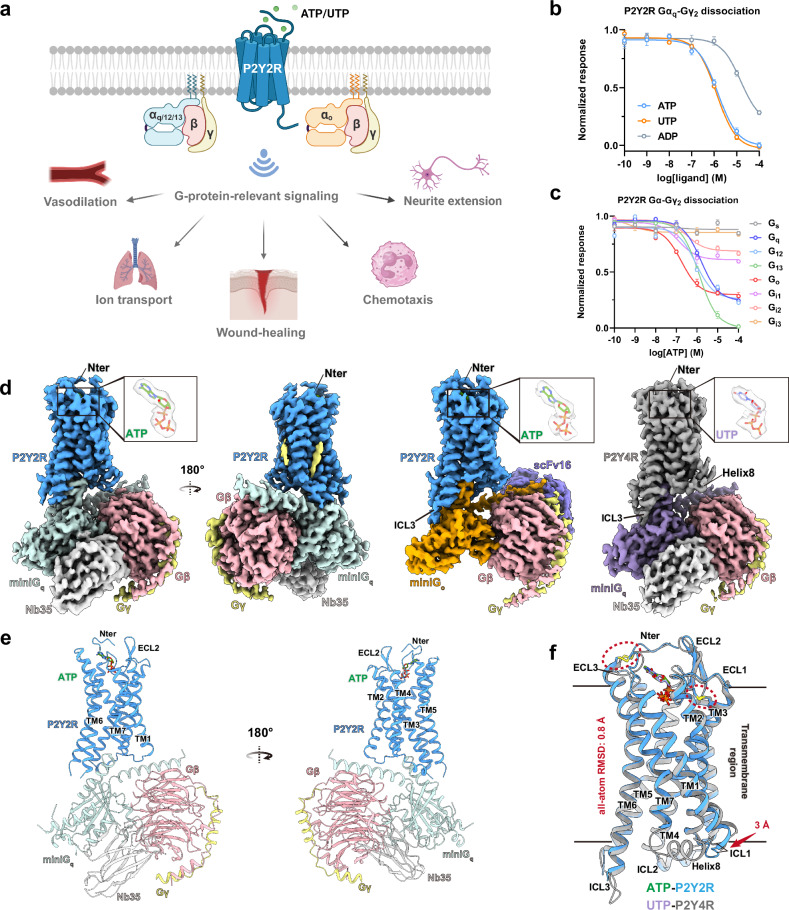
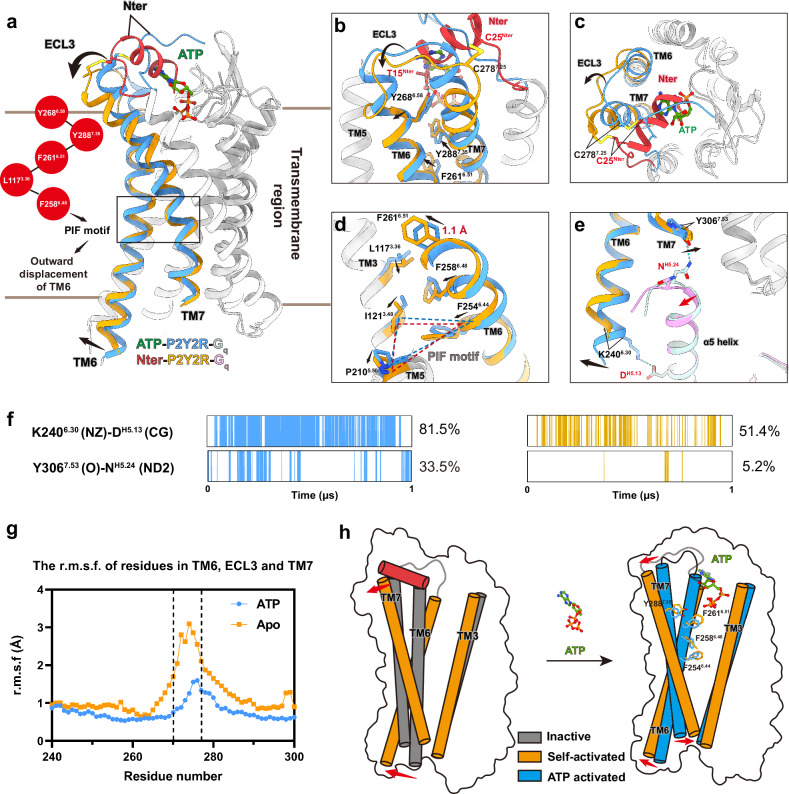
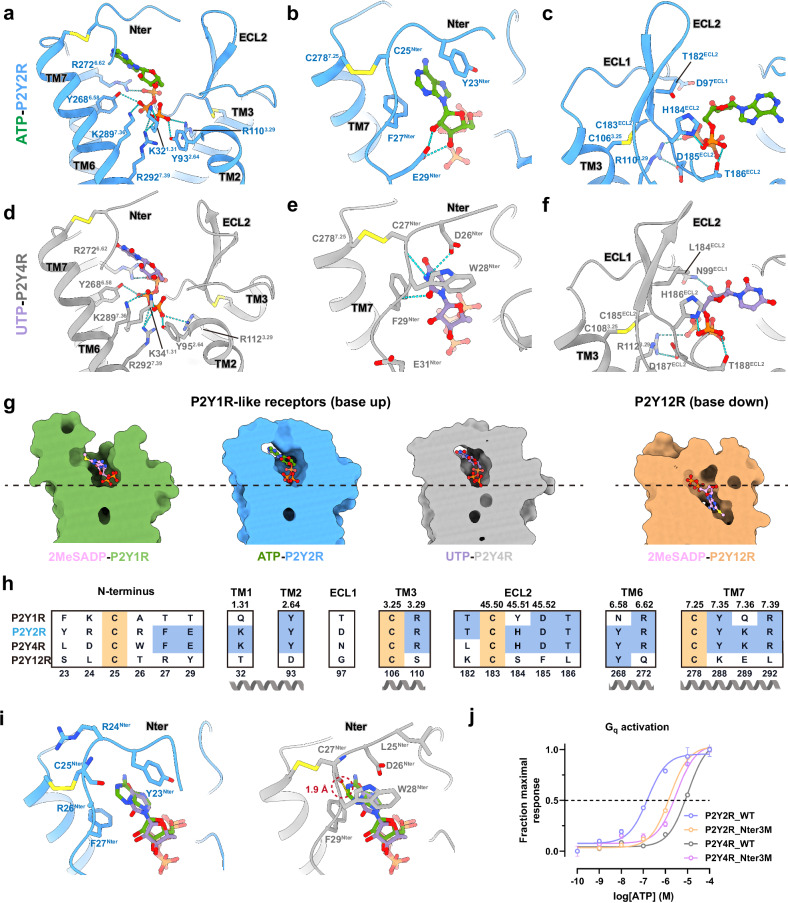
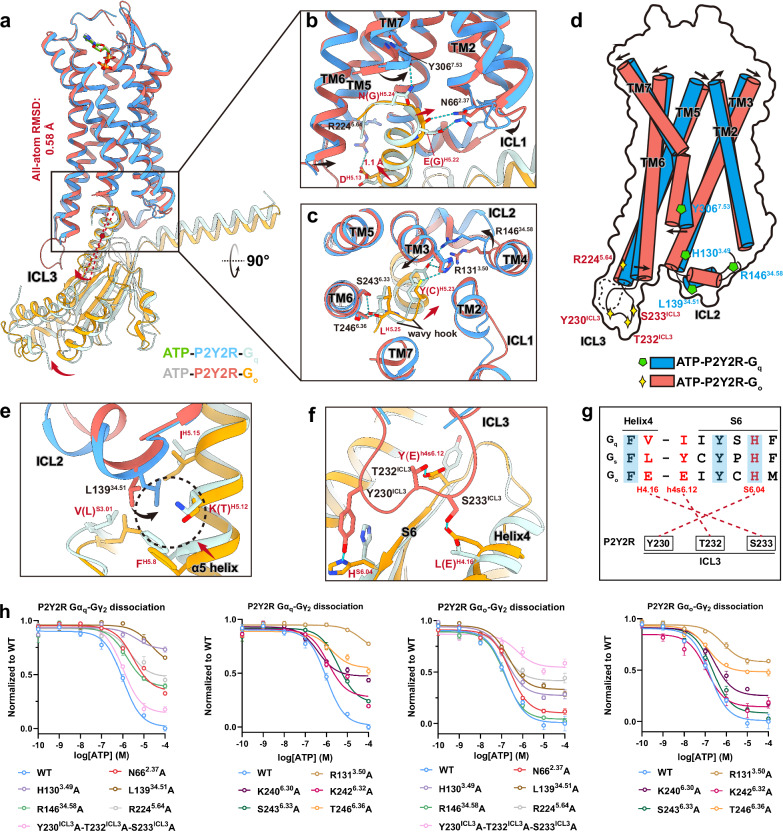
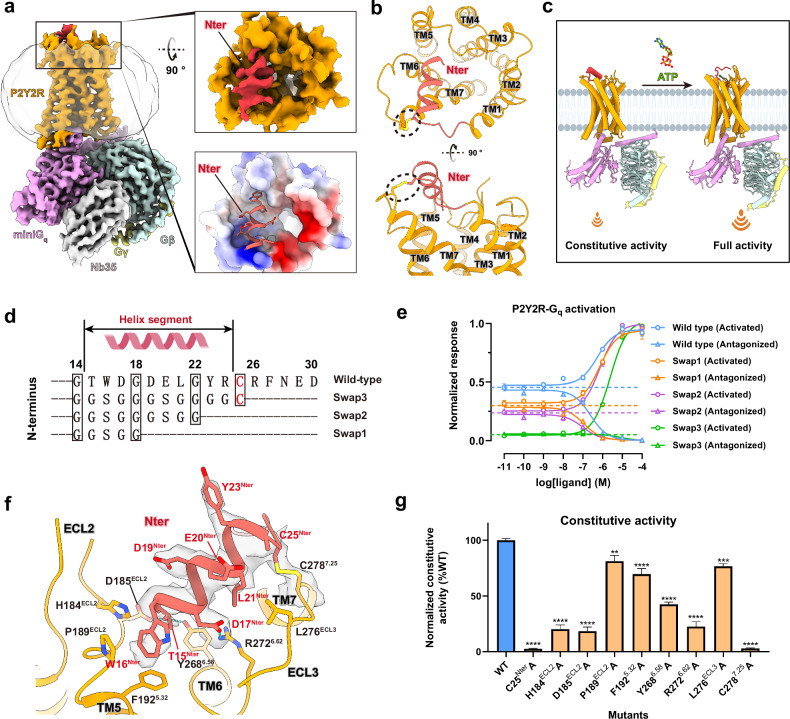
Purinergic P2Y2 receptor (P2Y2R) represents a typically extracellular ATP and UTP sensor for mediating purinergic signaling. Despite its importance as a pharmacological target, the molecular mechanisms underlying ligand recognition and G-protein coupling have remained elusive due to lack of structural information. In this study, we determined the cryo-electron microscopy (cryo-EM) structures of the apo P2Y2R in complex with G, ATP-bound P2Y2R in complex with G or G, and UTP-bound P2Y4R in complex with G. These structures reveal the similarities and distinctions of ligand recognition within the P2Y receptor family. Furthermore, a comprehensive analysis of G-protein coupling reveals that P2Y2R exhibits promiscuity in coupling with both G and G proteins. Combining molecular dynamics simulations and signaling assays, we elucidate the molecular mechanisms by which P2Y2R differentiates pathway-specific G or G coupling through distinct structural components on the intracellular side. Strikingly, we identify a helix-like segment within the N-terminus that occupies the orthosteric ligand-binding pocket of P2Y2R, accounting for its self-activation. Taken together, these findings provide a molecular framework for understanding the activation mechanism of P2Y2R, encompassing ligand recognition, G-protein coupling, and a novel N-terminus-mediated self-activation mechanism.
嘌呤能P2Y2受体(P2Y2R)是一种典型的细胞外ATP和UTP传感器,用于介导嘌呤能信号传导。尽管其作为药理学靶点很重要,但由于缺乏结构信息,配体识别和G蛋白偶联的分子机制仍然不清楚。在这项研究中,我们确定了与G蛋白结合的无配体P2Y2R、与G蛋白或G蛋白结合的ATP结合型P2Y2R以及与G蛋白结合的UTP结合型P2Y4R的冷冻电镜(cryo-EM)结构。这些结构揭示了P2Y受体家族中配体识别的异同。此外,对G蛋白偶联的全面分析表明,P2Y2R在与G蛋白和G蛋白偶联时表现出混杂性。结合分子动力学模拟和信号转导分析,我们阐明了P2Y2R通过细胞内侧不同结构成分区分途径特异性G蛋白或G蛋白偶联的分子机制。令人惊讶的是,我们在N端鉴定出一个螺旋状片段,它占据了P2Y2R的正构配体结合口袋,这解释了其自我激活的原因。综上所述,这些发现为理解P2Y2R的激活机制提供了一个分子框架,包括配体识别、G蛋白偶联和一种新的N端介导的自我激活机制。