Sun Yihao, Qian ShaSha, Du Yaxin, Wu Jiahui, Rehemutula Hadireya, Meng Shengli, Wang Zejun, Guo Jing, Shen Shuo
Wuhan Institute of Biological Products Co. Ltd., Wuhan, People's Republic of China.
J Virol. 2025 Jun 17;99(6):e0012825. doi: 10.1128/jvi.00128-25. Epub 2025 May 14.
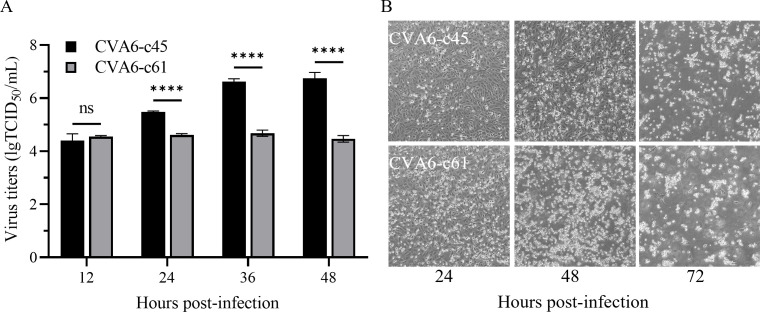
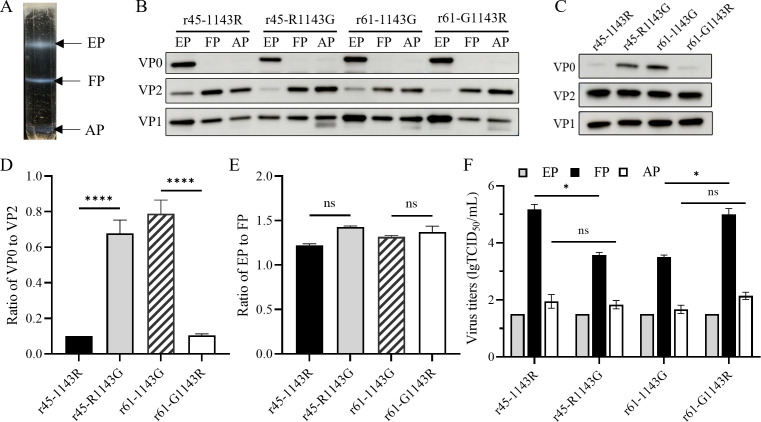
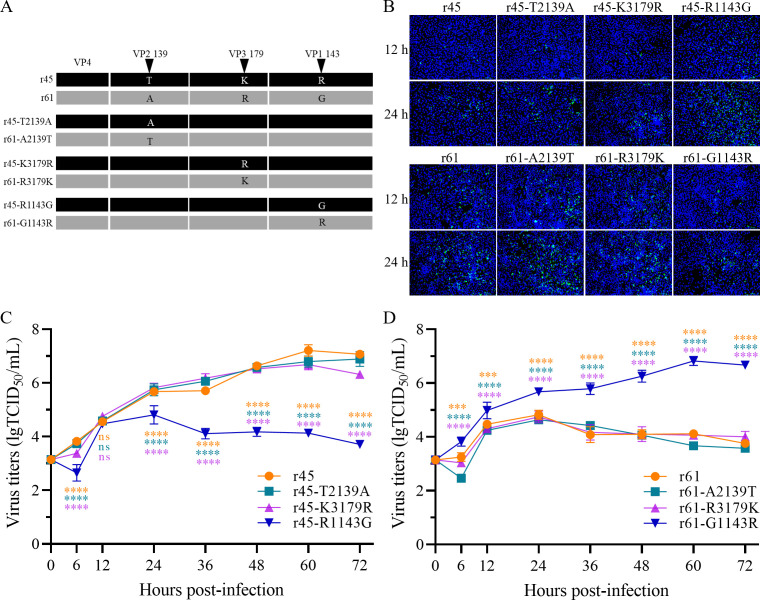
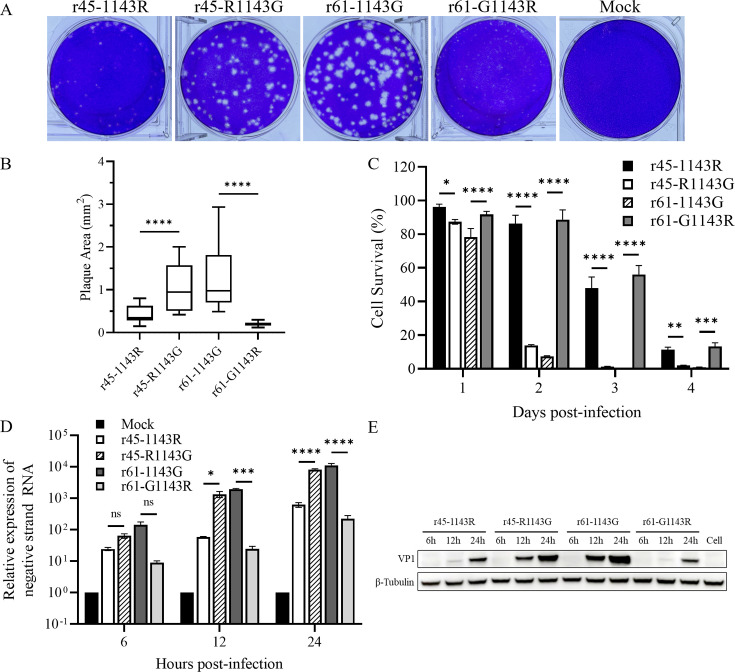
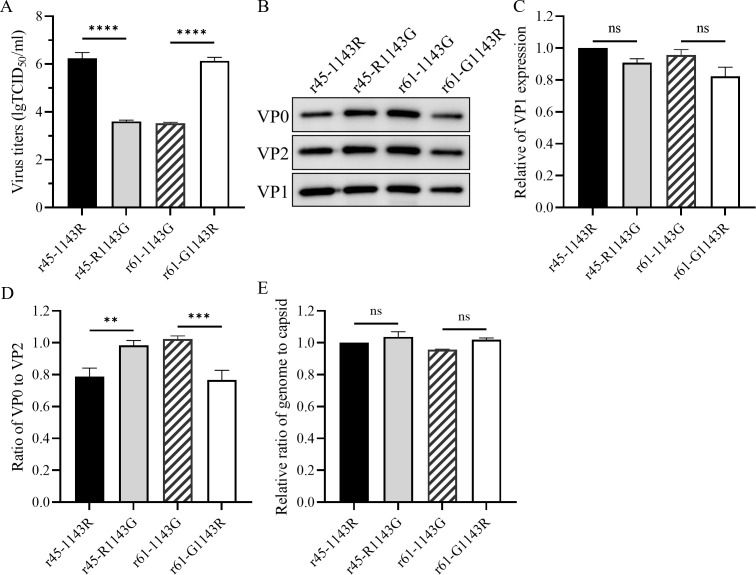
Coxsackievirus A6 (CV-A6) has emerged as a major pathogen associated with hand, foot, and mouth disease (HFMD), capable of infecting both children and adults. However, currently, there is no effective vaccine to prevent HFMD caused by non-EV-A71 enteroviruses. In this study, a pair of CV-A6 strains was selected from a rhabdomyosarcoma (RD)-isolated and Vero-adapted stock with a difference of 7 nucleotides in their genomes, resulting in three amino acid mutations in the structural proteins. Distinct differences in propagation, virulence in cells, and plaque size were observed. A series of single-site mutants was constructed, and a single mutation in VP1-143 was mapped to associate with phenotype changes. The mutation from glycine to arginine at VP1-143 dramatically increased infectivity but decreased virulence, growth rate, and plaque size. Furthermore, the experiments using both purified whole virus and full particle (FP) demonstrated that glycine-to-arginine mutation increased VP0 cleavage efficiency because of decreased VP0/VP2 ratio. The decrease in VP0 cleavage efficiency led to the accumulation of non-infectious provirion. The efficiency of virus transmission between cells determined the rates of viral RNA (vRNA) and protein synthesis and was related to fast-slow growth and virulence phenotypes. In addition, the data indicated that the mutation did not affect the encapsidation of the genomic RNA, and the ratio of empty and full particles was unchanged. The results are important for understanding the mechanism of VP0 cleavage regulation and are relevant to developing vaccines and therapeutic reagents against CV-A6 infection and diseases.
CV-A6 is a major pathogen in the context of HFMD. The cost of treatment and hospitalization of children with HFMD may have a considerable financial impact on the families of patients. CV-A6 is a member of picornaviruses and forms infectious virion through maturation cleavage of VP0 into VP4 and VP2. Although it is well accepted that the autocatalytic process involves viral RNA, the detailed mechanism remains unclear. In this study, residues in VP1-143 were demonstrated to regulate the efficiency of VP0 cleavage and affect the ratio of provirion and virion. Glycine-to-arginine mutation was tolerant, not abolished, but affected the efficiency of VP0 cleavage. The results support a theory that residue mutations on a structural protein of a serotype/genotype within enteroviruses, not well-conserved across picornaviruses and far away from the VP0 cleavage site on the outside surface, regulate the efficiency of VP0 cleavage and render phenotypically different strains.
柯萨奇病毒A6(CV-A6)已成为与手足口病(HFMD)相关的主要病原体,能够感染儿童和成人。然而,目前尚无有效的疫苗来预防非EV-A71肠道病毒引起的手足口病。在本研究中,从横纹肌肉瘤(RD)分离并经Vero细胞适应的毒株中挑选出一对CV-A6毒株,它们的基因组有7个核苷酸差异,导致结构蛋白出现3个氨基酸突变。观察到它们在增殖、细胞毒性和蚀斑大小方面存在明显差异。构建了一系列单点突变体,并确定VP1-143位点的单个突变与表型变化相关。VP1-143位点由甘氨酸突变为精氨酸显著增加了感染性,但降低了毒性、生长速率和蚀斑大小。此外,使用纯化的全病毒和完整病毒颗粒(FP)进行的实验表明,甘氨酸到精氨酸的突变由于VP0/VP2比例降低而提高了VP0的切割效率。VP0切割效率的降低导致非感染性前病毒颗粒的积累。细胞间病毒传播效率决定了病毒RNA(vRNA)和蛋白质合成的速率,并与快/慢生长和毒性表型相关。此外,数据表明该突变不影响基因组RNA的包装,空病毒颗粒和完整病毒颗粒的比例未改变。这些结果对于理解VP0切割调控机制很重要,并且与开发针对CV-A6感染和疾病的疫苗及治疗试剂相关。
CV-A6是手足口病背景下的主要病原体。手足口病患儿的治疗和住院费用可能会给患者家庭带来相当大的经济影响。CV-A6是微小核糖核酸病毒的成员,通过将VP0成熟切割为VP4和VP2形成感染性病毒粒子。虽然普遍认为自催化过程涉及病毒RNA,但其详细机制仍不清楚。在本研究中,证明VP1-143位点的残基调节VP0切割效率并影响前病毒颗粒和病毒粒子的比例。甘氨酸到精氨酸的突变是可耐受的,并非完全消除,但影响了VP0切割效率。这些结果支持一种理论,即肠道病毒血清型/基因型结构蛋白上的残基突变,在微小核糖核酸病毒中保守性不佳且远离外表面的VP0切割位点,调节VP0切割效率并产生表型不同的毒株。