Salum Kaio Cezar Rodrigues, Miranda Gabriel Brendo Alves, Dias Alessandra Lima, Carneiro João Regis Ivar, Bozza Patrícia Torres, da Fonseca Ana Carolina Proença, Silva Tamara
Clementino Fraga Filho University Hospital, Federal University of Rio de Janeiro, Rio de Janeiro, Brazil.
Human Genetics Laboratory, Oswaldo Cruz Institute, Oswaldo Cruz Foundation, Rio de Janeiro, Brazil.
Oncol Rev. 2025 Apr 30;19:1573797. doi: 10.3389/or.2025.1573797. eCollection 2025.
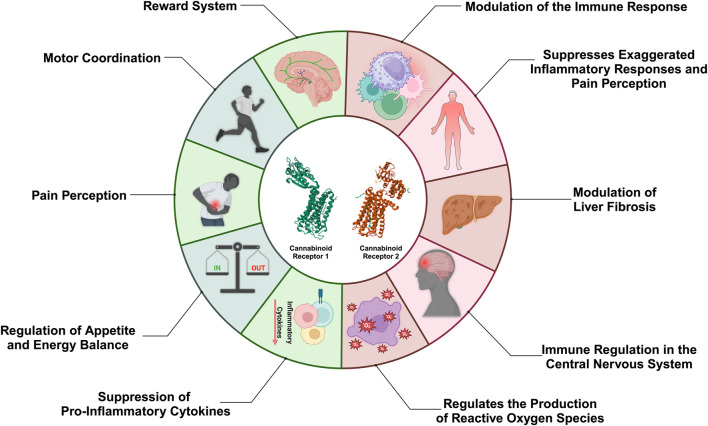
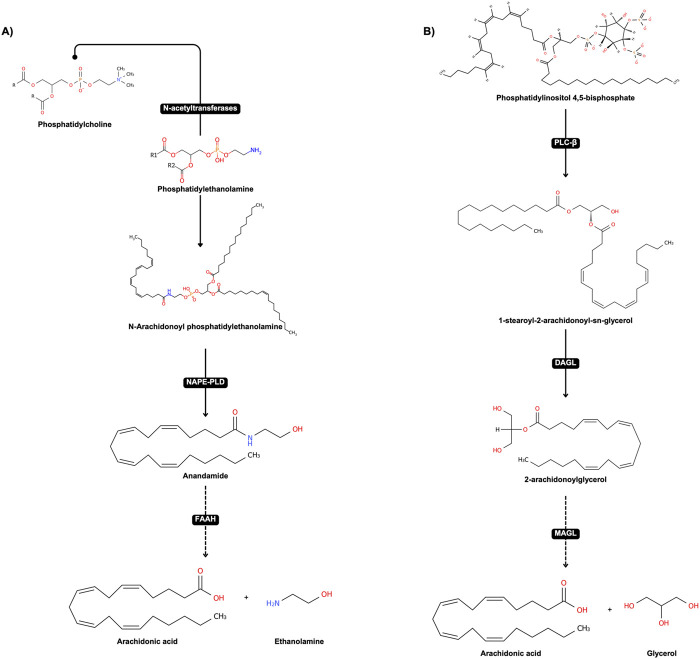
The Endocannabinoid System (ECS) plays a critical role in maintaining physiological homeostasis, influencing a range of processes such as neuroprotection, inflammation, energy metabolism, and immune responses. Comprising cannabinoid receptors (CB1 and CB2), endogenous ligands (endocannabinoids), and the enzymes responsible for their synthesis and degradation, the ECS has attracted increasing attention in cancer research. Cannabinoid receptor activation has been associated with the regulation of cancer-related processes, including cell proliferation, apoptosis, and angiogenesis, suggesting that the ECS may have a role in tumor progression and cancer treatment. Preclinical studies have shown that cannabinoids, through their interaction with CB1 and CB2 receptors, can inhibit tumor cell growth, induce programmed cell death, and suppress the formation of new blood vessels in various cancer models. Despite these encouraging findings, the clinical translation of ECS-targeted therapies remains in its early stages. The complexity of tumor heterogeneity, the variability in patient responses, and the challenges associated with the pharmacokinetics of cannabinoids are significant obstacles to the broader application of these findings in clinical settings. This review provides an overview of the current understanding of the ECS's involvement in cancer biology, focusing on key mechanisms by which it may influence carcinogenesis. Additionally, we discuss the therapeutic potential of targeting the ECS in cancer treatment, while highlighting the limitations and uncertainties that need to be addressed through ongoing research.
内源性大麻素系统(ECS)在维持生理稳态中起着关键作用,影响一系列过程,如神经保护、炎症、能量代谢和免疫反应。ECS由大麻素受体(CB1和CB2)、内源性配体(内源性大麻素)以及负责其合成和降解的酶组成,在癌症研究中受到越来越多的关注。大麻素受体激活与癌症相关过程的调节有关,包括细胞增殖、凋亡和血管生成,这表明ECS可能在肿瘤进展和癌症治疗中发挥作用。临床前研究表明,大麻素通过与CB1和CB2受体相互作用,可在各种癌症模型中抑制肿瘤细胞生长、诱导程序性细胞死亡并抑制新血管形成。尽管有这些令人鼓舞的发现,但以ECS为靶点的疗法的临床转化仍处于早期阶段。肿瘤异质性的复杂性、患者反应的变异性以及与大麻素药代动力学相关的挑战,是这些发现更广泛应用于临床环境的重大障碍。本综述概述了目前对ECS参与癌症生物学的理解,重点关注其可能影响致癌作用的关键机制。此外,我们讨论了在癌症治疗中以ECS为靶点的治疗潜力,同时强调了需要通过持续研究来解决的局限性和不确定性。