Park Jae Young, Song Jeong Yun, Chang Jun Young, Kang Dong-Wha, Kwon Sun U, Suh Chong Hyun, Kim Hyunjin, Lim Jae-Sung, Saito Satoshi, Ha Sang Hee, Kim Bum Joon
Departments of Neurology Asan Medical Center, University of Ulsan College of Medicine, 88, Olympic-ro 43-gil, Songpa-gu, Seoul, South Korea.
Department of Neurology and Radiology Asan Medical Center, University of Ulsan College of Medicine, Seoul, South Korea.
Sci Rep. 2025 May 16;15(1):17113. doi: 10.1038/s41598-025-00220-1.
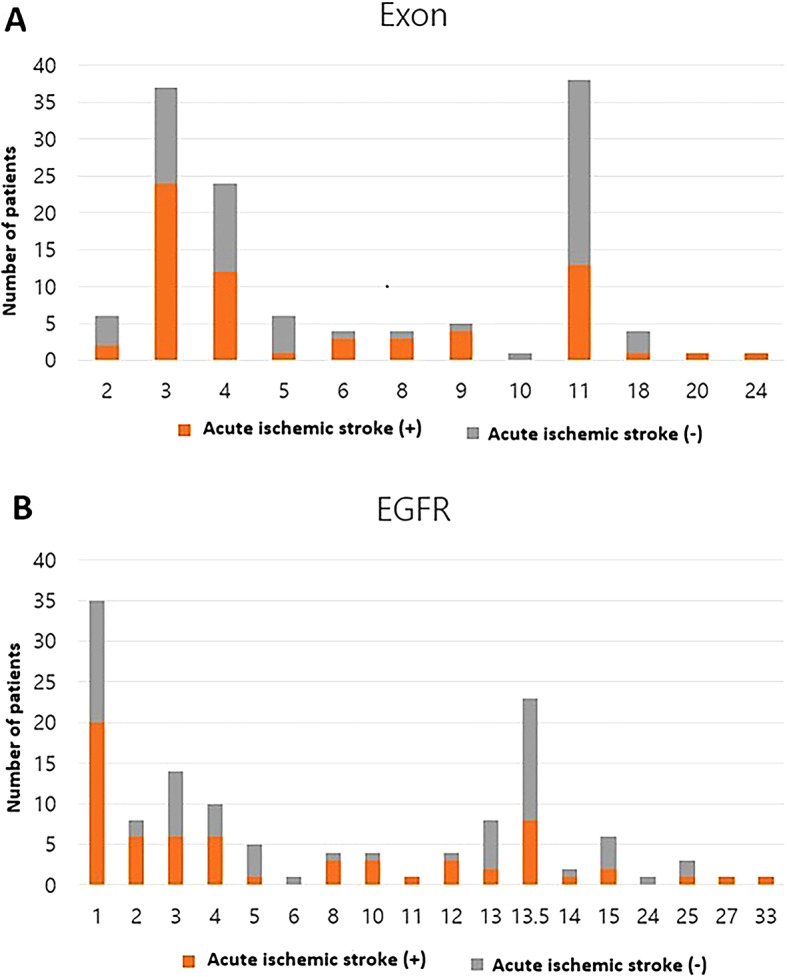
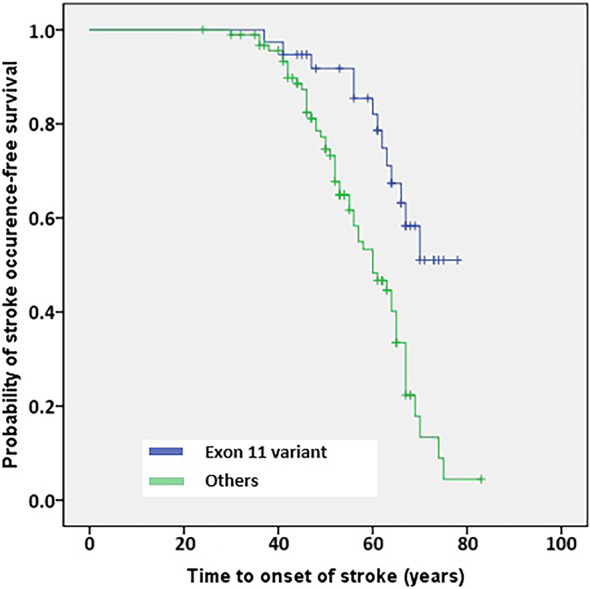
Cerebral autosomal dominant arteriopathy with subcortical infarcts and leukoencephalopathy (CADASIL), which is caused by mutations in the NOTCH3 gene, is associated with early-onset strokes. However, the specific genetic and imaging characteristics associated with acute ischemic stroke (AIS) in patients with CADASIL remain unclear. We reviewed CADASIL patients with NOTCH3 mutations, dividing them into two groups based on the presence of clinically relevant AIS lesions on diffusion-weighted imaging, observed at any time, regardless of the timing of CADASIL diagnosis. Clinical, imaging, and genetic features were compared between these groups. Genetic variations were categorized by exon location: specifically, exon 3 including Arg75Pro, and exon 11 including Arg544Cys, were examined in detail. Factors associated with AIS in CADASIL patients were analyzed. A total of 141 patients were included, of whom 70 (49.6%) were diagnosed with AIS. While there were no significant differences in vascular risk factors between the two groups, patients with AIS had a higher prevalence and greater number of lacunes (p < 0.001) and exhibited more severe white matter changes (p = 0.007). CADASIL patients with AIS had a higher rate of exon 3 variant and a lower rate of exon 11 variant compared to those without AIS. Multivariable analysis revealed that exon 11 variants were associated with a reduced risk (aOR = 0.270, 95% CI 0.099-0.733; p = 0.010). CADASIL who experienced AIS had unique genetic and imaging characteristics when compared to those who did not experience AIS.
伴有皮质下梗死和白质脑病的常染色体显性遗传性脑动脉病(CADASIL)由NOTCH3基因突变引起,与早发性中风相关。然而,CADASIL患者急性缺血性中风(AIS)相关的具体遗传和影像学特征仍不清楚。我们回顾了携带NOTCH3突变的CADASIL患者,根据扩散加权成像上是否存在临床相关的AIS病变将他们分为两组,观察时间不限,无论CADASIL诊断时间。比较两组之间的临床、影像学和遗传特征。基因变异按外显子位置分类:具体而言,详细检查了包括Arg75Pro的外显子3和包括Arg544Cys的外显子11。分析CADASIL患者中与AIS相关的因素。共纳入141例患者,其中70例(49.6%)被诊断为AIS。虽然两组之间血管危险因素无显著差异,但AIS患者腔隙的患病率更高、数量更多(p<0.001),且白质改变更严重(p = 0.007)。与无AIS的CADASIL患者相比,有AIS的CADASIL患者外显子3变异率更高,外显子11变异率更低。多变量分析显示,外显子11变异与风险降低相关(调整后比值比=0.270,95%置信区间0.099 - 0.733;p = 0.010)。与未发生AIS的CADASIL患者相比,发生AIS的CADASIL患者具有独特的遗传和影像学特征。