Ogawa Shimpei, Endo Hideki, Yoshida Masahiro, Tsuru Tomomitsu, Itabashi Michio, Yamamoto Hiroyuki, Kakeji Yoshihiro, Ueno Hideki, Shirabe Ken, Hibi Taizo, Taketomi Akinobu, Ikeda Norihiko, Mori Masaki
The Japanese Society for Abdominal Emergency Medicine Tokyo Japan.
Department of Surgery, Institute of Gastroenterology Tokyo Women's Medical University Tokyo Japan.
Ann Gastroenterol Surg. 2024 Nov 27;9(3):505-517. doi: 10.1002/ags3.12887. eCollection 2025 May.
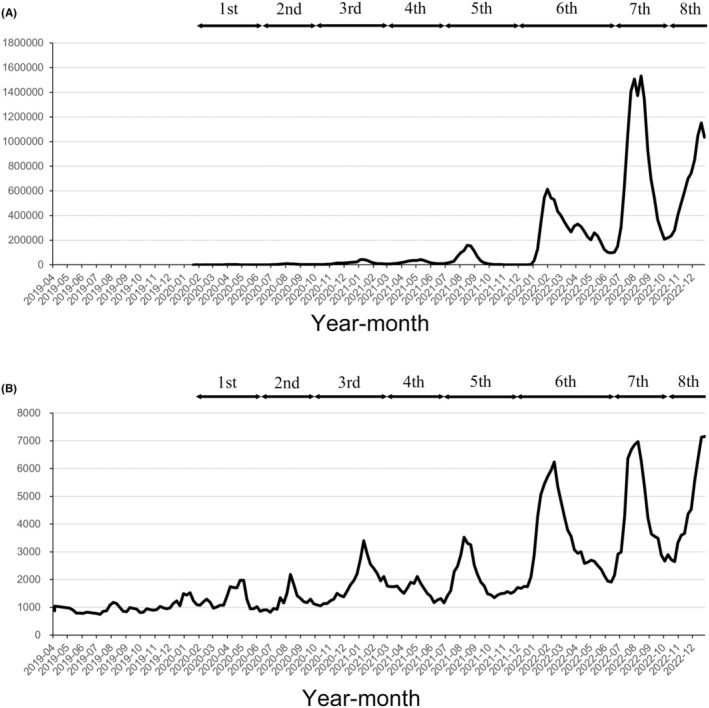
During the COVID-19 pandemic, there were delays in transport of emergency cases to hospital by ambulance due to increased difficulties in obtaining hospital acceptance. The aim of this study was to examine if this had a negative effect on postoperative short-term outcomes in patients with colorectal perforation.
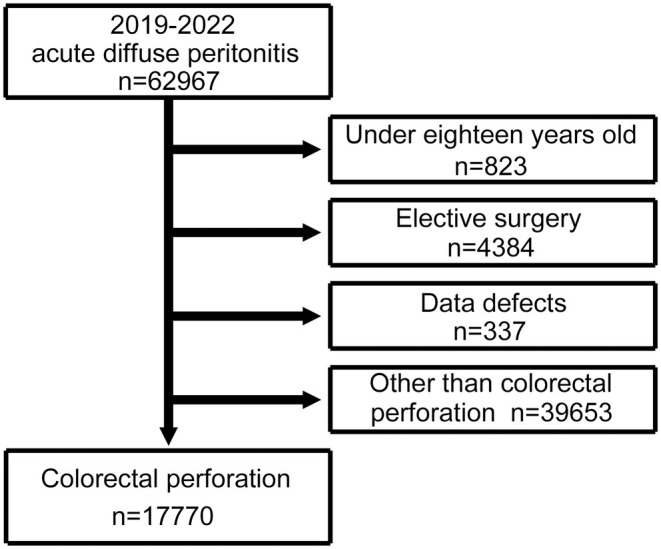
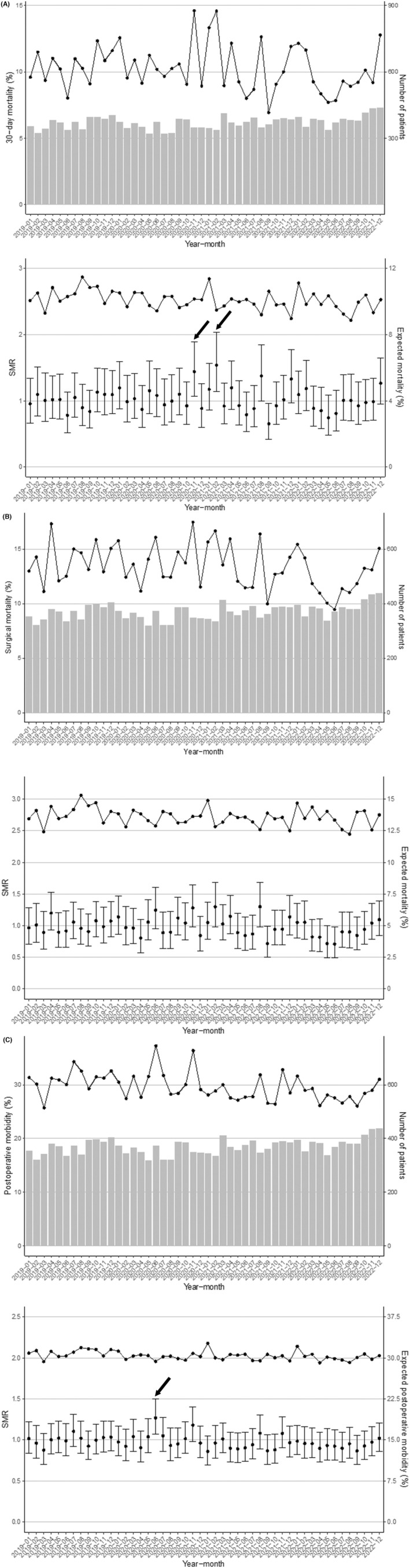
The National Clinical Database (NCD) includes >95% of surgical cases in Japan. Postoperative 30-day mortality, surgical mortality, and postoperative complications (Clavien-Dindo grade ≥3) were examined in 17 770 cases of colorectal perforation registered from 2019 to 2022 in the NCD. These outcomes were compared for cases with new COVID-19 infection and emergency cases with difficulties in transport to hospital. Months were considered to have significantly high or low mortality or complication rates, if the 95% confidence interval (CI) of the standardized mortality (morbidity) ratio (SMR) did not contain 1.
Postoperative 30-day mortality occurred in 1826 cases (10.3%), surgical mortality in 2382 cases (13.4%), and postoperative complications in 5276 cases (29.7%). Significantly higher SMRs were found for 30-day mortality in November 2020 (1.44 [95% CI: 1.07-1.89]) and February 2021 (1.54 [95% CI: 1.14-2.03]), and for postoperative complications in June 2020 (1.27 [95% CI: 1.07-1.50]). In 2022, there were marked increases in new COVID-19 cases and in emergency cases with difficulties in transport to hospital, but no month had a significantly high SMR.
Emergency cases with difficulties in transport markedly increased during the COVID-19 pandemic but had little effect on short-term outcomes of colorectal perforation.
在新型冠状病毒肺炎(COVID-19)大流行期间,由于医院接收难度增加,救护车运送急诊病例至医院出现延误。本研究的目的是探讨这是否会对结直肠穿孔患者的术后短期结局产生负面影响。
国家临床数据库(NCD)涵盖了日本>95%的外科病例。对2019年至2022年在NCD中登记的17770例结直肠穿孔病例的术后30天死亡率、手术死亡率和术后并发症(Clavien-Dindo分级≥3级)进行了研究。对新发COVID-19感染病例和运送至医院困难的急诊病例的这些结局进行了比较。如果标准化死亡率(发病率)比(SMR)的95%置信区间(CI)不包含1,则认为某些月份的死亡率或并发症发生率显著高或低。
1826例(10.3%)发生术后30天死亡,2382例(13.4%)发生手术死亡,5276例(29.7%)发生术后并发症。2020年11月(1.44 [95% CI:1.07-1.89])和2021年2月(1.54 [95% CI:1.14-2.03])的30天死亡率的SMR显著更高,2020年6月的术后并发症的SMR显著更高(1.27 [95% CI:1.07-1.50])。2022年,新发COVID-19病例和运送至医院困难的急诊病例显著增加,但没有哪个月的SMR显著高。
在COVID-19大流行期间,运送困难的急诊病例显著增加,但对结直肠穿孔的短期结局影响不大。