• 文献检索
  • 文档翻译
  • 深度研究
  • 学术资讯
  • Suppr Zotero 插件Zotero 插件
  • 邀请有礼
  • 套餐&价格
  • 历史记录
应用&插件
Suppr Zotero 插件Zotero 插件浏览器插件Mac 客户端Windows 客户端微信小程序
定价
高级版会员购买积分包购买API积分包
服务
文献检索文档翻译深度研究API 文档MCP 服务
关于我们
关于 Suppr公司介绍联系我们用户协议隐私条款
关注我们

Suppr 超能文献

核心技术专利:CN118964589B侵权必究
粤ICP备2023148730 号-1Suppr @ 2026

文献检索

告别复杂PubMed语法,用中文像聊天一样搜索,搜遍4000万医学文献。AI智能推荐,让科研检索更轻松。

立即免费搜索

文件翻译

保留排版,准确专业,支持PDF/Word/PPT等文件格式,支持 12+语言互译。

免费翻译文档

深度研究

AI帮你快速写综述,25分钟生成高质量综述,智能提取关键信息,辅助科研写作。

立即免费体验

严重精神疾病风险预测中的伦理和社会问题:一项范围综述与主题分析

Ethical and social issues in prediction of risk of severe mental illness: a scoping review and thematic analysis.

作者信息

Neiders Ivars, Mežinska Signe, van Haren Neeltje E M

机构信息

University of Latvia, Institute of Clinical and Preventive Medicine, Riga, Latvia.

Child and Adolescent Psychiatry/Psychology, Erasmus University Medical Centre, Rotterdam, Netherlands.

出版信息

BMC Psychiatry. 2025 May 19;25(1):501. doi: 10.1186/s12888-025-06949-3.

DOI:10.1186/s12888-025-06949-3
PMID:40389909
原文链接:https://pmc.ncbi.nlm.nih.gov/articles/PMC12087066/
Abstract

BACKGROUND

Over the last decade, there has been considerable development in precision psychiatry, especially in the development of novel prediction tools that can be used for early prediction of the risk of developing a severe mental disorder such as schizophrenia, depression, bipolar disorder. Although the clinical efficiency of those tools is still unclear it is crucial to consider the future ethical and social consequences of their clinical use before they are used in clinical practice. The literature on this issue is rapidly growing and represents input from scholars from different fields-psychiatrists, bioethicists etc. However, to our knowledge, nobody has produced a review addressing these issues. Therefore, the present study aims to bridge the gap.

METHODS

We conducted a scoping review, allowing integration of both empirical and non-empirical studies. The research question addressed is: what are the ethical and social issues raised by the potential use of predictive tools for the risk of developing of severe mental disorder identified in the existing empirical and theoretical literature? After developing the search terms, we conducted a search in three electronic databases: Scopus, Web of Science and PubMed. For the included articles bibliometric analysis and inductive thematic coding was performed. To ensure the transparency and rigour of this scoping review we followed he Preferred Reporting Items for Systematic Reviews and Meta-Analyses Extension for Scoping Reviews (PRISMA-ScR). A qualitative inductive thematic analysis of the included articles was performed using Atlas.ti.

RESULTS

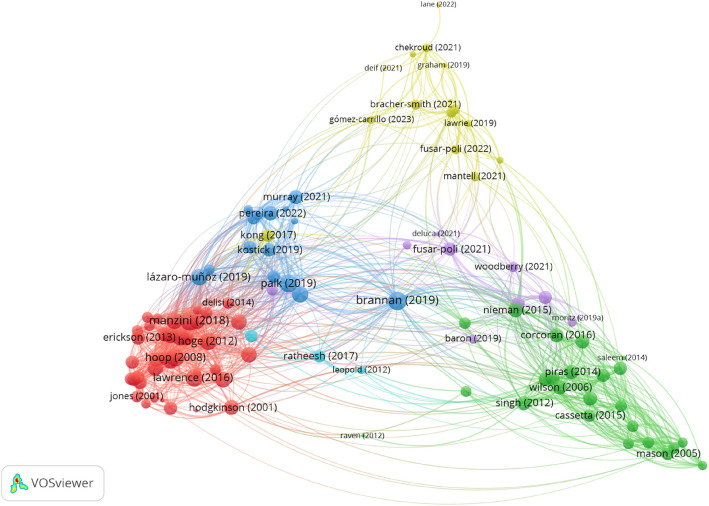
After screening, evaluation for eligibility and citation tracing 129 publications were included in the scoping review. The articles represent a wide range of fields of research-clinical psychology, general medicine, neuroscience, genetics, clinical genetics, psychiatry and mental health, philosophy, ethics, etc. The majority of the articles (83) are theoretical studies, 35 papers report results of empirical research and 11 are review papers. Qualitative thematic analysis of the included articles revealed four main themes: 1) Potential benefits and harms; 2) Rights and responsibilities; 3) Counselling, education and communication; 4) Ethical issues in different applications.

CONCLUSIONS

The articles included in the review cover a wide variety of concerns that might be raised when implementing predictive tools for the risk of developing of severe mental disorder. However, some important gaps in the literature are indicated. First, there are issues that should deserve more attention than they have received thus far (clinical utility, extensive or mandatory use). In several cases there is no empirical knowledge that determines whether particular concerns are justified (stigmatisation, use of machine learning algorithms).
https://cdn.ncbi.nlm.nih.gov/pmc/blobs/9586/12087066/d3f2496b6b56/12888_2025_6949_Fig2_HTML.jpg
https://cdn.ncbi.nlm.nih.gov/pmc/blobs/9586/12087066/eec8799224ae/12888_2025_6949_Fig1_HTML.jpg
https://cdn.ncbi.nlm.nih.gov/pmc/blobs/9586/12087066/d3f2496b6b56/12888_2025_6949_Fig2_HTML.jpg
https://cdn.ncbi.nlm.nih.gov/pmc/blobs/9586/12087066/eec8799224ae/12888_2025_6949_Fig1_HTML.jpg
https://cdn.ncbi.nlm.nih.gov/pmc/blobs/9586/12087066/d3f2496b6b56/12888_2025_6949_Fig2_HTML.jpg
摘要

背景

在过去十年中,精准精神病学取得了长足发展,尤其是在新型预测工具的开发方面,这些工具可用于早期预测诸如精神分裂症、抑郁症、双相情感障碍等严重精神障碍的发病风险。尽管这些工具的临床效率仍不明确,但在将其应用于临床实践之前,考虑其临床使用的未来伦理和社会后果至关重要。关于这一问题的文献正在迅速增加,代表了来自不同领域的学者——精神科医生、生物伦理学家等的观点。然而,据我们所知,尚未有人对这些问题进行综述。因此,本研究旨在填补这一空白。

方法

我们进行了一项范围综述,允许纳入实证研究和非实证研究。所探讨的研究问题是:在现有实证和理论文献中确定的用于预测严重精神障碍发病风险的预测工具的潜在使用会引发哪些伦理和社会问题?在制定检索词后,我们在三个电子数据库中进行了检索:Scopus、科学网和PubMed。对纳入的文章进行了文献计量分析和归纳主题编码。为确保本范围综述的透明度和严谨性,我们遵循了系统评价和Meta分析扩展的范围综述的首选报告项目(PRISMA-ScR)。使用Atlas.ti对纳入的文章进行了定性归纳主题分析。

结果

经过筛选、资格评估和引文追踪,129篇出版物被纳入范围综述。这些文章代表了广泛的研究领域——临床心理学、普通医学、神经科学、遗传学、临床遗传学、精神病学和心理健康、哲学、伦理学等。大多数文章(83篇)是理论研究,35篇论文报告了实证研究结果,11篇是综述论文。对纳入文章的定性主题分析揭示了四个主要主题:1)潜在的益处和危害;2)权利和责任;3)咨询、教育和沟通;4)不同应用中的伦理问题。

结论

综述中纳入的文章涵盖了在实施用于预测严重精神障碍发病风险的预测工具时可能引发的各种问题。然而,文献中也指出了一些重要的空白。首先,有些问题应得到比目前更多的关注(临床效用、广泛或强制使用)。在一些情况下,没有实证知识来确定特定问题是否合理(污名化、机器学习算法的使用)。

相似文献

1
Ethical and social issues in prediction of risk of severe mental illness: a scoping review and thematic analysis.严重精神疾病风险预测中的伦理和社会问题:一项范围综述与主题分析
BMC Psychiatry. 2025 May 19;25(1):501. doi: 10.1186/s12888-025-06949-3.
2
Artificial intelligence technologies and compassion in healthcare: A systematic scoping review.医疗保健中的人工智能技术与人文关怀:一项系统综述。
Front Psychol. 2023 Jan 17;13:971044. doi: 10.3389/fpsyg.2022.971044. eCollection 2022.
3
Folic acid supplementation and malaria susceptibility and severity among people taking antifolate antimalarial drugs in endemic areas.在流行地区,服用抗叶酸抗疟药物的人群中,叶酸补充剂与疟疾易感性和严重程度的关系。
Cochrane Database Syst Rev. 2022 Feb 1;2(2022):CD014217. doi: 10.1002/14651858.CD014217.
4
Ethics of Procuring and Using Organs or Tissue from Infants and Newborns for Transplantation, Research, or Commercial Purposes: Protocol for a Bioethics Scoping Review.从婴儿和新生儿获取器官或组织用于移植、研究或商业目的的伦理问题:生物伦理学范围审查方案
Wellcome Open Res. 2024 Dec 5;9:717. doi: 10.12688/wellcomeopenres.23235.1. eCollection 2024.
5
Beyond the black stump: rapid reviews of health research issues affecting regional, rural and remote Australia.超越黑木树:影响澳大利亚地区、农村和偏远地区的健康研究问题的快速综述。
Med J Aust. 2020 Dec;213 Suppl 11:S3-S32.e1. doi: 10.5694/mja2.50881.
6
Exploring the Ethical Challenges of Conversational AI in Mental Health Care: Scoping Review.探索心理健康护理中对话式人工智能的伦理挑战:范围审查
JMIR Ment Health. 2025 Feb 21;12:e60432. doi: 10.2196/60432.
7
Ethical deliberations on video recording of patients in healthcare facilities- a scoping review.医疗机构中对患者进行视频录制的伦理审议——范围综述。
Med J Malaysia. 2024 Nov;79(6):785-793.
8
Exploring the Use and Implications of AI in Sexual and Reproductive Health and Rights: Protocol for a Scoping Review.探索人工智能在性与生殖健康及权利中的应用与影响:一项范围综述方案
JMIR Res Protoc. 2024 Apr 9;13:e53888. doi: 10.2196/53888.
9
Impact of Responsible AI on the Occurrence and Resolution of Ethical Issues: Protocol for a Scoping Review.负责任的人工智能对伦理问题的发生和解决的影响:范围综述方案。
JMIR Res Protoc. 2024 Jun 5;13:e52349. doi: 10.2196/52349.
10
Your Robot Therapist Will See You Now: Ethical Implications of Embodied Artificial Intelligence in Psychiatry, Psychology, and Psychotherapy.您的机器人治疗师现在为您服务:具身人工智能在精神病学、心理学和心理治疗中的伦理意义。
J Med Internet Res. 2019 May 9;21(5):e13216. doi: 10.2196/13216.

本文引用的文献

1
Person-level contributions of bipolar polygenic risk score to the prediction of new-onset bipolar disorder in at-risk offspring.双相障碍多基因风险评分对风险后代新发双相障碍的预测的个体水平贡献。
J Affect Disord. 2025 Jan 1;368:359-365. doi: 10.1016/j.jad.2024.09.107. Epub 2024 Sep 17.
2
Take five? A coherentist argument why medical AI does not require a new ethical principle.休息五分钟?一个连贯主义的论点,为什么医疗人工智能不需要新的伦理原则。
Theor Med Bioeth. 2024 Oct;45(5):387-400. doi: 10.1007/s11017-024-09676-0. Epub 2024 Jun 8.
3
A closer look into the affect dynamics of adolescents with depression and the interactions with their parents: An ecological momentary assessment study.
深入探究青少年抑郁症患者的情感动态及其与父母的互动:一项生态瞬时评估研究。
Eur Child Adolesc Psychiatry. 2024 Dec;33(12):4259-4272. doi: 10.1007/s00787-024-02447-1. Epub 2024 May 18.
4
Running in the FAMILY: understanding and predicting the intergenerational transmission of mental illness.家族中的跑步:理解和预测精神疾病的代际传递。
Eur Child Adolesc Psychiatry. 2024 Nov;33(11):3885-3898. doi: 10.1007/s00787-024-02423-9. Epub 2024 Apr 13.
5
Transdiagnostic risk of mental disorders in offspring of affected parents: a meta-analysis of family high-risk and registry studies.受影响父母的后代患精神障碍的跨诊断风险:一项针对家庭高危和登记研究的荟萃分析。
World Psychiatry. 2023 Oct;22(3):433-448. doi: 10.1002/wps.21147.
6
The Influence of Using Novel Predictive Technologies on Judgments of Stigma, Empathy, and Compassion among Healthcare Professionals.新型预测技术对医疗专业人员的污名化、同理心和同情心判断的影响。
AJOB Neurosci. 2024 Jan-Mar;15(1):32-45. doi: 10.1080/21507740.2023.2225470. Epub 2023 Jul 14.
7
The Ethics of Risk Prediction for Psychosis and Suicide Attempt in Youth Mental Health.青年心理健康中的精神病和自杀企图风险预测的伦理问题。
J Pediatr. 2023 Dec;263:113583. doi: 10.1016/j.jpeds.2023.113583. Epub 2023 Jun 21.
8
Restoring the missing person to personalized medicine and precision psychiatry.将失踪者带回个性化医疗和精准精神病学领域。
Front Neurosci. 2023 Feb 9;17:1041433. doi: 10.3389/fnins.2023.1041433. eCollection 2023.
9
Parenting and Serious Mental Illness (SMI): A Systematic Review and Metasynthesis.养育子女与严重精神疾病(SMI):系统评价与元综合。
Clin Child Fam Psychol Rev. 2023 Jun;26(2):303-342. doi: 10.1007/s10567-023-00427-6. Epub 2023 Feb 18.
10
Research priorities in psychiatric genetic counselling: how to talk to children and adolescents about genetics and psychiatric disorders.精神科遗传咨询中的研究重点:如何与儿童和青少年谈论遗传学与精神障碍
Eur J Hum Genet. 2023 Mar;31(3):262-264. doi: 10.1038/s41431-022-01253-0. Epub 2022 Dec 21.