Ren Yuxi, Li Shufan, Jia Shuqi, Wang Xing, Wen Haiyan
Shanghai University of Sport, Shanghai, 200438, China.
Shanghai University of International Business and Economics, Shanghai, 201620, China.
BMC Psychiatry. 2025 May 20;25(1):508. doi: 10.1186/s12888-025-06936-8.
Depressive symptoms are prevalent among university students and are closely correlated with verbal working memory. An increasing amount of evidence suggests that physical activity can mitigate depressive symptoms through multiple mechanisms. The objective of this study was to explore the correlations among depressive symptoms, verbal working memory, and physical activity in university students and to explore the potential correlations between these factors and EEG indicators.
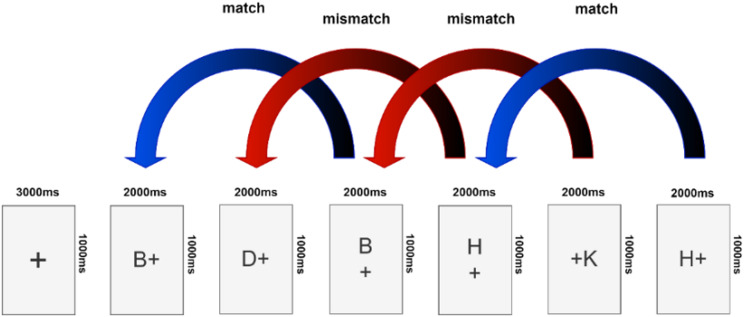
A case‒control study design was employed to enroll 136 university students, and convenience samples were used to collect 5-minute resting EEG data with their eyes closed. Physical activity was evaluated using the Physical Activity Scale-3, depressive symptoms were assessed with the Beck Depression Inventory-II, and the N-back task was used to measure the accuracy rate and reaction time of verbal working memory. Pearson's correlation coefficient was calculated to assess the correlation between the variables, the PROCESS macro in SPSS (Model 4) was applied to analyze the mediating role of verbal working memory in the correlation between physical activity and depressive symptoms, and the bootstrap method was used to calculate the mediating effect.
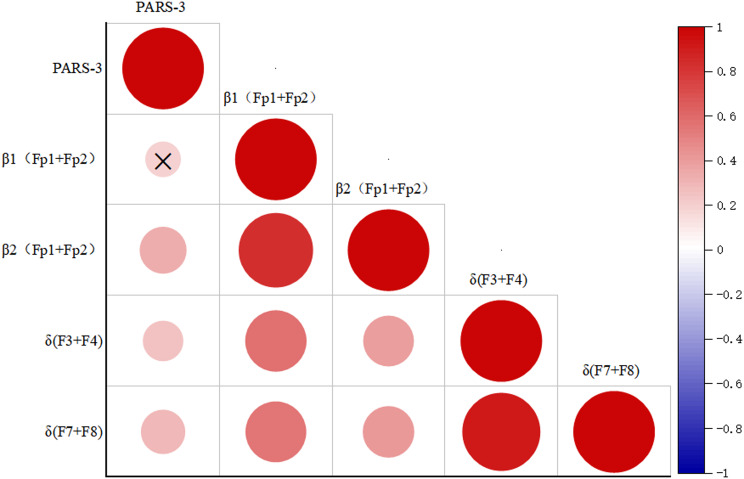
The results showed that the verbal working memory reaction time and physical activity scores of university students with depressive symptoms were significantly different from those of university students without depressive symptoms (P < 0.05), but no difference was found in the accuracy rate of verbal working memory (t = 0.580, P > 0.05). Physical activity was negatively correlated with depressive symptom scores (r=-369, P < 0.05) and with the reaction time of verbal working memory (r=-0.334, P < 0.05). Mediation analyses indicated that the verbal working memory reaction time partially mediated (β = -0.039, 95% CI = -0.096 to -0.001) the correlation between physical activity and depressive symptoms in university students. EEG indicators in the frontal regions of the brain, including beta2 power values for (FP1, FP2) and delta power values for (F3, F4) and (F7, F8), were negatively correlated with depressive symptom scores and verbal working memory reaction time and positively correlated with the level of physical activity (P < 0.05).
Differences in physical activity and VWM reaction time between university students with depressive symptoms and those without depressive symptoms. Three variables, depressive symptom scores, VWM, and physical activity, had mutually related EEG indicators, which may provide a useful addition to the clinical identification and targeting of interventions in the population with depressive symptoms. Verbal working memory partially mediated the relationship between physical activity and depressive symptoms, but the mediating path coefficient accounted for a low percentage.
Not applicable.

抑郁症状在大学生中普遍存在,且与言语工作记忆密切相关。越来越多的证据表明,体育活动可通过多种机制减轻抑郁症状。本研究的目的是探讨大学生抑郁症状、言语工作记忆和体育活动之间的相关性,并探索这些因素与脑电图指标之间的潜在相关性。
采用病例对照研究设计,招募136名大学生,采用便利抽样法收集他们闭眼休息5分钟的脑电图数据。使用《体育活动量表-3》评估体育活动,用《贝克抑郁量表第二版》评估抑郁症状,并用n-back任务测量言语工作记忆的准确率和反应时间。计算Pearson相关系数以评估变量之间的相关性,应用SPSS中的PROCESS宏(模型4)分析言语工作记忆在体育活动与抑郁症状相关性中的中介作用,并用Bootstrap法计算中介效应。
结果显示,有抑郁症状的大学生的言语工作记忆反应时间和体育活动得分与无抑郁症状的大学生有显著差异(P<0.05),但言语工作记忆的准确率无差异(t=0.580,P>0.05)。体育活动与抑郁症状得分呈负相关(r=-0.369,P<0.05),与言语工作记忆的反应时间呈负相关(r=-0.334,P<0.05)。中介分析表明,言语工作记忆反应时间部分中介了(β=-0.039,95%CI=-0.096至-0.001)大学生体育活动与抑郁症状之间的相关性。大脑额叶区域的脑电图指标,包括(FP1、FP2)的β2功率值以及(F3、F4)和(F7、F8)的δ功率值,与抑郁症状得分和言语工作记忆反应时间呈负相关,与体育活动水平呈正相关(P<0.05)。
有抑郁症状的大学生与无抑郁症状的大学生在体育活动和言语工作记忆反应时间上存在差异。抑郁症状得分、言语工作记忆和体育活动这三个变量具有相互关联的脑电图指标,这可能为抑郁症状人群的临床识别和干预靶向提供有益补充。言语工作记忆部分中介了体育活动与抑郁症状之间的关系,但中介路径系数占比很低。
不适用。