Al-Rasheed Lamees S, Ansari Siddique Akber, Asiri Hanadi H, Bakheit Ahmed H, Al-Mehizia Abdulrahman A, Alsegiani Amsha S, Alkahtani Hamad M
Department of Pharmaceutical Chemistry, College of Pharmacy, King Saud University, P.O. Box 2457, 11451, Riyadh, Saudi Arabia.
Drug Exploration and Development (DEDC), Department of Pharmaceutical Chemistry, College of Pharmacy, King Saud University, 11451, Riyadh, Saudi Arabia.
Saudi Pharm J. 2025 May 23;33(3):12. doi: 10.1007/s44446-025-00010-w.
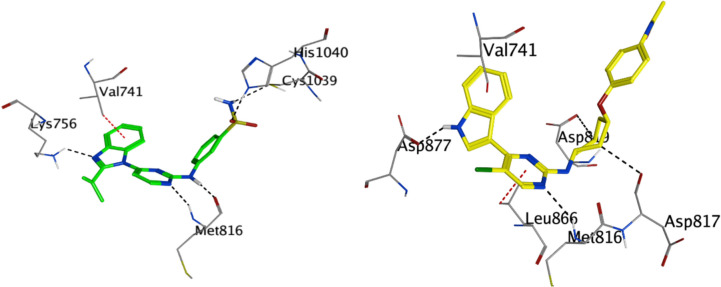
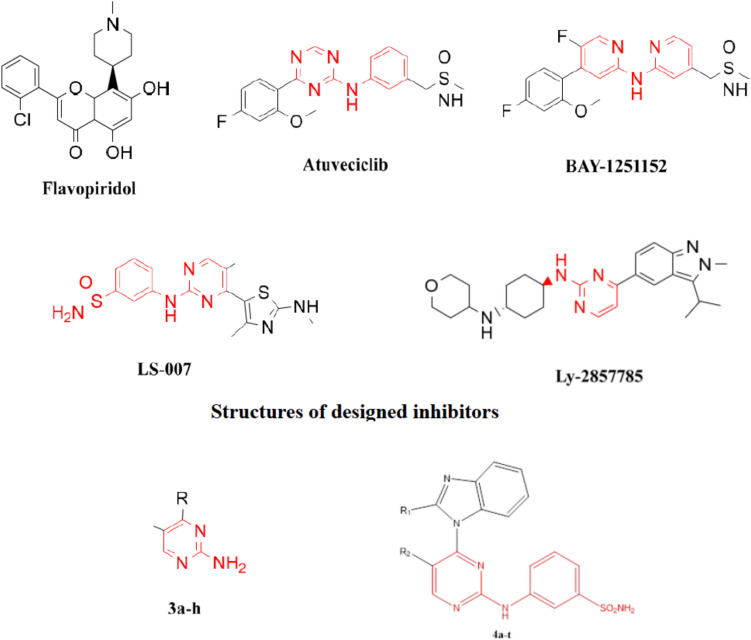
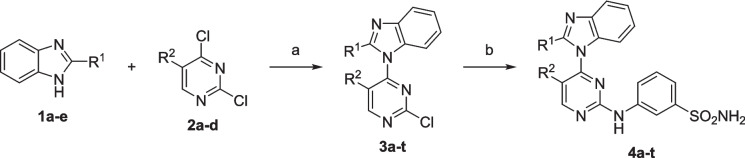
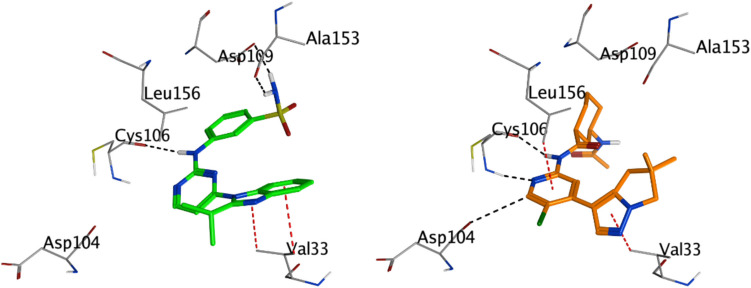
In an attempt to rationalize the search for new potential Chemotherapeutic agents, a new series of 2-anilinobenzimidazol derivatives with CDK activity have been synthesized. The newly synthesized compounds have been assessed for their cytotoxic effects and CDK activity. These presented compounds showed strong inhibition of cell proliferation in various solid cancer cell lines, suggesting a promising approach for treating malignant tumors. Compounds 4 g, 4j, 4 m, and 4q displayed remarkably strong anticancer potencies against HepG2 cells, with IC of 7.59, 8.54, 3.56 and 5.88 µM, respectively, compared to the positive control, DOX (IC = 4.50 µM). while compound 4 m, and 4q had the highest anticancer activity against HeLa cells, with an IC of 6.39 and 9.71 µM, respectively, compared to the positive control DOX (IC = 5.57 µM). On the other hand, comparison of IC values against MCF-7 cells revealed that compounds 4 g, 4 m, and 4q showed significant anticancer potency with IC of 5.08, 2.18 and 8.19 µM, respectively compared to that of the positive control DOX (IC = 4.17 µM). Moreover, compound 4 m and 4q were the most potent CDK9 and CDK12 inhibitors. Furthermore, a molecular docking simulation were performed to explore the ability of compounds 4 m to adopt the common binding pattern of CDK9 and CDK12/T1 inhibitors. In silico ADMET results showed that all compounds have favourable drug-like properties since they met Lipinski's rule of five criteria. Overall, the synthesized anilinopyrimidine derivatives exhibit significant potential as chemotherapeutic agents.
为了使寻找新的潜在化疗药物的研究更加合理,已合成了一系列具有细胞周期蛋白依赖性激酶(CDK)活性的新型2-苯胺基苯并咪唑衍生物。对新合成的化合物进行了细胞毒性作用和CDK活性评估。这些呈现的化合物在各种实体癌细胞系中显示出对细胞增殖的强烈抑制作用,表明这是一种治疗恶性肿瘤的有前景的方法。化合物4g、4j、4m和4q对肝癌细胞(HepG2)显示出非常强的抗癌效力,与阳性对照多柔比星(DOX,IC = 4.50 μM)相比,其IC50分别为7.59、8.54、3.56和5.88 μM。而化合物4m和4q对宫颈癌细胞(HeLa)具有最高的抗癌活性,与阳性对照DOX(IC = 5.57 μM)相比,其IC50分别为6.39和9.71 μM。另一方面,与雌激素受体阳性乳腺癌细胞(MCF-7)的IC50值比较表明,化合物4g、4m和4q显示出显著的抗癌效力,与阳性对照DOX(IC = 4.17 μM)相比,其IC50分别为5.08、2.18和8.19 μM。此外,化合物4m和4q是最有效的CDK9和CDK12抑制剂。此外,进行了分子对接模拟以探索化合物4m采用CDK9和CDK12/T1抑制剂共同结合模式的能力。计算机辅助药物代谢动力学(ADMET)结果表明,所有化合物均符合Lipinski的五规则标准,并具有良好的类药性质。总体而言,合成的苯胺基嘧啶衍生物作为化疗药物具有显著的潜力。