Kelleher Lily A, Anderson Zachary, Stratford Jeffrey A, Fortunato Caroline S
Department of Biology, West Chester University, West Chester, PA, 19383, USA.
Department of Biology, Widener University, Chester, PA, 19013, USA.
Microb Ecol. 2025 May 24;88(1):53. doi: 10.1007/s00248-025-02525-0.
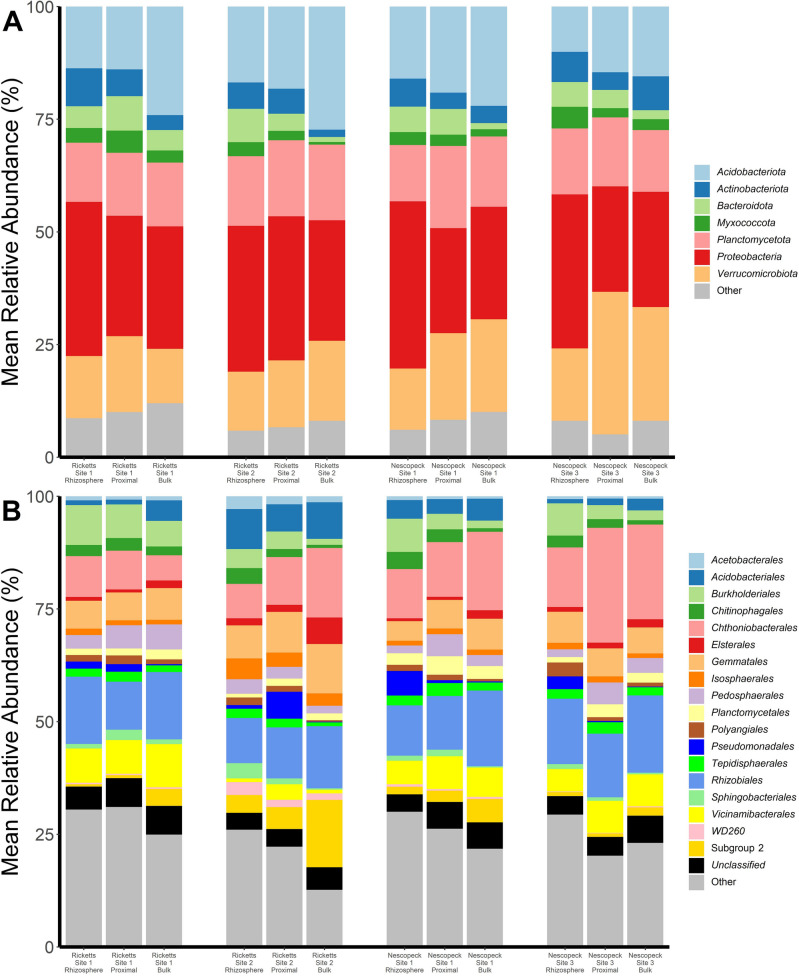
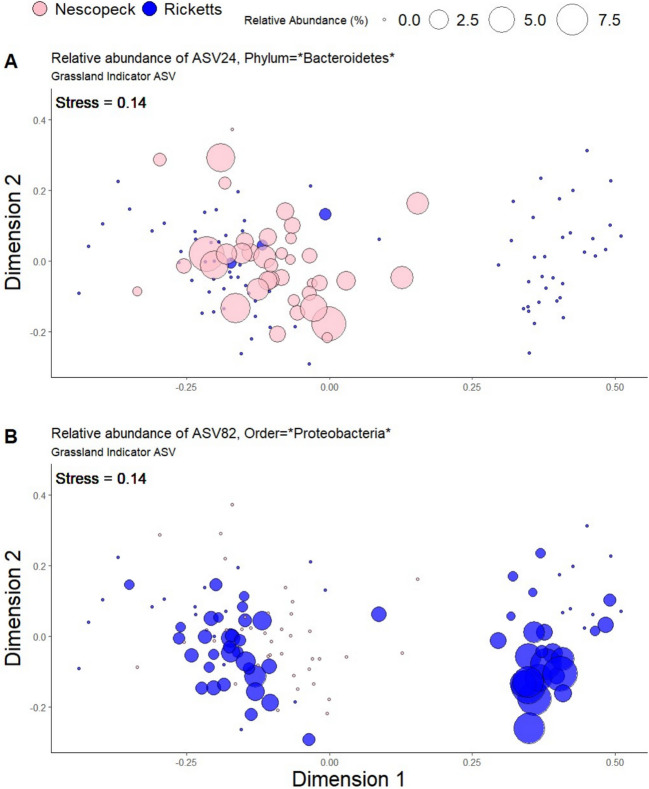
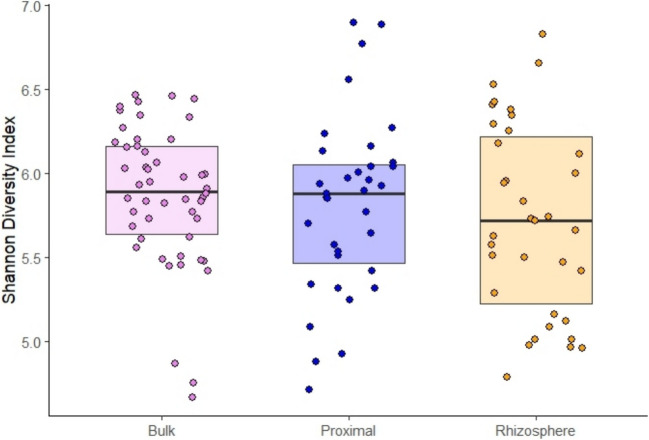
Grasslands are important centers of biodiversity; however, these ecosystems have been in decline. Although many methods for grassland restoration have been developed, the abundant microbial communities in these regions are understudied and could be used to assist in these efforts. In this study, we aimed to understand how microbial communities varied by soil type, grassland site, and environmental conditions. Samples were taken from rhizosphere soil (attached to plant roots), proximal soil (close to the plant roots), and from bulk cores at Ricketts Glen State Park and Nescopeck State Park in northeastern Pennsylvania, USA, during June and August of 2021 and 2022. Rhizosphere soil samples were taken from the native common grassland plant, Solidago rugosa. 16S rRNA gene sequencing revealed that pH as well as soil type (bulk, proximal, or rhizosphere) significantly influenced the microbial community composition of each soil. Each soil type had its own distinct microbial communities, and proximal soil was identified as a transition zone between rhizosphere and bulk microbial communities. We also observed that the rhizosphere communities were dependent upon geography, as these communities were significantly different between grasslands even though the plant species remained the same. Our results highlight the complex nature of soil microbial communities and how many factors, including pH, soil type, and geography, can be overlayed to impact soil microbes. Results suggest future avenues of conservation research through modification and regulation of specific soil microbial communities in order to aid in the rehabilitation of these diminished regions.
草原是重要的生物多样性中心;然而,这些生态系统一直在衰退。尽管已经开发出许多草原恢复方法,但这些地区丰富的微生物群落却未得到充分研究,可用于协助这些工作。在本研究中,我们旨在了解微生物群落如何因土壤类型、草原地点和环境条件而变化。2021年和2022年6月及8月期间,从美国宾夕法尼亚州东北部的里基茨格伦州立公园和内斯科普克州立公园的根际土壤(附着于植物根系)、近端土壤(靠近植物根系)和大块土芯中采集样本。根际土壤样本取自本地常见草原植物皱叶一枝黄花。16S rRNA基因测序表明,pH值以及土壤类型(大块土、近端土壤或根际土壤)显著影响每种土壤的微生物群落组成。每种土壤类型都有其独特的微生物群落,近端土壤被确定为根际和大块土壤微生物群落之间的过渡区。我们还观察到根际群落依赖于地理位置,因为即使植物物种相同,不同草原之间的这些群落也存在显著差异。我们的结果突出了土壤微生物群落的复杂性质,以及包括pH值、土壤类型和地理位置在内的许多因素如何相互叠加影响土壤微生物。结果表明,未来可通过修改和调节特定土壤微生物群落来开展保护研究,以帮助恢复这些退化地区。