Izco Maria, Sola Carlos, Schleef Martin, Schmeer Marco, de Toro María, Verona Guglielmo, Carlos Estefania, Reinares-Sebastian Alejandro, Colina Sandra, Marzo-Sola Maria Eugenia, Garcia-Sanmartin Josune, Fernández-Irigoyen Joaquín, Santamaría Enrique, Mugica-Vidal Rodolfo, Blesa Javier, Alvarez-Erviti Lydia
Laboratory of Molecular Neurobiology, Center for Biomedical Research of La Rioja (CIBIR), 26006, Logroño, Spain.
Transfusion Center and Blood Bank of La Rioja, 26006, Logroño, Spain.
Transl Neurodegener. 2025 May 26;14(1):26. doi: 10.1186/s40035-025-00484-7.
Neurological disorders are the second leading cause of death and the leading cause of disability in the world. Thus, the development of novel disease-modifying strategies is clearly warranted. We have previously developed a therapeutic approach using mouse targeted rabies virus glycoprotein (RVG) extracellular vesicles (EVs) to deliver minicircles (MCs) expressing shRNA (shRNA-MCs) to induce long-term α-synuclein down-regulation. Although the previous therapy successfully reduced the pathology, the clinical translation was extremely unlikely since they were mouse extracellular vesicles.
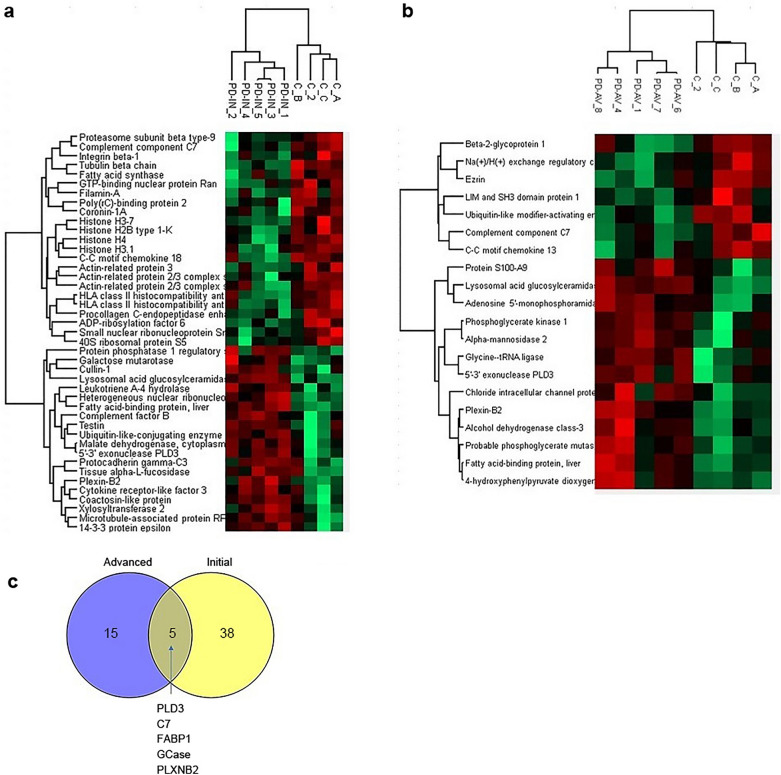
To overcome this limitation, we developed a source of human RVG-EVs compatible with a personalized therapy using immature dendritic cells. Human peripheral blood monocytes were differentiated in vitro into immature dendritic cells, which were transfected to express the RVG peptide. RVG-EVs containing shRNA-MCs, loaded by electroporation, were injected intravenously in the α-synuclein performed fibril (PFF) mouse model. Level of α-synuclein, phosphorylated α-synuclein aggregates, dopaminergic neurons and motor function were evaluated 90 days after the treatment. To confirm that EVs derived from patients were suitable as a vehicle, proteomic analysis of EVs derived from control, initial and advanced Parkinson's disease was performed.
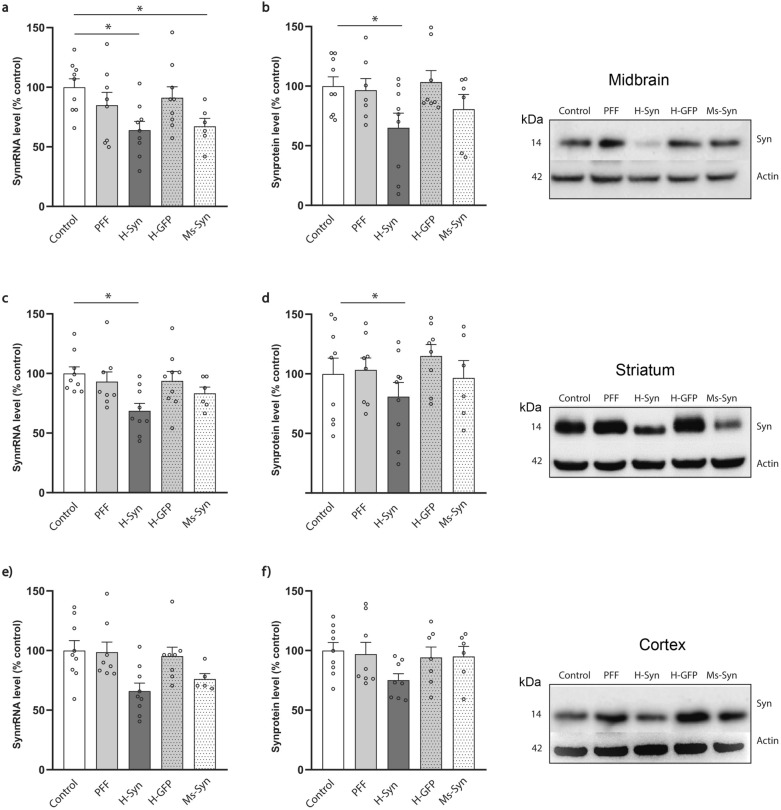
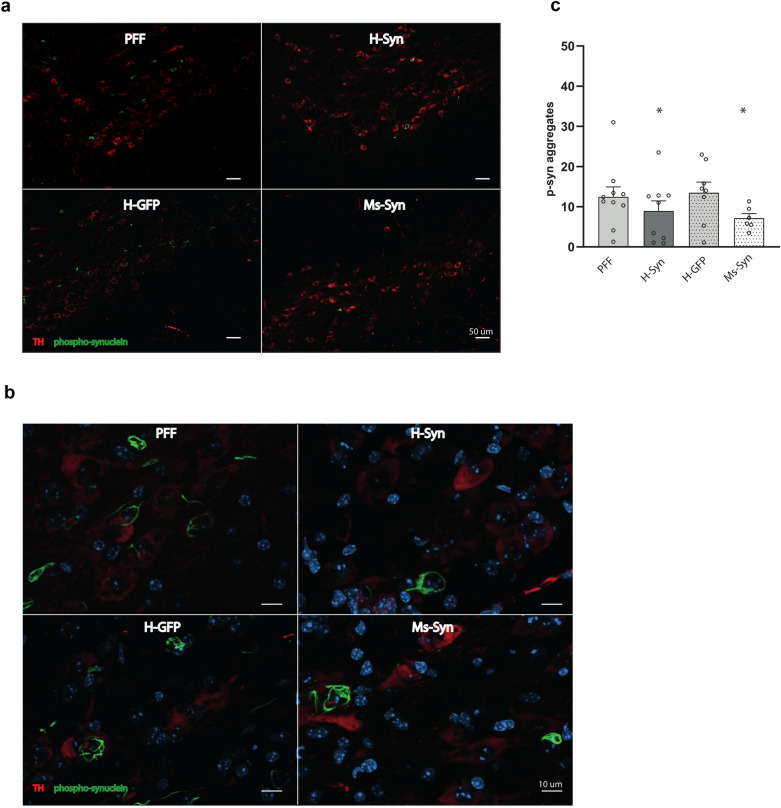
The shRNA-MCs could be successfully loaded into human RVG-EVs and downregulate α-synuclein in SH-SY5Y cells. Intravenous injection of the shRNA-MC-loaded RVG-EVs induced long-term downregulation of α-synuclein mRNA expression and protein level, decreased α-synuclein aggregates, prevented dopaminergic cell death and ameliorated motor impairment in the α-synuclein PFF mouse model. Moreover, we confirmed that the EVs from PD patients are suitable as a personalized therapeutic vehicle.
Our study confirmed the therapeutic potential of shRNA-MCs delivered by human RVG-EVs for long-term treatment of neurodegenerative diseases. These results pave the way for clinical use of this approach.
神经疾病是全球第二大死亡原因和致残的首要原因。因此,开发新的疾病改善策略显然是必要的。我们之前开发了一种治疗方法,利用小鼠靶向狂犬病病毒糖蛋白(RVG)细胞外囊泡(EVs)来递送表达短发夹RNA(shRNA)的微小环(MCs)(shRNA-MCs),以诱导α-突触核蛋白的长期下调。尽管之前的治疗成功减轻了病理症状,但由于它们是小鼠细胞外囊泡,临床转化极不可能实现。
为克服这一限制,我们开发了一种与使用未成熟树突状细胞的个性化治疗兼容的人RVG-EVs来源。人外周血单核细胞在体外分化为未成熟树突状细胞,将其转染以表达RVG肽。通过电穿孔加载含有shRNA-MCs的RVG-EVs,静脉注射到α-突触核蛋白原纤维(PFF)小鼠模型中。在治疗90天后评估α-突触核蛋白水平、磷酸化α-突触核蛋白聚集体、多巴胺能神经元和运动功能。为确认源自患者的EVs适合作为载体,对源自对照、早期和晚期帕金森病患者的EVs进行了蛋白质组学分析。
shRNA-MCs能够成功加载到人RVG-EVs中,并下调SH-SY5Y细胞中的α-突触核蛋白。静脉注射加载了shRNA-MC的RVG-EVs可诱导α-突触核蛋白mRNA表达和蛋白水平的长期下调,减少α-突触核蛋白聚集体,防止多巴胺能细胞死亡,并改善α-突触核蛋白PFF小鼠模型中的运动障碍。此外,我们证实来自帕金森病患者的EVs适合作为个性化治疗载体。
我们的研究证实了人RVG-EVs递送的shRNA-MCs对神经退行性疾病长期治疗的治疗潜力。这些结果为该方法的临床应用铺平了道路。