Russell Lene, Puxty Kathryn, Azoulay Elie, McPeake Joanne, Kentish-Barnes Nancy
Department of Intensive Care Medicine, Copenhagen University Hospital-Gentofte, Hellerup, Denmark.
Department of Clinical Medicine, University of Copenhagen, Copenhagen, Denmark.
Transfusion. 2025 Jul;65(7):1231-1241. doi: 10.1111/trf.18290. Epub 2025 May 27.
Platelet transfusions are frequently used in the Intensive Care Unit (ICU) as prophylaxis against bleeding complications. Several guidelines exist on when to administer platelet transfusions in the ICU, but studies indicate that these guidelines are not necessarily followed. The aim of this qualitative study was to understand how experienced ICU physicians make decisions on prescribing prophylactic platelet transfusions and to gain insight into their general concerns and views on blood product transfusions.
Descriptive qualitative study using semi-structured, in-depth interviews with clinicians working in ICUs in Austria, Denmark, France, Germany, Spain, and the United Kingdom. The interviews were recorded, transcribed verbatim, and analyzed using thematic analysis.
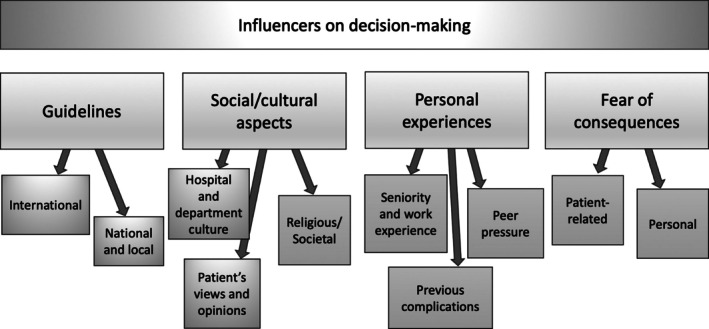
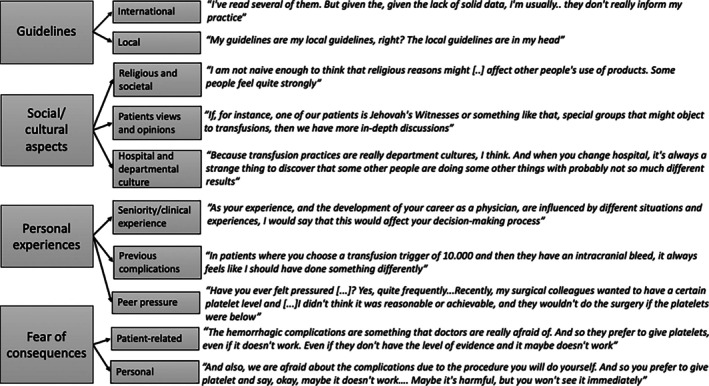
We identified four main themes influencing the decision to prescribe prophylactic platelet transfusions: Guidelines, social and cultural aspects (including religion), previous personal experiences, and fear of consequences.
Most doctors expressed uncertainty about balancing benefits and harm. Platelet transfusions were often used to prevent bleeding despite uncertainty on the effect and were typically triggered by fear of consequences when performing a procedure, which was an important driver. The departmental culture and colleagues' attitudes were far more important influencers on decision-making than guideline recommendations. Most doctors thought it was possible for blood products to transfer unknown and potentially harmful substances to patients, although this did not appear to influence their daily practice.
血小板输注在重症监护病房(ICU)中经常用于预防出血并发症。关于何时在ICU中进行血小板输注有若干指南,但研究表明这些指南不一定得到遵循。这项定性研究的目的是了解经验丰富的ICU医生如何做出预防性血小板输注的处方决策,并深入了解他们对血液制品输注的总体关注和看法。
采用描述性定性研究,对奥地利、丹麦、法国、德国、西班牙和英国ICU的临床医生进行半结构化深度访谈。访谈进行录音、逐字转录,并采用主题分析法进行分析。
我们确定了影响预防性血小板输注处方决策的四个主要主题:指南、社会和文化方面(包括宗教)、既往个人经历以及对后果的恐惧。
大多数医生表示在权衡利弊方面存在不确定性。尽管对效果存在不确定性,但血小板输注仍经常用于预防出血,并且通常是由进行某项操作时对后果的恐惧引发的,这是一个重要驱动因素。部门文化和同事的态度对决策的影响远比指南建议重要。大多数医生认为血液制品有可能将未知且潜在有害的物质传递给患者,尽管这似乎并未影响他们的日常实践。