Molla Adane S, Tang Waiching, Sher Willy, Bahar Md Mezbaul, Bekele Dawit Nega
School of Architecture and Built Environment, University of Newcastle, University Dr, Callaghan, NSW 2308, Australia.
Global Centre for Environmental Remediation, University of Newcastle, Callaghan, NSW 2308, Australia.
Toxics. 2025 May 2;13(5):370. doi: 10.3390/toxics13050370.
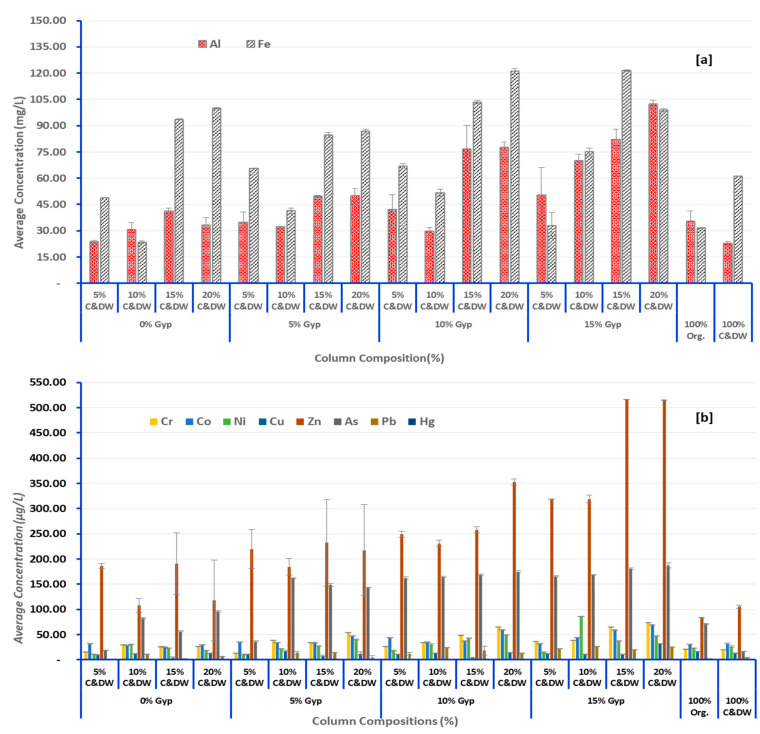
The rapid increase in construction and demolition waste (C&DW) has emerged as a significant environmental challenge, particularly due to the hazardous substances embodied within the fine residues destined into landfills. The disposal of C&DW in landfills has been widely recognized as a source of leachate, containing toxic contaminants, which pose significant environmental risks. A controlled column leaching experiment was conducted using samples with varying proportions of C&DW, gypsum, and organic content to assess their impact on leachate chemistry. The results indicate that higher C&DW content leads to increased concentrations of heavy metals, such as Pb, Hg, As, Cr, Ni, Cu, Zn, and Co, as well as other metals like Al and Fe, with peak contamination occurring within the first 13-15 weeks. Gypsum presence exacerbates heavy metal solubility by reducing pH, increasing sulfate levels, and promoting metal-sulfate complex formation. Despite remaining within regulatory thresholds, the cumulative concentration of toxic metals over time highlights potential environmental risks, particularly in landfill settings. This study underscores the need for improved C&DW management practices, enhanced waste segregation, and sustainable alternatives to gypsum to mitigate long-term ecological impacts. These findings contribute to a deeper understanding of C&DW leachate dynamics and inform policy recommendations for sustainable waste management in the construction sector.
建筑与拆除废物(C&DW)的迅速增加已成为一项重大的环境挑战,特别是因为进入填埋场的细颗粒残留物中所含的有害物质。在填埋场处置建筑与拆除废物已被广泛认为是渗滤液的一个来源,渗滤液含有有毒污染物,会带来重大的环境风险。使用具有不同比例的建筑与拆除废物、石膏和有机成分的样品进行了一项受控柱淋滤实验,以评估它们对渗滤液化学性质的影响。结果表明,较高的建筑与拆除废物含量会导致重金属浓度增加,如铅、汞、砷、铬、镍、铜、锌和钴,以及其他金属如铝和铁,在最初的13 - 15周内出现污染峰值。石膏的存在通过降低pH值、增加硫酸盐水平和促进金属 - 硫酸盐络合物的形成,加剧了重金属的溶解度。尽管仍在监管阈值范围内,但有毒金属的累积浓度随时间推移凸显了潜在的环境风险,特别是在填埋场环境中。本研究强调需要改进建筑与拆除废物管理做法、加强废物分类以及寻找石膏的可持续替代品,以减轻长期的生态影响。这些发现有助于更深入地了解建筑与拆除废物渗滤液动态,并为建筑部门可持续废物管理的政策建议提供依据。