Binder Natalie K, de Alwis Natasha, Beard Sally, Fato Bianca R, Garg Anjali, Baird Lydia, Young Morag J, Hannan Natalie J
Therapeutics Discovery and Vascular Function in Pregnancy Group, Department of Obstetrics and Gynaecology, The University of Melbourne and Mercy Hospital for Women, Heidelberg, VIC, 3084, Australia.
Cardiovascular Endocrinology Laboratory, Baker Heart and Diabetes Institute, Prahran, VIC, 3181, Australia.
Sci Rep. 2025 May 27;15(1):18455. doi: 10.1038/s41598-025-02475-0.
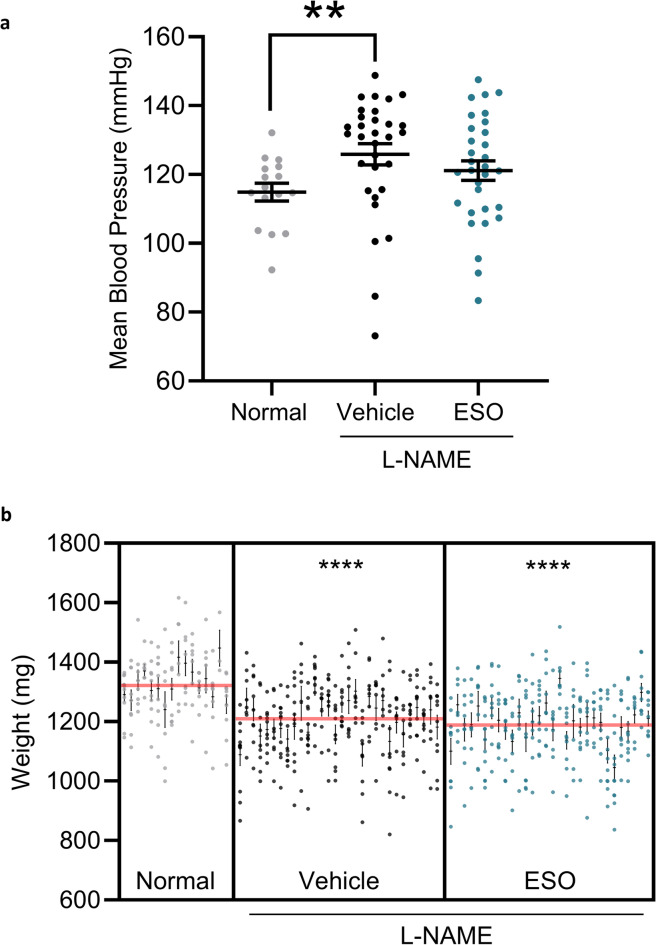
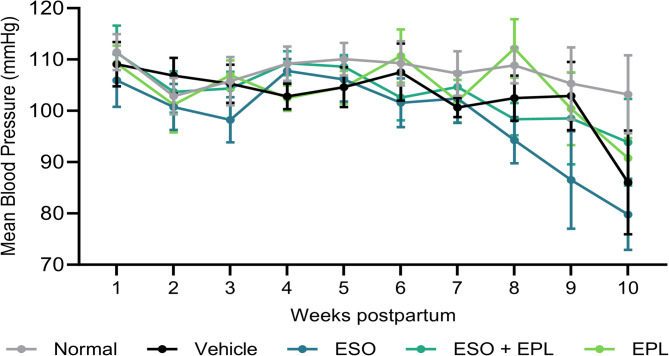
Preeclampsia is a severe pregnancy complication associated with substantial injury to systemic vasculature, major organs, and the feto-placental unit, with an approximate mortality rate of 76,000 pregnant women and 500,000 babies each year. Preeclampsia results in up to five-fold increased risk of cardiovascular disease. There is currently no cure and limited treatment options for preeclampsia and its long-term effects. In this study, we modelled preeclampsia in the mouse via nitric oxide blockade and examined the effect of therapeutic intervention during pregnancy (esomeprazole) and postpartum (eplerenone) on indices of cardiovascular health. Pregnant CBA x C57BL/6 mice received 50 mg/kg/day N(ω)-nitro-L-arginine methyl ester to induce a preeclampsia-like phenotype. Mice were treated with either 12.5 mg/kg/day esomeprazole during pregnancy, 55.5 mg/kg/day eplerenone during the postpartum period, or both esomeprazole and eplerenone in sequence. Mice were hypertensive during pregnancy, fetal growth was restricted by 10%, and maternal vasoactivity was impaired at 5-weeks postpartum. Eplerenone treatment (± esomeprazole) reduced vasoconstriction at 5-weeks postpartum and enhanced vasorelaxation at 5- and 10-weeks postpartum, supporting improved cardiovascular indices in the medium to long term postpartum period. Postpartum eplerenone treatment may be beneficial in mitigating consequent cardiovascular disease risk following a pregnancy complicated by preeclampsia.
子痫前期是一种严重的妊娠并发症,会对全身血管系统、主要器官和胎儿 - 胎盘单位造成严重损害,每年约有76000名孕妇和500000名婴儿因此死亡。子痫前期会使心血管疾病的风险增加多达五倍。目前,子痫前期及其长期影响尚无治愈方法,治疗选择也有限。在本研究中,我们通过一氧化氮阻断在小鼠中模拟子痫前期,并研究了孕期(埃索美拉唑)和产后(依普利酮)治疗干预对心血管健康指标的影响。怀孕的CBA×C57BL/6小鼠每天接受50毫克/千克的N(ω)-硝基-L-精氨酸甲酯以诱导子痫前期样表型。小鼠在孕期接受每天12.5毫克/千克的埃索美拉唑治疗,产后接受每天55.5毫克/千克的依普利酮治疗,或依次接受埃索美拉唑和依普利酮治疗。小鼠在孕期出现高血压,胎儿生长受限10%,产后5周母体血管活性受损。依普利酮治疗(±埃索美拉唑)在产后5周时减少了血管收缩,并在产后5周和10周时增强了血管舒张,这支持了产后中长期心血管指标的改善。产后依普利酮治疗可能有助于减轻子痫前期并发症妊娠后随之而来的心血管疾病风险。