García-Pérez Laura, Padial-Ruz Rosario, Cepero-González Mar, Ubago-Jiménez José Luis
Department of Didactics of Corporal Expression, Faculty of Education, University of Granada, 18071 Granada, Spain.
Healthcare (Basel). 2025 May 20;13(10):1197. doi: 10.3390/healthcare13101197.
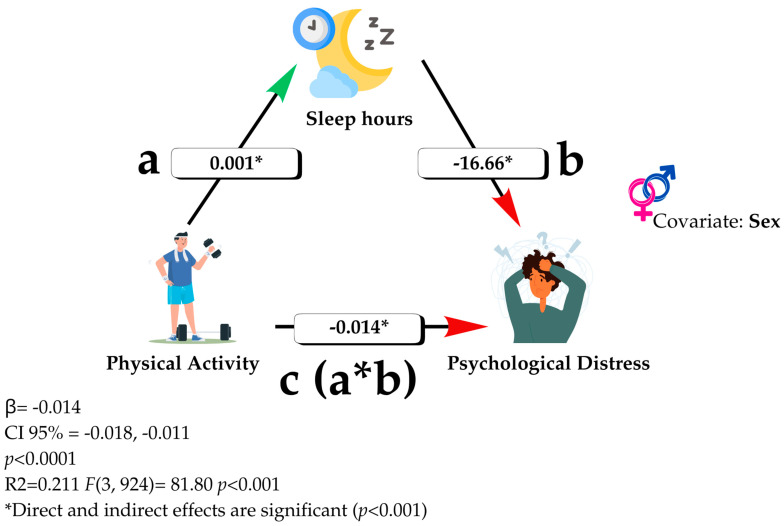
: This study explored the influence of three key lifestyle habits-physical activity (PA), adherence to the Mediterranean diet (MD), and sleep duration-on psychological well-being indicators (resilience, psychological distress, and self-esteem) in university students. : A total of 928 students (67.3% females; total sample mean age = 21.01 ± 1.95) from the Faculty of Education at the University of Granada participated. Validated self-report instruments were used to assess all variables: the International Physical Activity Questionnaire (IPAQ-SF), the KIDMED index, the Connor-Davidson Resilience Scale (CD-RISC), the Depression Anxiety Stress Scales (DASS-21), and the Rosenberg Self-Esteem Scale. : Results showed that male students reported higher levels of PA, better MD adherence, longer sleep duration, and more favorable psychological outcomes. Stepwise regression analyses indicated that MD adherence was the strongest and most consistent predictor of resilience, self-esteem, and psychological distress. Sleep duration emerged as a key factor, particularly in predicting resilience among men. Although no direct association was found between PA and psychological distress, mediation analysis revealed a significant indirect effect through sleep duration. : These findings underscore the relevance of promoting healthy lifestyle habits in an integrated and sex-sensitive manner to enhance mental health (MH) in university students. In particular, targeting future teachers may be essential, given their potential role as promoters of well-being in school settings.
本研究探讨了三种关键生活方式习惯——体育活动(PA)、坚持地中海饮食(MD)和睡眠时间——对大学生心理健康指标(心理韧性、心理困扰和自尊)的影响。
来自格拉纳达大学教育学院的928名学生参与了研究(67.3%为女性;总样本平均年龄 = 21.01 ± 1.95)。使用经过验证的自我报告工具评估所有变量:国际体育活动问卷(IPAQ-SF)、儿童地中海饮食依从性指数(KIDMED)、康纳-戴维森心理韧性量表(CD-RISC)、抑郁焦虑压力量表(DASS-21)和罗森伯格自尊量表。
结果显示,男学生报告的体育活动水平更高、对地中海饮食的依从性更好、睡眠时间更长,且心理结果更有利。逐步回归分析表明,坚持地中海饮食是心理韧性、自尊和心理困扰最强且最一致的预测因素。睡眠时间成为一个关键因素,尤其是在预测男性的心理韧性方面。虽然未发现体育活动与心理困扰之间存在直接关联,但中介分析揭示了通过睡眠时间产生的显著间接效应。
这些发现强调了以综合且性别敏感的方式促进健康生活方式习惯对增强大学生心理健康(MH)的相关性。特别是,鉴于未来教师在学校环境中作为幸福促进者的潜在作用,针对他们可能至关重要。