Tinelli Andrea, Morciano Andrea, Sparic Radmila, Hatirnaz Safak, Malgieri Lorenzo E, Malvasi Antonio, D'Amato Antonio, Baldini Giorgio Maria, Pecorella Giovanni
Department of Obstetrics and Gynecology, CERICSAL [CEntro di RIcerca Clinico SALentino], Veris delli Ponti Hospital, 73020 Scorrano, Lecce, Italy.
Department of Obstetrics and Gynecology, Cardinal Panico Hospital, 73039 Tricase, Lecce, Italy.
J Clin Med. 2025 May 15;14(10):3454. doi: 10.3390/jcm14103454.
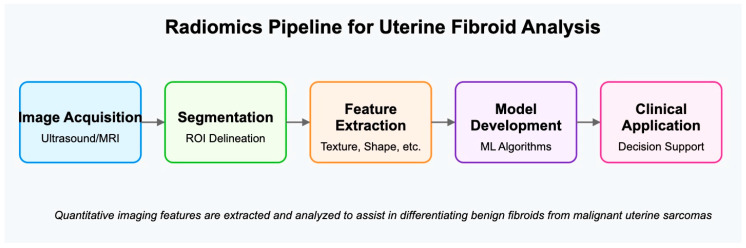
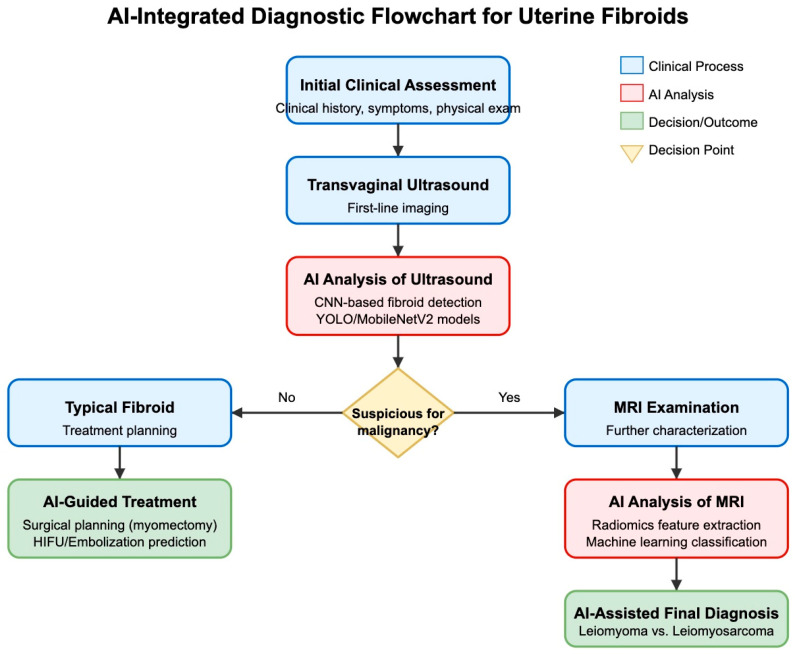
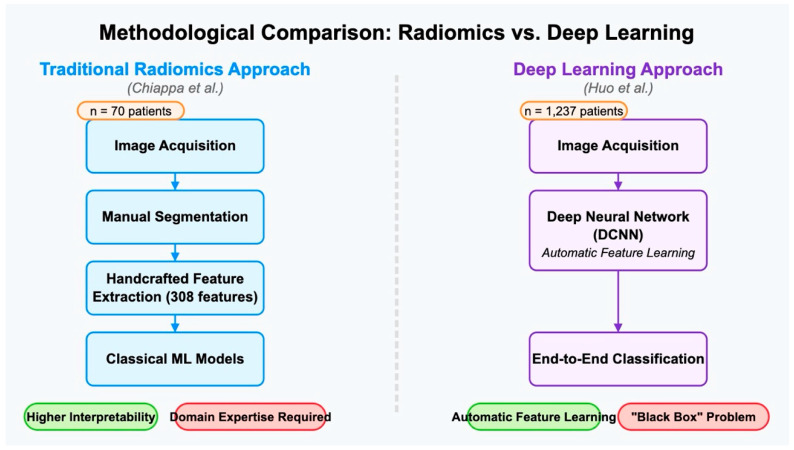
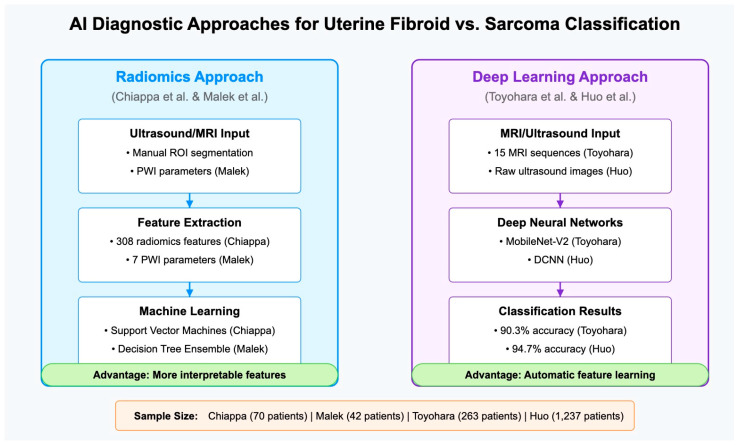
This manuscript examines the role of artificial intelligence (AI) in the diagnosis and treatment of uterine fibroids and uterine sarcomas, offering a comprehensive assessment of AI-supported diagnostic and therapeutic techniques. Through the use of radiomics, machine learning, and deep neural network models, AI shows promise in identifying benign and malignant uterine lesions, directing therapeutic decisions, and improving diagnostic accuracy. It also demonstrates significant capabilities in the timely detection of fibroids. Additionally, AI improves surgical precision, real-time structure detection, and patient outcomes by transforming surgical techniques such as myomectomy, robot-assisted laparoscopic surgery, and High-Intensity Focused Ultrasound (HIFU) ablation. By helping to forecast treatment outcomes and monitor progress during procedures like uterine fibroid embolization, AI also offers a fresh and fascinating perspective for improving the clinical management of these conditions. This review critically assesses the current literature, identifies the advantages and limitations of various AI approaches, and provides future directions for research and clinical implementation.
本手稿探讨了人工智能(AI)在子宫肌瘤和子宫肉瘤诊断与治疗中的作用,对人工智能支持的诊断和治疗技术进行了全面评估。通过使用放射组学、机器学习和深度神经网络模型,人工智能在识别子宫良性和恶性病变、指导治疗决策以及提高诊断准确性方面显示出前景。它在及时检测子宫肌瘤方面也展现出显著能力。此外,人工智能通过变革诸如子宫肌瘤切除术、机器人辅助腹腔镜手术和高强度聚焦超声(HIFU)消融等手术技术,提高了手术精度、实时结构检测能力和患者治疗效果。通过帮助预测子宫纤维瘤栓塞等手术过程中的治疗结果并监测进展情况,人工智能还为改善这些病症的临床管理提供了全新且引人入胜的视角。本综述批判性地评估了当前文献,确定了各种人工智能方法的优缺点,并为研究和临床应用提供了未来方向。