Song Yi-Fan, Wang Hai-Jun, Yan Xin, Xu Zi-Jie, Wang Xin-Jie, Wang Fei, Yu Jia-Kuo
Sports Medicine Department, Beijing Key Laboratory of Sports Injuries Peking University Third Hospital Beijing China.
Institute of Sports Medicine Peking University Beijing China.
J Exp Orthop. 2025 May 27;12(2):e70291. doi: 10.1002/jeo2.70291. eCollection 2025 Apr.
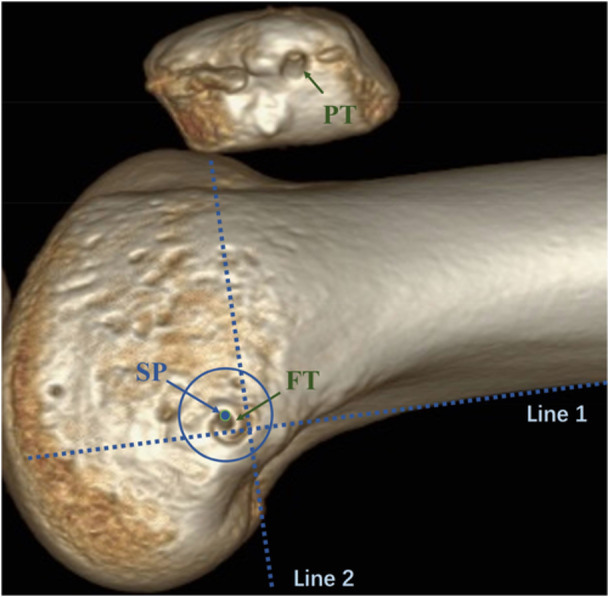
The purpose of this study was to evaluate the accuracy of femoral tunnel location, post-operative pain management, functional rehabilitation and clinical outcomes in medial patellofemoral ligament (MPFL) reconstruction using all-arthroscopic technique.
Between 2020 and 2021, 160 patients with recurrent patellar dislocation undergoing MPFL reconstruction were categorized into control (traditional surgery) and study (all-arthroscopic technique) groups. Femoral tunnel accuracy was assessed via computed tomography scans, pain management, functional rehabilitation, knee range of motion and daily activities were evaluated up to 6 months post-operatively. Knee function was assessed using Kujala and Lysholm scores at post-operative 12 months.
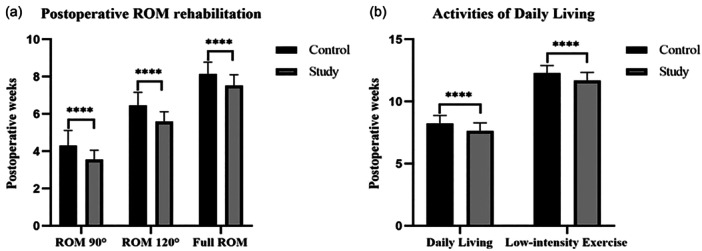
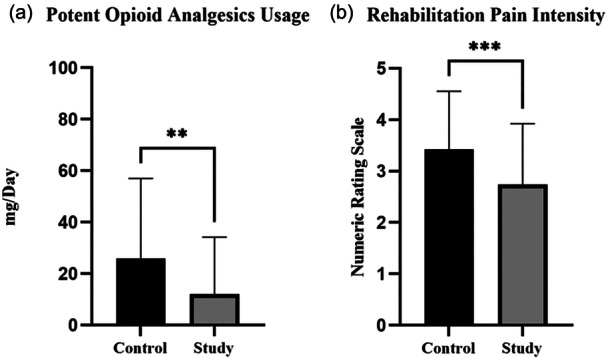
Seventy-one patients in the control group and 69 patients in the study group reached the final follow-up with no demographic differences. Follow-up duration was 12.65 ± 0.68 vs 12.77 ± 0.73 months in the control and study groups ( = 0.3145). The intra-class correlation coefficient was excellent ( = 0.97). In femoral tunnels, 93.5% in the control group and 92.4% in the study group were correctly localized. In patellar tunnels, 96.1% in the control group and 96.2% in the study group were correctly localized ( > 0.9999). Post-operative strong opioid analgesics were used 25.9 ± 31.0 versus 12.0 ± 22.2 mg/day in the control and study groups ( = 0.0016). The pain score was 3.4 ± 1.1 versus 2.7 ± 1.2 in the control and study groups ( = 0.0006) during post-operative functional rehabilitation. Time to resume daily living was 8.2 ± 0.6 versus 7.6 ± 0.6 weeks in the control and study groups ( < 0.0001). Time to resume low-intensity exercise was 12.3 ± 0.6 versus 11.7 ± 0.6 weeks in the control and study groups ( < 0.0001). In the more than 1-year follow-up, no significant difference was found in the Kujala and Lysholm scores.
The all-arthroscopic technique for MPFL reconstruction in recurrent patellar dislocation ensures precise femoral tunnel placement. It offers advantages in early post-operative pain management and functional recovery, enabling faster rehabilitation compared to traditional non-all-arthroscopic techniques.
Level III.
本研究旨在评估采用全关节镜技术进行内侧髌股韧带(MPFL)重建时股骨隧道定位的准确性、术后疼痛管理、功能康复及临床疗效。
2020年至2021年期间,160例复发性髌骨脱位并接受MPFL重建的患者被分为对照组(传统手术)和研究组(全关节镜技术)。通过计算机断层扫描评估股骨隧道的准确性,术后长达6个月评估疼痛管理、功能康复、膝关节活动范围及日常活动情况。术后12个月使用Kujala和Lysholm评分评估膝关节功能。
对照组71例患者和研究组69例患者完成最终随访,两组在人口统计学方面无差异。对照组和研究组的随访时间分别为12.65±0.68个月和12.77±0.73个月(P = 0.3145)。组内相关系数极佳(P = 0.97)。在股骨隧道方面,对照组93.5%定位正确,研究组92.4%定位正确。在髌骨隧道方面,对照组96.1%定位正确,研究组96.2%定位正确(P > 0.9999)。术后对照组和研究组使用强效阿片类镇痛药的剂量分别为25.9±31.0 mg/天和12.0±22.2 mg/天(P = 0.0016)。术后功能康复期间,对照组和研究组的疼痛评分分别为3.4±1.1和2.7±1.2(P = 0.0006)。恢复日常生活的时间,对照组为8.2±0.6周,研究组为7.6±0.6周(P < 0.0001)。恢复低强度运动的时间,对照组为12.3±0.6周,研究组为11.7±0.6周(P < 0.0001)。在1年以上的随访中,Kujala和Lysholm评分无显著差异。
复发性髌骨脱位MPFL重建的全关节镜技术可确保股骨隧道精确放置。与传统非全关节镜技术相比,该技术在术后早期疼痛管理和功能恢复方面具有优势,能实现更快的康复。
三级。