
石墨烯纳米片增强人骨髓间充质干细胞的神经元分化。
Graphene nanoplatelets enhance neuronal differentiation of human bone marrow mesenchymal stem cells.
作者信息
Sevimli Gulsah, Kus Eda, Baran Gulin, Marashian Mahya, Tabatabaei Nasrollah, Mustafaoglu Nur
机构信息
Molecular Biology, Genetics and Bioengineering Program, Faculty of Engineering and Natural Sciences, Sabanci University, Istanbul, Turkey.
Department of Medical Nanotechnology, School of Advanced Technologies in Medicine, Tehran University of Medical Sciences, Tehran, Iran.
出版信息
Biol Res. 2025 May 30;58(1):32. doi: 10.1186/s40659-025-00616-3.
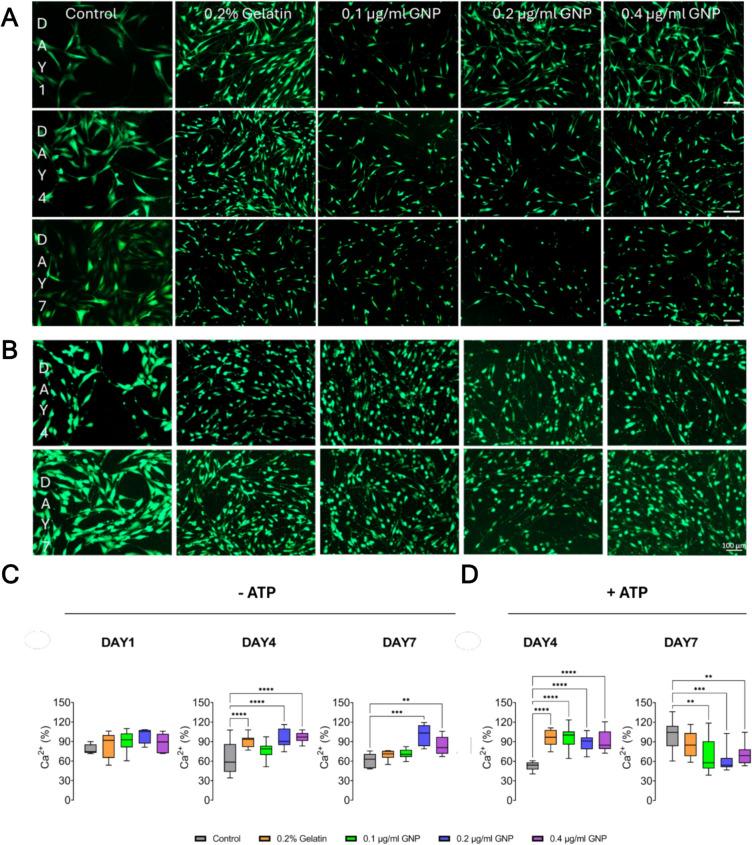
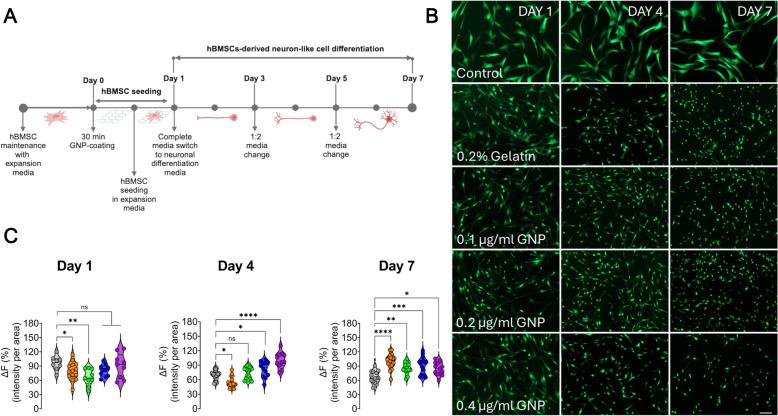
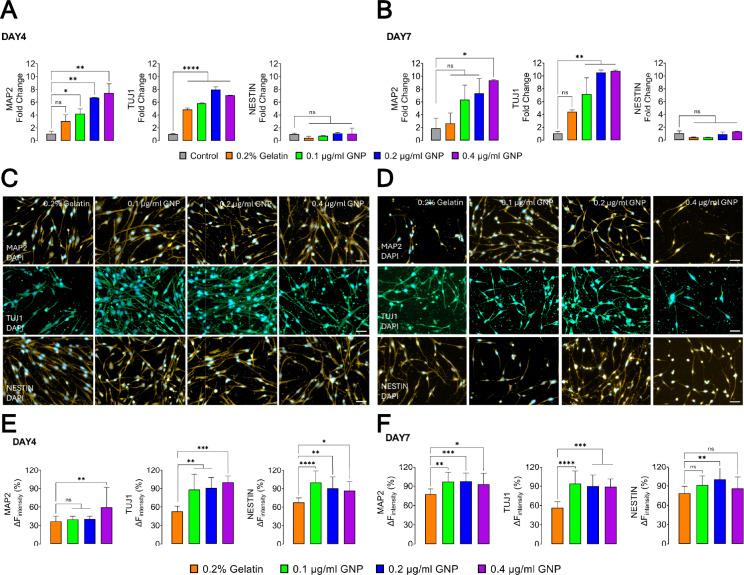
Stem cell technology plays a key role in advancing the understanding of neurological treatments and developing disease models that mimic human conditions. Differentiation of human bone marrow mesenchymal stem cells (hBMSCs) into neurons shows promise for treating neurodegenerative diseases. However, improving the functionality of these nerve cells remains a challenge. Graphene nanoplatelets (GNPs), with their excellent conductivity and biocompatibility, can enhance neuronal differentiation. This study examines the effect of GNPs on hBMSC differentiation. Cells cultured with varying GNP concentrations were assessed at 4 and 7 days using RT-qPCR and immunocytochemistry for neuronal markers MAP2, Nestin, and Tuj1. Results show that GNPs enhance marker expression and promote differentiation. Lower GNP concentrations maintained viability, while higher concentrations were detrimental. Morphological changes and increased fluorescence were observed with a 0.4 µg/ml GNP coating. Calcium imaging with Fluo4-AM indicated increased neuronal activity, underscoring GNPs' role in neuronal maturation. These findings suggest GNPs can drive stem cell differentiation toward neurons, offering new therapeutic potential for neurodegenerative diseases.
干细胞技术在推进神经治疗的理解以及开发模拟人类疾病状况的疾病模型方面发挥着关键作用。人骨髓间充质干细胞(hBMSCs)向神经元的分化显示出治疗神经退行性疾病的潜力。然而,提高这些神经细胞的功能仍然是一项挑战。石墨烯纳米片(GNPs)具有出色的导电性和生物相容性,能够增强神经元分化。本研究考察了GNPs对hBMSC分化的影响。使用RT-qPCR和免疫细胞化学方法,针对神经元标志物MAP2、巢蛋白(Nestin)和Tuj1,在第4天和第7天对用不同浓度GNPs培养的细胞进行评估。结果表明,GNPs可增强标志物表达并促进分化。较低浓度的GNPs能维持细胞活力,而较高浓度则具有损害作用。在0.4μg/ml的GNPs包被下观察到形态学变化和荧光增强。用Fluo4-AM进行钙成像表明神经元活性增加,这突出了GNPs在神经元成熟过程中的作用。这些发现表明,GNPs可推动干细胞向神经元分化,为神经退行性疾病提供了新的治疗潜力。
 Zotero 插件