Camaione S, Pansegrau W, Concetti F, Del Vecchio M, Dello Iacono L, Ferlenghi I, Manetti A G O, Manzi L, Norais N, Pellegrini A, Savino S, Margarit I, Pietrocola G
GSK Vaccines, Siena, Italy.
Department of Molecular Medicine, University of Pavia, Pavia, Italy.
FASEB J. 2025 Jun 15;39(11):e70679. doi: 10.1096/fj.202500086R.
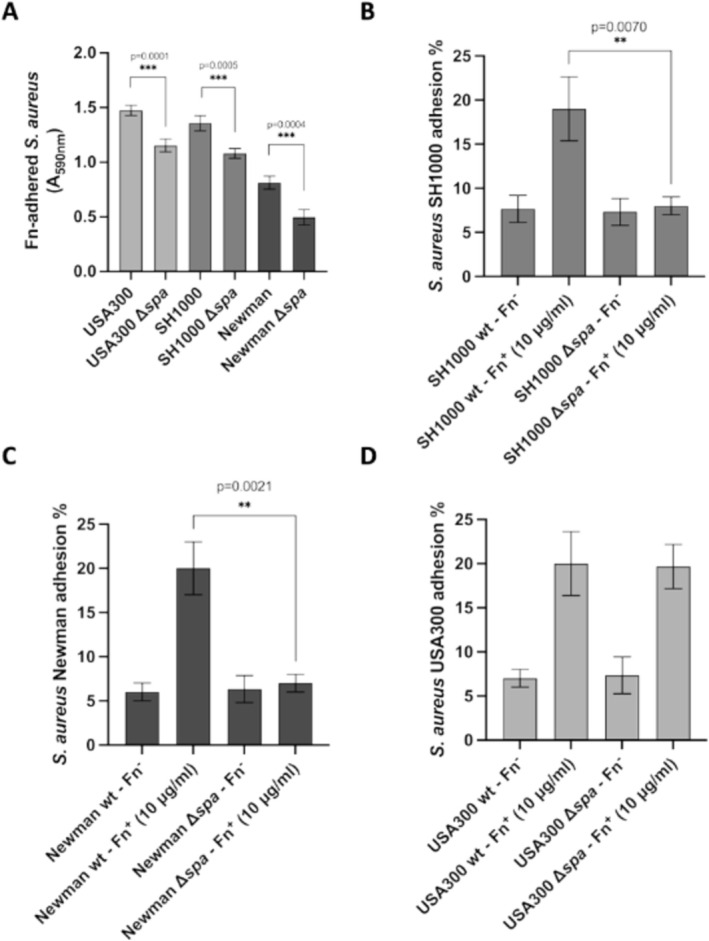
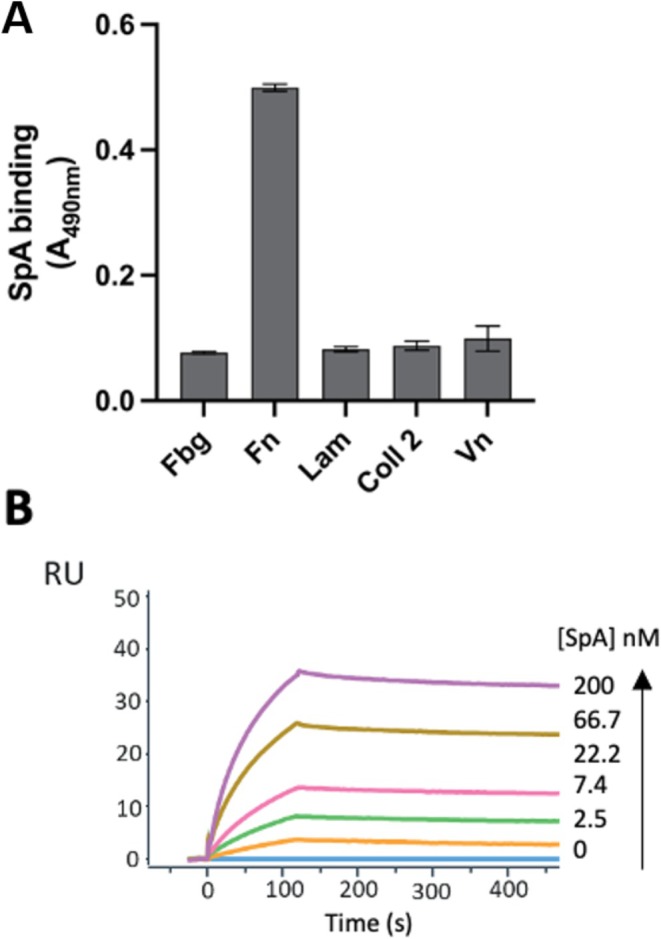
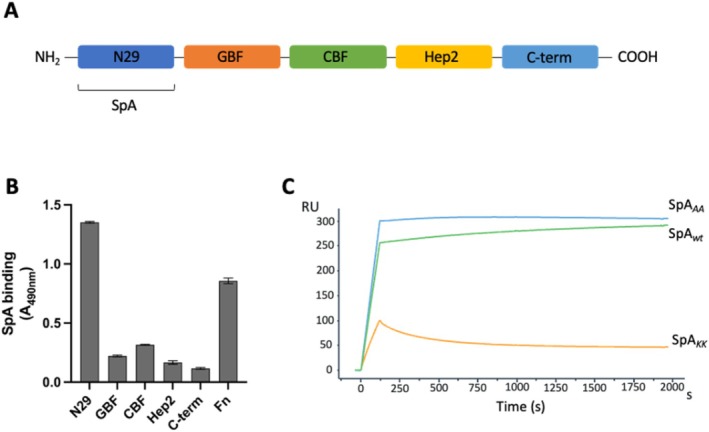
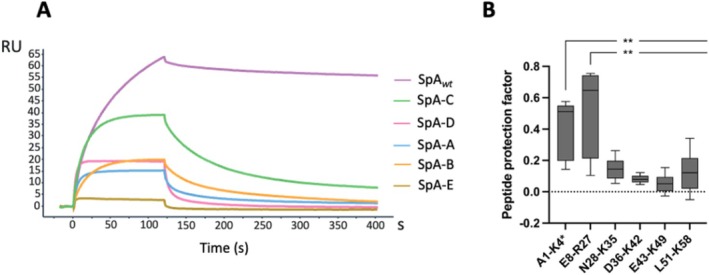
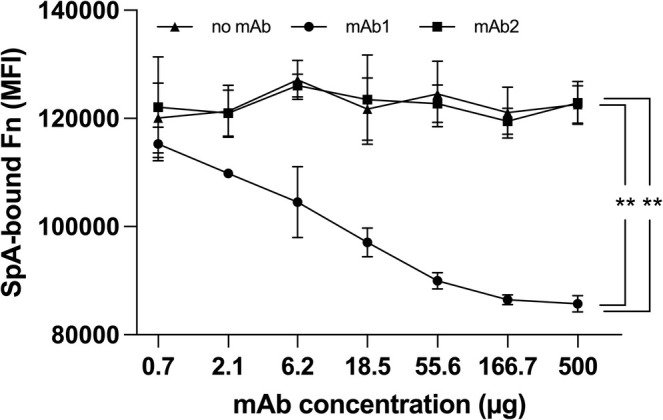
Staphylococcus aureus is the causative agent of serious human health conditions, such as sepsis, endocarditis, and necrotizing pneumonia, as well as less severe clinical manifestations including epithelial and mucosal infections. This pathogen expresses a wide range of surface virulence factors, among which fibronectin-binding proteins play a crucial role in both bacterial adhesion and infection of host cells. Fibronectin is utilized by S. aureus during the early stages of infection to form a protective coating that shields the bacterium from host defenses, facilitating adhesion to the extracellular matrix of host cells and promoting immune evasion and subsequent invasion. S. aureus protein A (SpA) is a key multi-domain cell wall-anchored and secreted molecule that functions to evade the human immune response by non-specifically interacting with Fc and the Fab V3 domains of immunoglobulins. Other known human ligands of SpA include the von Willebrand factor, the tumor necrosis factor receptor 1, and a platelet surface protein, all of which contribute to immune evasion and pathogenesis. The present study reveals that SpA can also bind human fibronectin with high affinity, adding a new function to this already multifunctional virulence factor. We show that the N-terminus of fibronectin is involved in the interaction and demonstrate by carbene footprinting experiments that the SpA fibronectin binding site spans the interdomain linker region and helix 1 of the domains D, A, B, and C, partially overlapping with the Fc binding site. In the presence of fibronectin, SpA knock-out mutant strains showed reduced adhesion to human endothelial cells compared to wild-type bacteria, suggesting that this interaction may play a significant role in the attachment to host tissues by S. aureus.
金黄色葡萄球菌是严重人类健康问题的病原体,如败血症、心内膜炎和坏死性肺炎,以及包括上皮和粘膜感染在内的不太严重的临床表现。这种病原体表达多种表面毒力因子,其中纤连蛋白结合蛋白在细菌粘附和宿主细胞感染中都起着关键作用。在感染的早期阶段,金黄色葡萄球菌利用纤连蛋白形成一层保护涂层,使细菌免受宿主防御,促进其粘附到宿主细胞的细胞外基质,并促进免疫逃逸和随后的入侵。金黄色葡萄球菌蛋白A(SpA)是一种关键的多结构域细胞壁锚定和分泌分子,其功能是通过与免疫球蛋白的Fc和Fab V3结构域非特异性相互作用来逃避人类免疫反应。SpA的其他已知人类配体包括血管性血友病因子、肿瘤坏死因子受体1和一种血小板表面蛋白,所有这些都有助于免疫逃逸和发病机制。本研究表明,SpA还能以高亲和力结合人纤连蛋白,为这种已经具有多种功能的毒力因子增添了一项新功能。我们表明,纤连蛋白的N末端参与了这种相互作用,并通过卡宾足迹实验证明,SpA纤连蛋白结合位点跨越结构域D、A、B和C的结构域间连接区和螺旋1,部分与Fc结合位点重叠。在存在纤连蛋白的情况下,与野生型细菌相比,SpA基因敲除突变株对人内皮细胞的粘附减少,这表明这种相互作用可能在金黄色葡萄球菌对宿主组织的附着中起重要作用。