
纯金属(铁、铬、镍)及合金(A709、SS316)在热纯化和化学纯化的熔融氯化物盐中的腐蚀动力学。
Corrosion kinetics of pure metals (Fe, Cr, Ni) and alloys (A709, SS316) in thermal and chemical purified molten chloride salt.
作者信息
Zhang Mingyang, Leong Amanda, Ren Siheng, Zhang Jinsuo
机构信息
Nuclear Engineering Program, Department of Mechanical Engineering, Virginia Tech Blacksburg VA 24061 USA
出版信息
RSC Adv. 2025 Jun 5;15(24):19013-19022. doi: 10.1039/d5ra00451a. eCollection 2025 Jun 4.
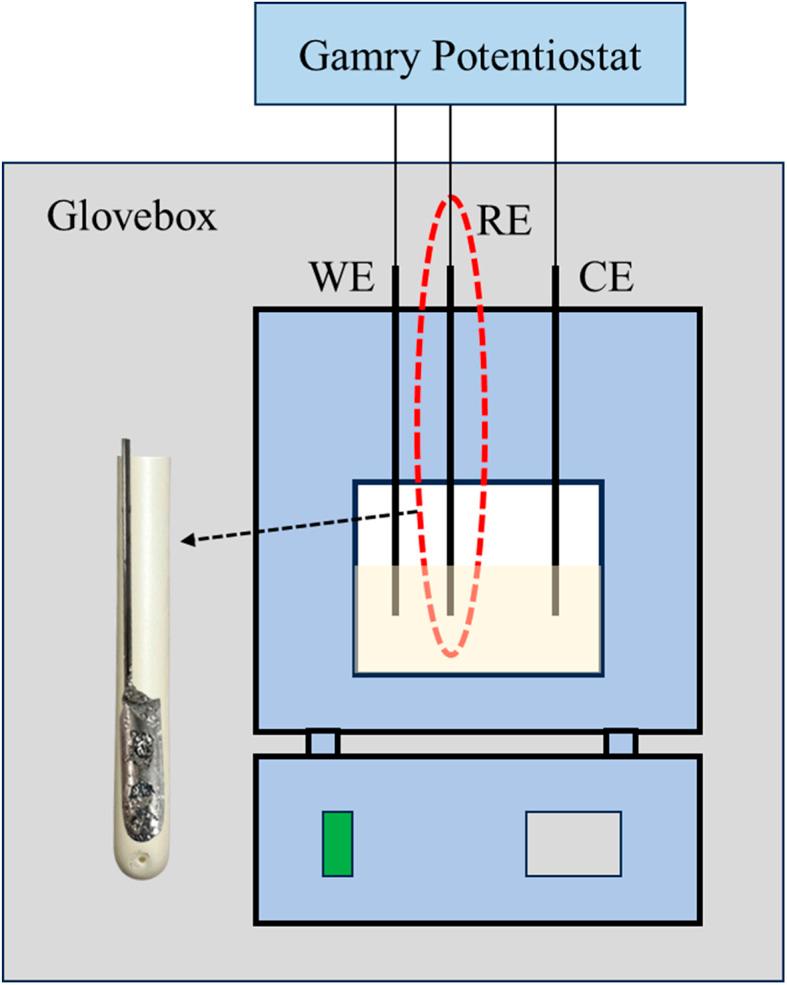
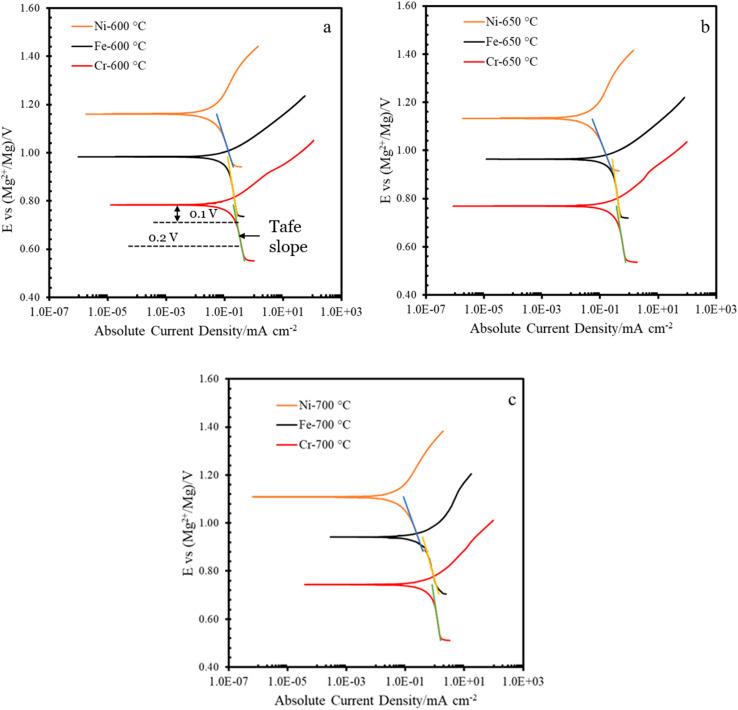
There has been notable research interest in utilizing chloride molten salt as both a heat transfer and thermal energy storage medium in nuclear and solar energy systems. However, a significant concern remains regarding the compatibility of structural materials with chloride molten salt. In this study, electrochemical methods were applied to investigate the corrosion kinetics and mechanisms of pure Ni, Fe, Cr, SS316, and A709 in thermally and chemically purified molten MgCl-KCl-NaCl salt to explore the underlying corrosion mechanisms. It was found that the corrosion of metals and alloys in the salt was governed by the diffusion of corrosive impurities at temperatures of 600, 650, and 700 °C. The corrosion rates of each metal/alloy were determined using Tafel analysis under impurity diffusion-controlled conditions. The results showed that the corrosion resistance hierarchy for pure metals was Ni > Fe > Cr, while for alloys, SS316 demonstrated superior corrosion resistance compared to A709 within the tested temperature range and conditions.
在核能和太阳能系统中,利用氯化物熔盐作为传热和热能存储介质已引起了显著的研究兴趣。然而,结构材料与氯化物熔盐的兼容性仍然是一个重大问题。在本研究中,采用电化学方法研究了纯镍、铁、铬、SS316和A709在热化学净化的MgCl-KCl-NaCl熔盐中的腐蚀动力学和机理,以探索潜在的腐蚀机制。研究发现,在600、650和700℃的温度下,盐中金属和合金的腐蚀受腐蚀性杂质扩散的控制。在杂质扩散控制条件下,使用塔菲尔分析确定了每种金属/合金的腐蚀速率。结果表明,纯金属的耐蚀性等级为Ni>Fe>Cr,而对于合金,在测试温度范围和条件下,SS316的耐蚀性优于A709。





 Zotero 插件