Pang Yanyu, Tian Lei, Liu Yufei, Guo Yifan, Zhao Jingwen, Wang Yutong, Wang Mengdi, Zhao Wenjing
Department of Nephrology, Beijing Hospital of Traditional Chinese Medicine, Capital Medical University, Beijing, China.
Dongfang Hospital, Beijing University of Chinese Medicine, Beijing, China.
Front Endocrinol (Lausanne). 2025 May 23;16:1606326. doi: 10.3389/fendo.2025.1606326. eCollection 2025.
Diabetic kidney disease (DKD) progression is strongly associated with podocyte mitochondrial dysfunction. The clinically effective Chinese herbal Baoshentongluo formula (BSTL) has demonstrated significant proteinuria reduction in DKD patients. HPLC-ESI-MS analysis identified characteristic bioactive components in BSTL including astragalosides, rehmanniosides, and tanshinones. However, the molecular mechanisms through which BSTL maintains podocyte homeostasis remain incompletely understood.
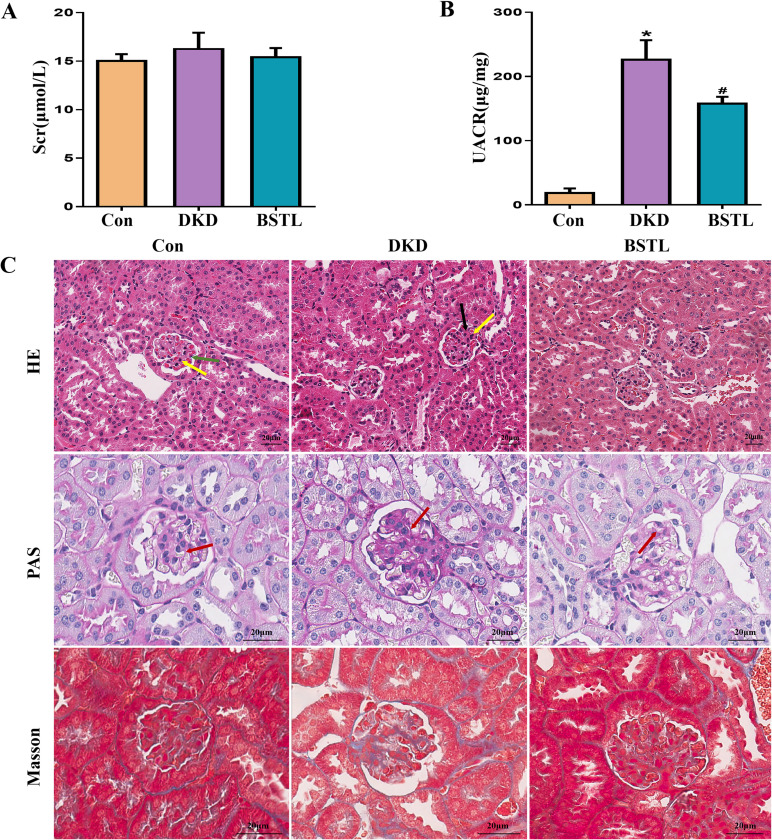
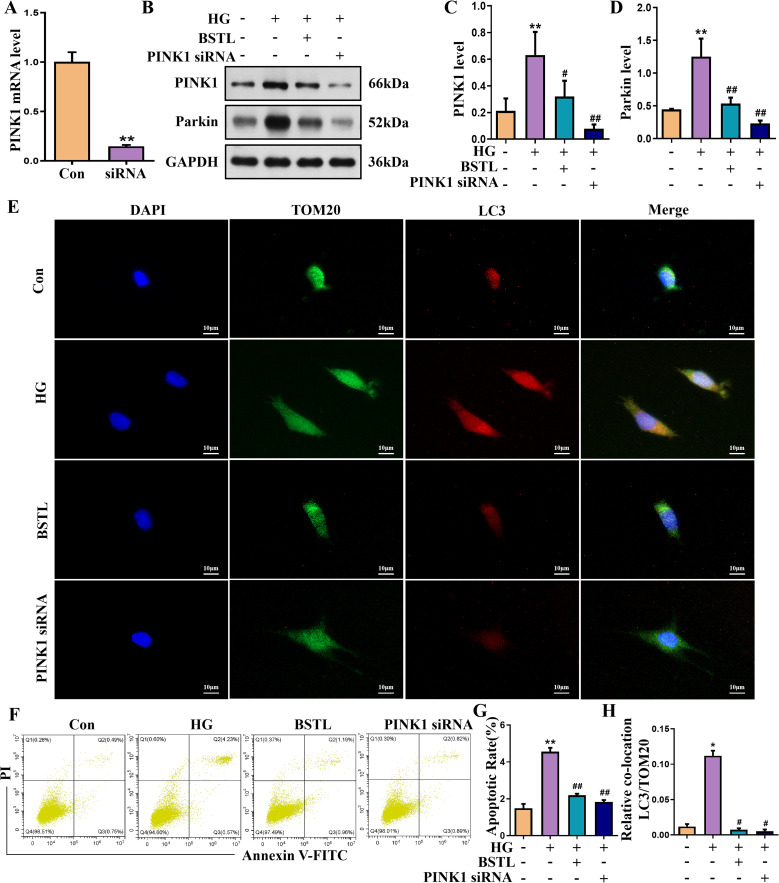
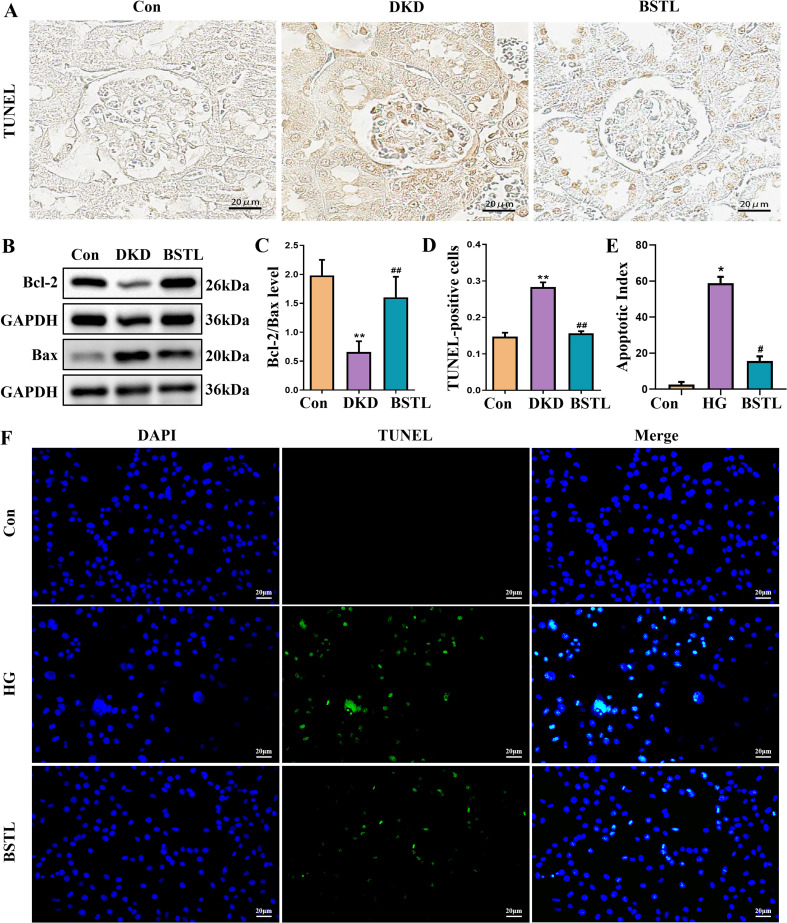
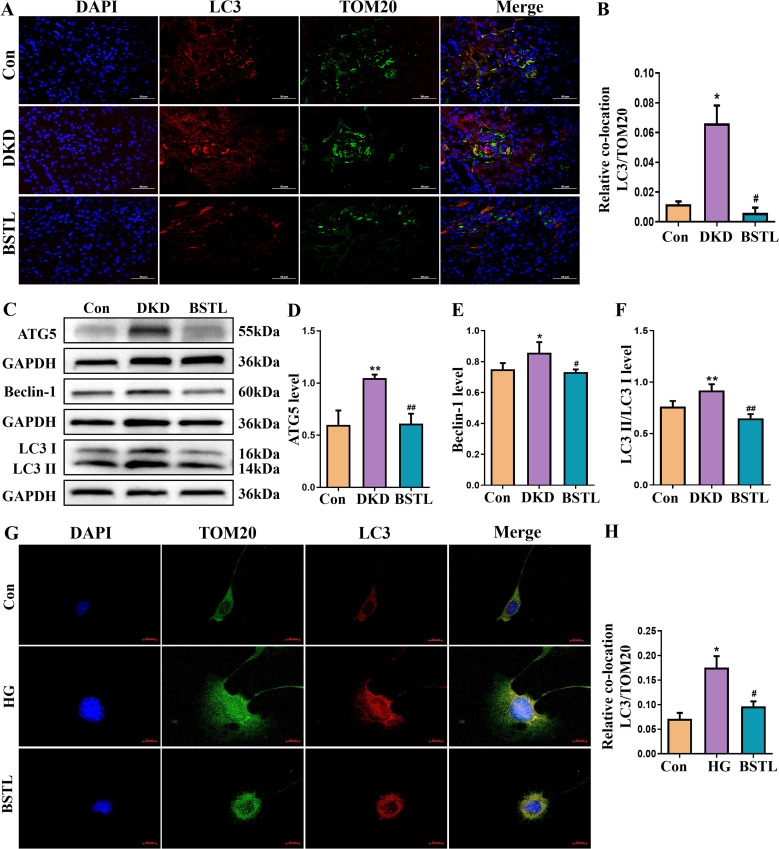
Mouse podocyte clone-5 (MPC-5) cells and db/db mice were used. Db/db mice were randomized into db/db and db/db + BSTL (16.5 g/kg/d, intragastric administration for 12 weeks). A group of m/m mice served as the control. Renal function, urinary albumin-to-creatinine ratio (UACR), histopathological analysis, apoptotic, and mitophagy-related protein levels were evaluated. MPC-5 cells were exposed to high glucose (HG, 30 mM) and BSTL drug-containing serum (8%) for 24 h grouping as control, HG, HG + BSTL, and HG + siPINK1. Podocyte apoptosis, mitophagy levels, and expression of PTEN-induced putative kinase 1 (PINK1) and E3 ubiquitin ligase (Parkin) were assessed.
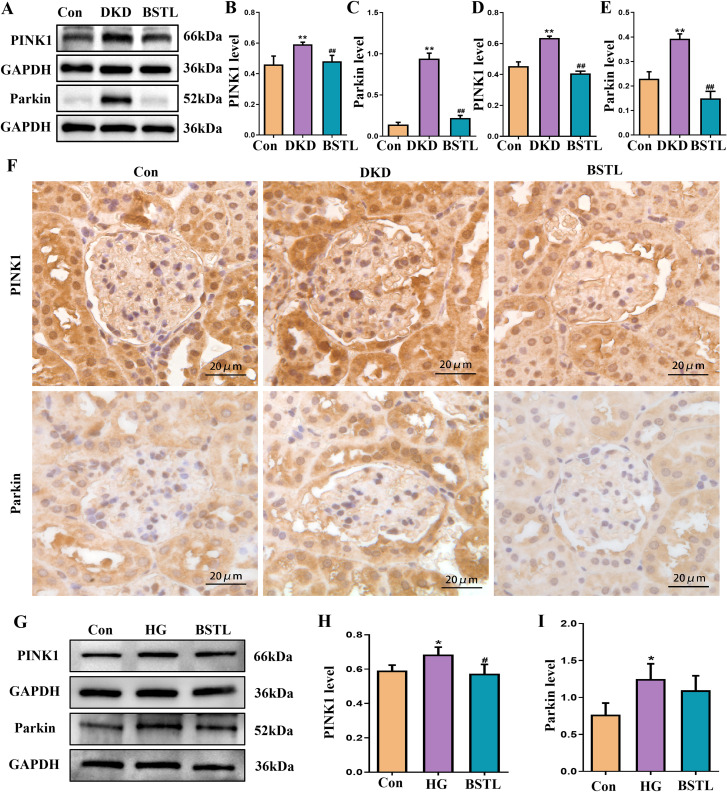
In db/db diabetic mice, oral administration of BSTL significantly lowered urinary albumin-to-creatinine ratio (P<0.05), improved glomerular filtration rate, and ameliorated renal histopathological changes, decreased LC3-II/LC3-I ratio, and downregulated expression of mitophagy-related proteins PINK1, Parkin, ATG5 and Beclin-1. Treatment with 8% BSTL-containing serum significantly attenuated HG-induced podocyte apoptosis (<0.01) and suppressed excessive mitophagy, as evidenced by reduced TOM20/LC3 co-localization (P<0.01). Notably, BSTL treatment markedly reduced protein levels of both PINK1 and Parkin (P<0.01), key regulators of mitophagy initiation. Genetic silencing of PINK1 in podocytes phenocopied BSTL's protective effects, confirming the pathway specificity.
Our integrated in vitro and in vivo findings establish that BSTL protects against DKD progression by selectively inhibiting PINK1/Parkin-dependent mitophagy in podocytes to inhibit podocyte injury, which provides both mechanistic insights and therapeutic potential for clinical DKD management.
糖尿病肾病(DKD)的进展与足细胞线粒体功能障碍密切相关。临床有效的中药保肾通络方(BSTL)已证明可显著降低DKD患者的蛋白尿。高效液相色谱-电喷雾电离质谱分析确定了BSTL中的特征性生物活性成分,包括黄芪苷、地黄苷和丹参酮。然而,BSTL维持足细胞内环境稳定的分子机制仍不完全清楚。
使用小鼠足细胞克隆-5(MPC-5)细胞和db/db小鼠。将db/db小鼠随机分为db/db组和db/db + BSTL组(16.5 g/kg/d,灌胃给药12周)。一组m/m小鼠作为对照。评估肾功能、尿白蛋白与肌酐比值(UACR)、组织病理学分析、凋亡和线粒体自噬相关蛋白水平。将MPC-5细胞暴露于高糖(HG,30 mM)和含BSTL药物血清(8%)中24小时,分组为对照、HG、HG + BSTL和HG + siPINK1。评估足细胞凋亡、线粒体自噬水平以及PTEN诱导的假定激酶1(PINK1)和E3泛素连接酶(Parkin)的表达。
在db/db糖尿病小鼠中,口服BSTL可显著降低尿白蛋白与肌酐比值(P<0.05),改善肾小球滤过率,减轻肾脏组织病理学变化,降低LC3-II/LC3-I比值,并下调线粒体自噬相关蛋白PINK1、Parkin、ATG5和Beclin-1的表达。用含8% BSTL的血清处理可显著减轻HG诱导的足细胞凋亡(<0.01),并抑制过度的线粒体自噬,TOM20/LC3共定位减少证明了这一点(P<0.01)。值得注意的是,BSTL处理显著降低了线粒体自噬起始关键调节因子PINK1和Parkin的蛋白水平(P<0.01)。足细胞中PINK1的基因沉默模拟了BSTL的保护作用,证实了该途径的特异性。
我们整合的体外和体内研究结果表明,BSTL通过选择性抑制足细胞中PINK1/Parkin依赖性线粒体自噬来保护DKD进展,从而抑制足细胞损伤,这为临床DKD管理提供了机制见解和治疗潜力。