Baty Joshua J, Drozdick Aidan K, Pfeiffer Julie K
Department of Microbiology, University of Texas Southwestern Medical Center, Dallas, Texas, USA.
bioRxiv. 2025 Jun 4:2025.06.04.657910. doi: 10.1101/2025.06.04.657910.
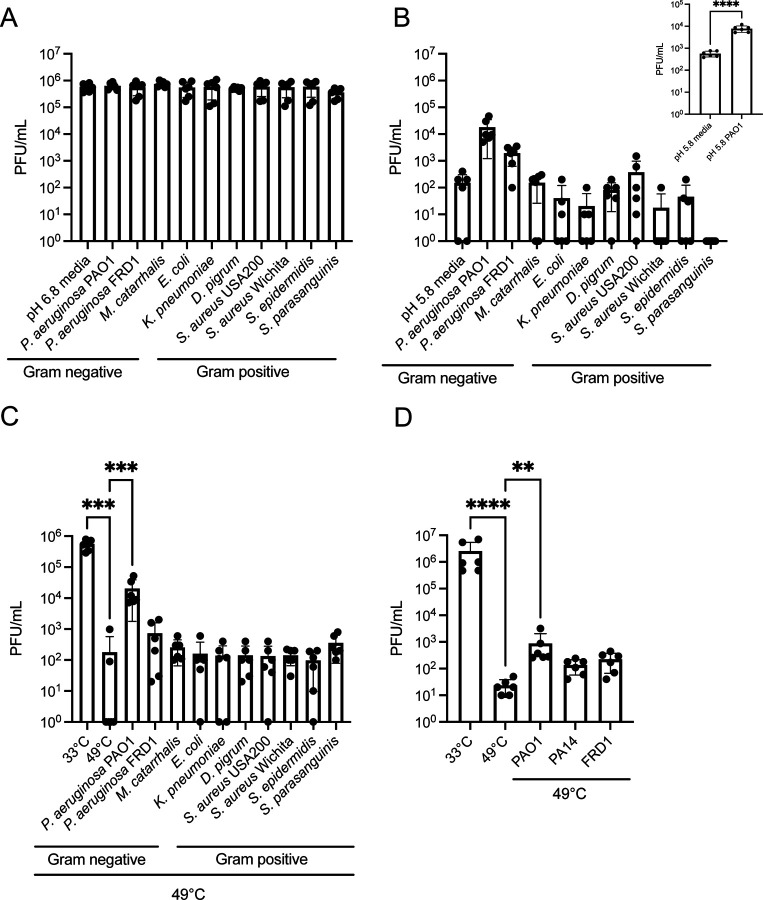
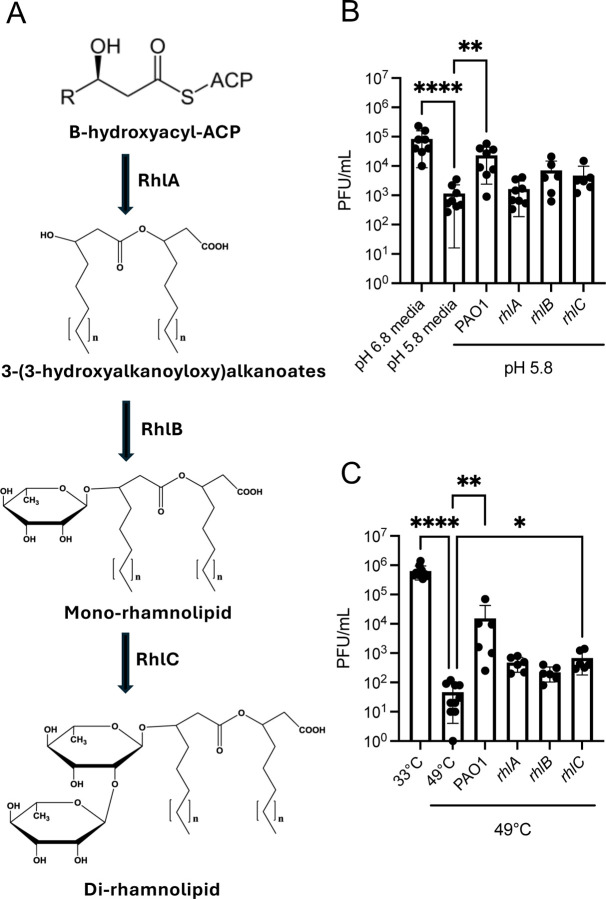
Many mammalian viruses encounter bacteria and bacterial molecules over the course of infection. Previous work has shown that the microbial ecology of the gut plays an integral role in poliovirus and coxsackievirus infection, where bacterial glycans can facilitate virus-receptor interactions, enhance viral replication, and stabilize viral particles. However, how airway bacteria alter respiratory viral infection is less understood. Therefore, we investigated whether a panel of airway bacteria affect rhinovirus stability. We found that , an opportunistic airway pathogen, protects human rhinovirus 14 from acid or heat inactivation. Further investigation revealed that rhamnolipids, glycolipids with surfactant properties, are necessary and sufficient for stabilization of rhinovirus virions. Taken together, this work demonstrates that specific molecules produced by an opportunistic airway pathogen can influence a respiratory virus.
许多哺乳动物病毒在感染过程中会接触到细菌和细菌分子。先前的研究表明,肠道微生物生态在脊髓灰质炎病毒和柯萨奇病毒感染中起着不可或缺的作用,其中细菌聚糖可促进病毒与受体的相互作用、增强病毒复制并稳定病毒颗粒。然而,气道细菌如何改变呼吸道病毒感染却知之甚少。因此,我们研究了一组气道细菌是否会影响鼻病毒的稳定性。我们发现,一种机会性气道病原体可保护人鼻病毒14免受酸或热灭活。进一步研究表明,具有表面活性剂特性的糖脂鼠李糖脂对于鼻病毒颗粒的稳定是必要且充分的。综上所述,这项研究表明,一种机会性气道病原体产生的特定分子可影响呼吸道病毒。