Ricotta Giulio, Russo Silvio Andrea, Fagotti Anna, Martinez Alejandra, Gauroy Elodie, Del Mathilde, Thibaud Valentin, Guillaume Bataillon, Ferron Gwenaël
Surgical Oncology, Oncopole Claudius Regaud-Institut Universitaire du Cancer Toulouse Oncopole, 31100 Toulouse, France.
Gynecologic Oncology Unit, Department of Women, Child and Public Health Sciences, Fondazione Policlinico Universitario Agostino Gemelli IRCCS, 00168 Rome, Italy.
Cancers (Basel). 2025 Jun 5;17(11):1893. doi: 10.3390/cancers17111893.
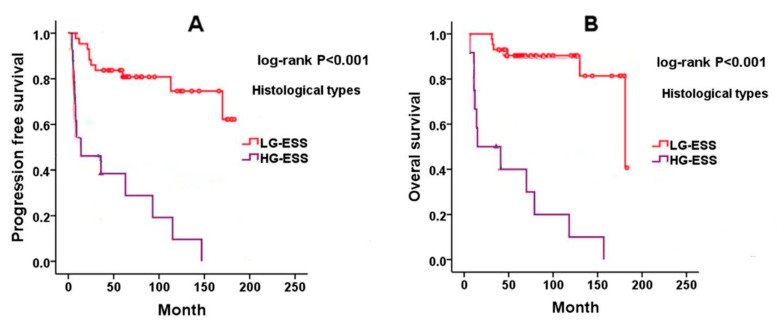
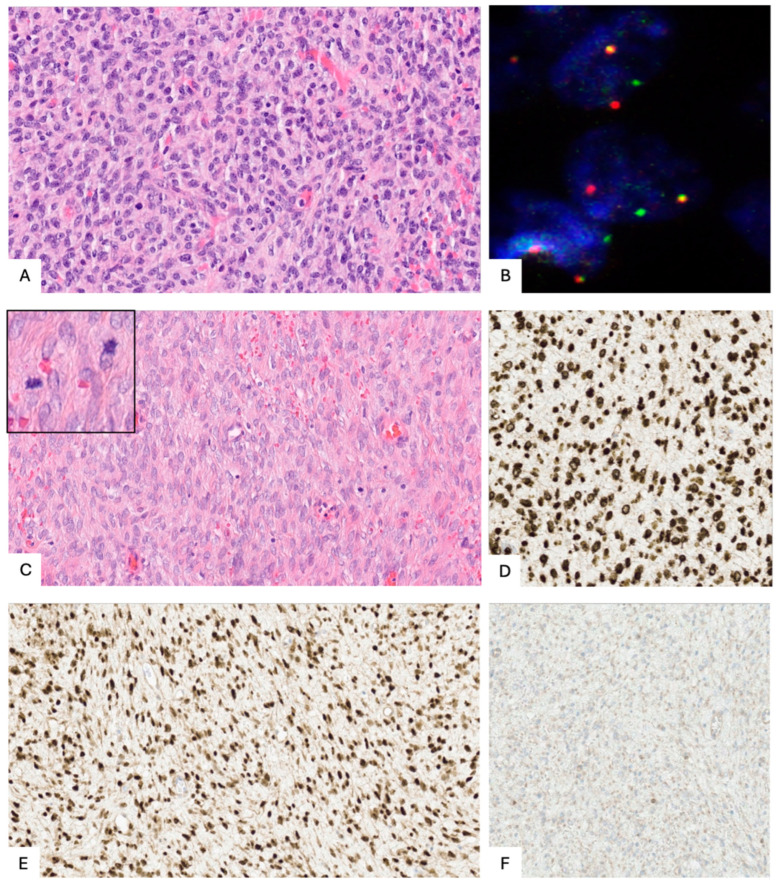
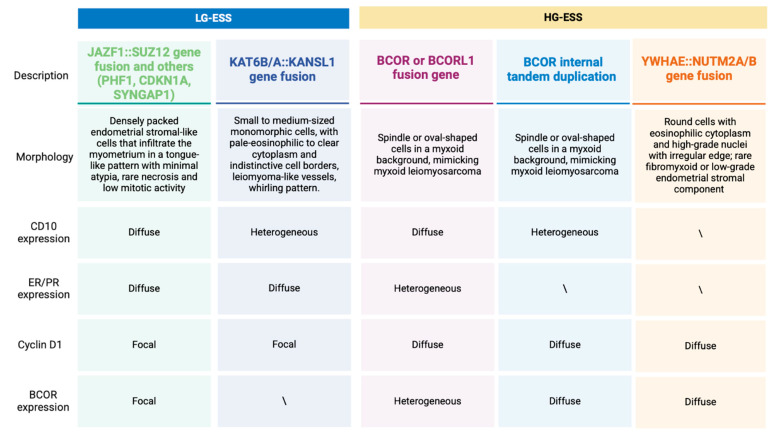
Endometrial stromal sarcoma (ESS) is a rare malignant tumor of uterine mesenchyme, accounting for 15-20% of uterine sarcomas. It is classified into low-grade (LG-ESS) and high-grade (HG-ESS) subtypes, each defined by distinct histopathological and molecular features. LG-ESS exhibits slow progression, resembling proliferative-phase endometrial stroma, with genetic alterations like JAZF1-SUZ12 fusions. HG-ESS is more aggressive, characterized by high mitotic activity, necrosis, and genetic markers such as BCOR internal tandem duplication, often leading to advanced-stage diagnosis. Surgical resection is the cornerstone for managing early-stage ESS. A total hysterectomy with bilateral salpingo-oophorectomy (BSO) is recommended to prevent recurrence. Fertility-preserving approaches may be considered in LG-ESS but are associated with high recurrence rates. Lymphadenectomy is not routinely performed, given its limited prognostic value. HG-ESS, due to its aggressiveness, often requires additional treatment, including chemotherapy. Adjuvant therapy varies by subtype. LG-ESS responds well to hormonal treatments such as aromatase inhibitors and progestins, while tamoxifen is contraindicated. HG-ESS, lacking hormonal receptor expression, is managed with chemotherapy, often incorporating doxorubicin-based regimens. Radiotherapy may improve local control in select cases but shows limited impact on overall survival. Advanced-stage ESS treatment focuses on complete cytoreduction, supplemented by systemic therapies. Hormonal therapy remains the standard for advanced LG-ESS, whereas HG-ESS relies on chemotherapy. Prognosis depends on the subtype and stage. LG-ESS has favorable outcomes, with five-year survival exceeding 90% in early stages, but recurrent disease remains common. HG-ESS is associated with poorer survival due to its aggressive nature. Advances in molecular profiling offer promising avenues for personalized therapies, integrating genomic insights with targeted treatments to improve outcomes in this rare malignancy.
子宫内膜间质肉瘤(ESS)是一种罕见的子宫间叶恶性肿瘤,占子宫肉瘤的15% - 20%。它分为低级别(LG - ESS)和高级别(HG - ESS)亚型,每种亚型由不同的组织病理学和分子特征定义。LG - ESS进展缓慢,类似于增殖期子宫内膜间质,具有如JAZF1 - SUZ12融合等基因改变。HG - ESS更具侵袭性,其特征为高有丝分裂活性、坏死以及如BCOR内部串联重复等基因标志物,常导致晚期诊断。手术切除是早期ESS治疗的基石。建议行全子宫切除术加双侧输卵管卵巢切除术(BSO)以预防复发。对于LG - ESS可考虑保留生育功能的方法,但复发率较高。鉴于其预后价值有限,一般不常规进行淋巴结切除术。HG - ESS由于其侵袭性,通常需要额外治疗,包括化疗。辅助治疗因亚型而异。LG - ESS对芳香化酶抑制剂和孕激素等激素治疗反应良好,而他莫昔芬则禁忌使用。HG - ESS缺乏激素受体表达,采用化疗治疗,通常采用基于阿霉素的方案。放疗在某些病例中可能改善局部控制,但对总生存期影响有限。晚期ESS治疗侧重于完全减瘤,并辅以全身治疗。激素治疗仍是晚期LG - ESS的标准治疗方法,而HG - ESS则依赖化疗。预后取决于亚型和分期。LG - ESS预后良好,早期五年生存率超过90%,但复发病例仍很常见。HG - ESS因其侵袭性本质,生存率较差。分子谱分析的进展为个性化治疗提供了有前景的途径,将基因组见解与靶向治疗相结合以改善这种罕见恶性肿瘤的治疗效果。