Rios-de-Moya-Angeler Rafael, Santonja-Medina Fernando, Sanz-Mengibar Jose Manuel, Ríos-Bernabé Rafael, Hurtado-Avilés José, Santonja-Renedo Fernando
Centro de Salud San Diego, IMIB Pascual Parrilla, Primary Health Service Area III, 30720 Murcia, Spain.
Faculty of Medicine, University of Murcia, 30100 Murcia, Spain.
J Clin Med. 2025 May 30;14(11):3870. doi: 10.3390/jcm14113870.
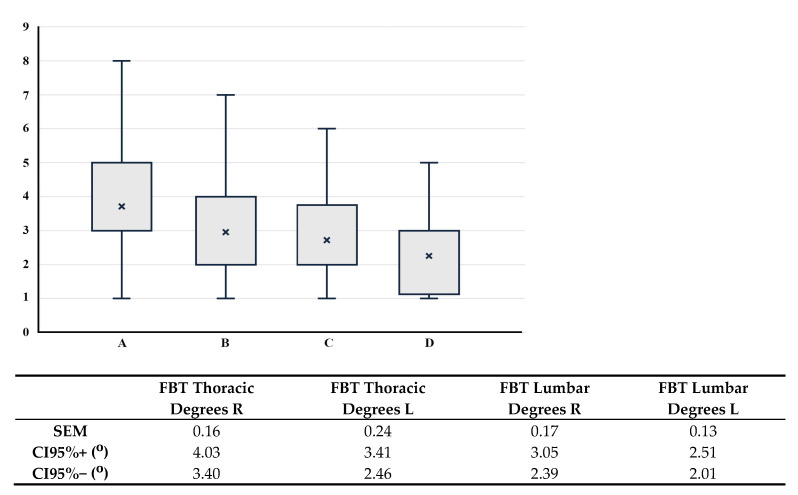
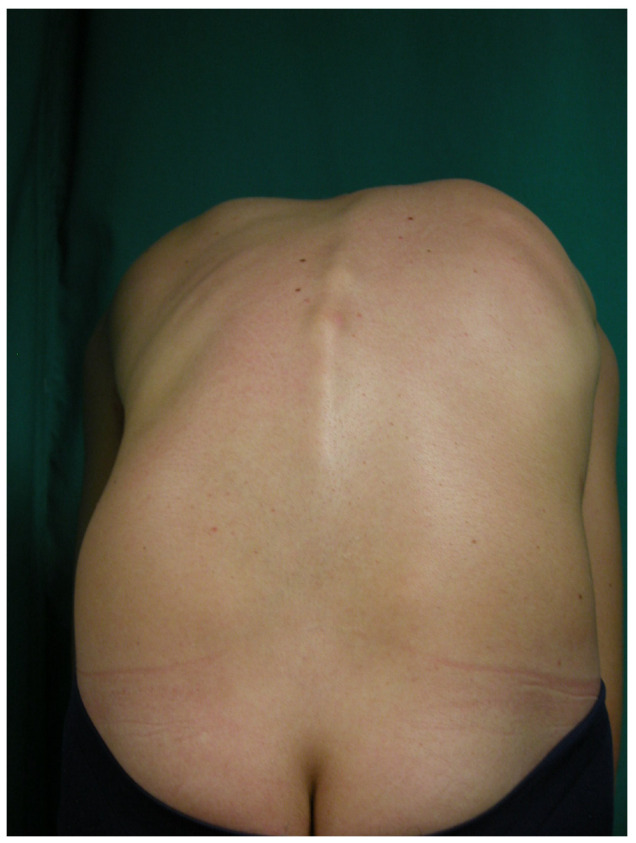
Scoliosis screening aims to detect spinal deformities early and prevent progression. The Programa de Atención a la Salud de Niños y Adolescentes (PANA) in Spain includes primary care screenings at ages 5-6, 10-11, and 13-14, but its effectiveness remains unverified. First, we evaluated attendance rates in each phase. Second, a nine-year follow-up was used to determine outcomes in adolescents who completed all three phases of PANA. A retrospective-prospective cohort study was conducted. The retrospective phase analyzed records of 881 schoolchildren screened at a primary healthcare center in Lorca, Spain. The prospective phase re-evaluated 127 adolescents (94.1% of those who completed all three phases) after nine years using a standardized forward bending test (FBT) with scoliometer quantification. Attendance declined from 73.2%, at age 5-6, to 20.5%, at age 13-14. Only 15.3% completed all three phases. At age 13-14, 11.1% had a positive FBT by visual assessment. Non-quantified FBT had low sensitivity (5.9%) but high specificity (96.7%). Nine years later, mean scoliometer-measured vertebral rotation was 3.6 ± 1.7° (thoracic) and 2.5 ± 1.4° (lumbar). Scoliosis suspicion (FBT > 5°) was 15.1%, but applying the FBT > 7° threshold it was reduced to 4%. The PANA program has limited effectiveness due to low attendance and lack of scoliometer use. Visual FBT without quantification increases false positives, reducing diagnostic accuracy. It is recommended that preventive assessments be conducted in schools by primary care physicians. Training in the use of the scoliometer is essential to improve scoliosis detection.
脊柱侧弯筛查旨在早期发现脊柱畸形并预防其进展。西班牙的儿童和青少年健康关爱计划(PANA)包括在5至6岁、10至11岁以及13至14岁时进行的初级保健筛查,但其有效性仍未得到验证。首先,我们评估了每个阶段的参与率。其次,通过九年的随访来确定完成PANA所有三个阶段的青少年的结局。开展了一项回顾性-前瞻性队列研究。回顾性阶段分析了在西班牙洛尔卡的一家初级保健中心接受筛查的881名学童的记录。前瞻性阶段在九年后使用标准化前屈试验(FBT)并通过脊柱侧凸测量仪进行量化,对127名青少年(占完成所有三个阶段青少年的94.1%)进行了重新评估。参与率从5至6岁时的73.2%下降至13至14岁时的20.5%。只有15.3%的人完成了所有三个阶段。在13至14岁时,通过视觉评估有11.1%的人FBT呈阳性。未量化的FBT敏感性较低(5.9%)但特异性较高(96.7%)。九年后,脊柱侧凸测量仪测量的椎体旋转平均值为胸椎3.6±1.7°和腰椎2.5±1.4°。脊柱侧弯可疑情况(FBT>5°)为15.1%,但应用FBT>7°的阈值时,该比例降至4%。由于参与率低且未使用脊柱侧凸测量仪,PANA计划的有效性有限。未量化的视觉FBT会增加假阳性,降低诊断准确性。建议由初级保健医生在学校进行预防性评估。使用脊柱侧凸测量仪的培训对于提高脊柱侧弯检测至关重要。