Janczarek Iwona, Gazda Izabela, Barłowska Joanna, Kurnik Julia, Łuszczyński Jarosław
Department of Horse Breeding and Use, Faculty of Animal Sciences and Bioeconomy, University of Life Sciences in Lublin, Akademicka 13 Str., 20-950 Lublin, Poland.
Department Quality Assessment and Processing of Animal Products, Faculty of Animal Sciences and Bioeconomy, University of Life Sciences in Lublin, Akademicka 13 Str., 20-950 Lublin, Poland.
Animals (Basel). 2025 Jun 3;15(11):1649. doi: 10.3390/ani15111649.
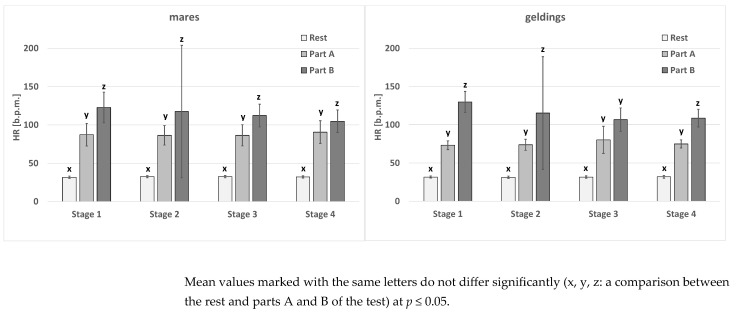
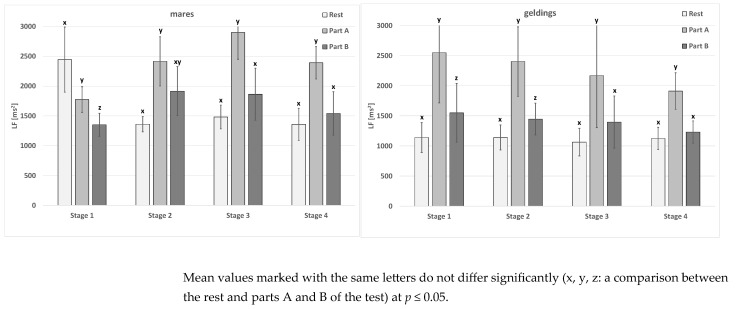
It is assumed that horses have a strong herd instinct that cannot be suppressed by any form of social support from humans. The aim of this study was to assess the behaviour and heart rate parameters of horses that received various forms of human support during short-term social isolation. The research material consisted of 12 clinically healthy recreational warmblood mares and geldings. The test was carried out four times. The research test consisted of two parts, which began in the presence of accompanying horses and under conditions of social isolation, with and without support provided by a human (types of contact: tactile, vocal, tactile and vocal). Behavioural observations were carried out on a five-point scale, and the heart rate parameters were measured using Polar ELECTRO OY Kempele (Finland) measuring devices (Polar H9 type) and Polar Ignite2 receivers. Data analysis was carried out using the Polar Flowsync application coupled with the Polar Flow service. It was concluded that social support provided by humans in tactile, vocal, or tactile and vocal forms during the isolation of horses from the herd does not have very significant effects, especially in mares. The geldings respond much more favourably than the mares. In addition, at this point in the research, it can be suggested that vocal support may have the best effects. The more emotionally balanced the horses are, the more pronounced these effects should be.
据推测,马具有强烈的群居本能,任何形式的人类社会支持都无法抑制这种本能。本研究的目的是评估在短期社会隔离期间接受各种形式人类支持的马的行为和心率参数。研究材料包括12匹临床健康的休闲温血母马和 geldings(这个词原文有误,可能是“公马”stallions 之类,暂按原文)。测试进行了四次。研究测试包括两个部分,首先在有同伴马在场的情况下开始,然后在社会隔离条件下进行,有或没有人类提供的支持(接触类型:触觉、声音、触觉和声音)。行为观察采用五点量表进行,心率参数使用芬兰 Polar ELECTRO OY Kempele 的测量设备(Polar H9 型)和 Polar Ignite2 接收器进行测量。数据分析使用 Polar Flowsync 应用程序结合 Polar Flow 服务进行。得出的结论是,在马与马群隔离期间,人类以触觉、声音或触觉和声音形式提供的社会支持没有非常显著的影响,尤其是对母马而言。公马的反应比母马更积极。此外,在本研究的这个阶段,可以认为声音支持可能效果最佳。马的情绪越平衡,这些效果就越明显。