He Shuai, Chen Hao, Xi Hongzhong, Sun Guangquan, Du Bin, Liu Xin
Department of Orthopedics, The Affiliated Hospital of Nanjing University of Chinese Medicine, Nanjing 210029, China.
Department of Orthopedics, Jiangsu Province Hospital of Chinese Medicine, Nanjing 210029, Jiangsu, China.
Mediators Inflamm. 2025 Jun 5;2025:8742817. doi: 10.1155/mi/8742817. eCollection 2025.
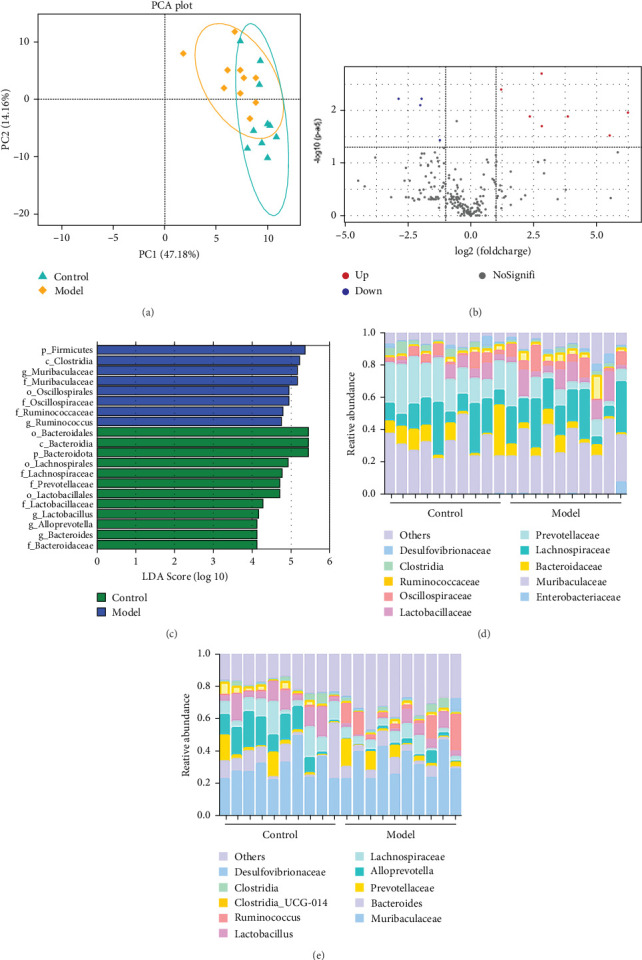
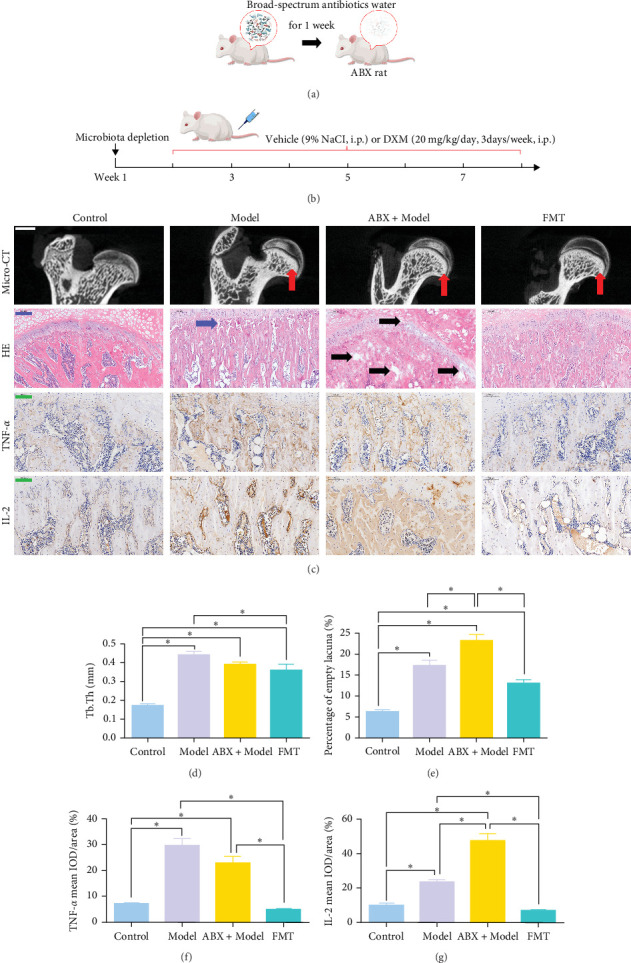
The role of gut microbiota and its metabolites in regulating bone metabolism has been well established, with inflammatory immune responses potentially playing a critical role. Glucocorticoid-associated osteonecrosis of the femoral head (GA-ONFH), caused by high-dose glucocorticoid use for inflammatory or immune-related diseases, is a prevalent condition of bone metabolic imbalance. However, the regulatory role and mechanisms of gut microbiota and its metabolites in the development and progression of GA-ONFH remain unclear. This study aims to investigate the intervention effects of gut microbiota and its metabolite butyric acid on GA-ONFH through a series of multi-omics and experiments. Sprague Dawley rats were randomly divided into four groups. The gut microbial composition of the groups was analyzed through 16S rDNA sequencing. Targeted metabolomics was employed to assess differences in short-chain fatty acids (SCFAs) among the groups. Butyric acid, identified as a key differential metabolite, was then selected for further exploration of its effects on bone marrow mesenchymal stem cells (BMSCs) and GA-ONFH rat models through and experiments. 16S rDNA sequencing revealed alterations in gut microbiota structure in GA-ONFH rats. Micro-CT and HE staining demonstrated that depletion of gut microbiota with broad-spectrum antibiotics prior to GA-ONFH modeling exacerbated the disease's development. In contrast, fecal microbiota transplantation (FMT) was shown to alleviate GA-ONFH progression. Targeted metabolomics indicated that FMT mitigated the reduction in butyric acid levels induced by dexamethasone (DXM). Subsequent cell experiments confirmed that butyric acid promotes BMSC proliferation, migration, and osteogenic differentiation. RNA sequencing revealed that butyric acid regulates T cell-mediated inflammatory cytokine genes in BMSCs, while Western blot and immunofluorescence assays confirmed that butyric acid modulates the expression of TNF-α and IL-2/IL-4 in BMSCs. Finally, experiments demonstrated that butyric acid supplementation attenuated the progression of GA-ONFH and improved the expression of inflammation-related cytokines in femoral head tissue. Our study demonstrates that gut microbiota depletion exacerbates GA-ONFH, while FMT restores butyric acid levels and alleviates disease severity. Butyric acid reduced the expression of TNF-α and IL-2 while increasing the level of IL-4 and , thereby improving the local inflammatory environment of the femoral head and alleviating the progression of GA-ONFH. These findings highlight that reduction in butyric acid levels due to gut microbiota dysbiosis is a crucial factor in the progression of GA-ONFH.
肠道微生物群及其代谢产物在调节骨代谢中的作用已得到充分证实,炎症免疫反应可能起着关键作用。糖皮质激素相关的股骨头坏死(GA-ONFH)是一种常见的骨代谢失衡疾病,由用于炎症或免疫相关疾病的高剂量糖皮质激素使用引起。然而,肠道微生物群及其代谢产物在GA-ONFH发生发展中的调节作用和机制仍不清楚。本研究旨在通过一系列多组学和实验,研究肠道微生物群及其代谢产物丁酸对GA-ONFH的干预作用。将Sprague Dawley大鼠随机分为四组。通过16S rDNA测序分析各组的肠道微生物组成。采用靶向代谢组学评估各组短链脂肪酸(SCFAs)的差异。然后选择被确定为关键差异代谢产物的丁酸,通过细胞实验和动物实验进一步探索其对骨髓间充质干细胞(BMSCs)和GA-ONFH大鼠模型的影响。16S rDNA测序显示GA-ONFH大鼠肠道微生物群结构发生改变。Micro-CT和HE染色表明,在GA-ONFH建模前用广谱抗生素清除肠道微生物群会加剧疾病的发展。相反,粪便微生物群移植(FMT)显示可减轻GA-ONFH的进展。靶向代谢组学表明,FMT减轻了地塞米松(DXM)诱导的丁酸水平降低。随后的细胞实验证实,丁酸促进BMSC的增殖、迁移和成骨分化。RNA测序显示,丁酸调节BMSCs中T细胞介导的炎症细胞因子基因,而蛋白质免疫印迹和免疫荧光分析证实,丁酸调节BMSCs中TNF-α和IL-2/IL-4的表达。最后,动物实验表明,补充丁酸可减轻GA-ONFH的进展,并改善股骨头组织中炎症相关细胞因子的表达。我们的研究表明,肠道微生物群的减少会加剧GA-ONFH,而FMT可恢复丁酸水平并减轻疾病严重程度。丁酸降低了TNF-α和IL-2的表达,同时提高了IL-4的水平,从而改善了股骨头的局部炎症环境,减轻了GA-ONFH的进展。这些发现突出表明,肠道微生物群失调导致的丁酸水平降低是GA-ONFH进展的关键因素。