Du Xuezhi, Yu Runze, Yan Caigu, Dong Penggang, Wei Cheng, Wang Bo, Zhang Chenhui, He Yingjie, Wei Yaqing, Han Lei, Sun Jinjin
Department of Hepatopancreatobiliary Surgery, The Second Hospital of Tianjin Medical University, Tianjin, China.
Key Laboratory of Post‑Neuroinjury Neuro‑Repair and Regeneration in Central Nervous System, Ministry of Education and Tianjin City, Tianjin Neurological Institute, Tianjin Medical University General Hospital, Tianjin, China.
Cell Death Dis. 2025 Jun 14;16(1):449. doi: 10.1038/s41419-025-07757-z.
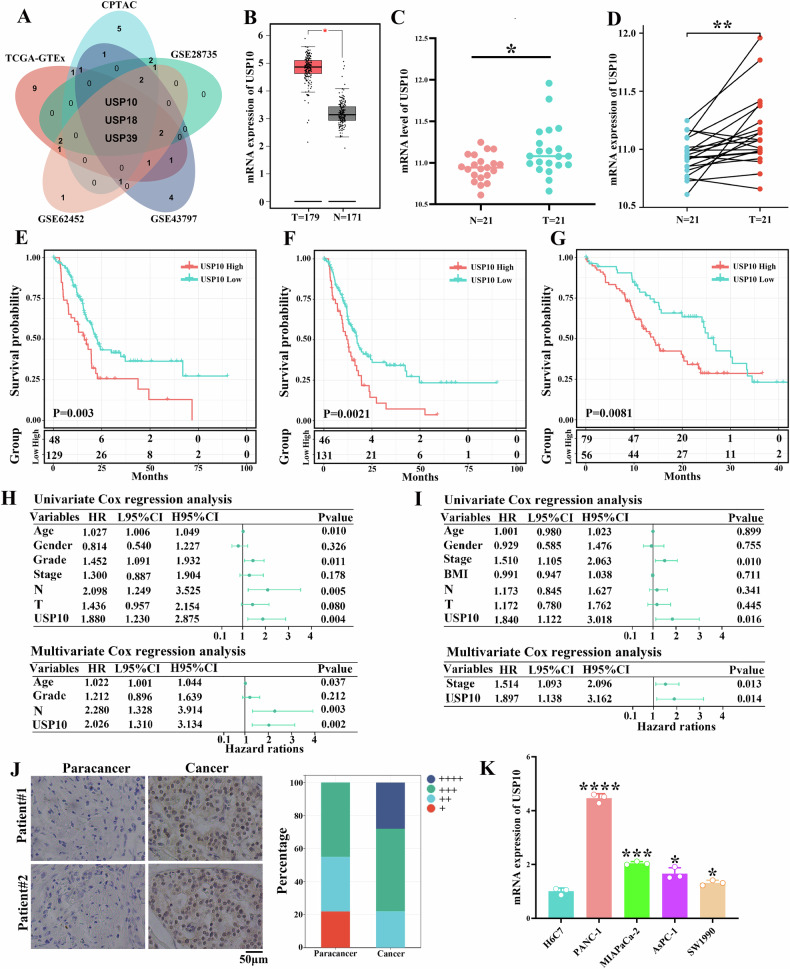
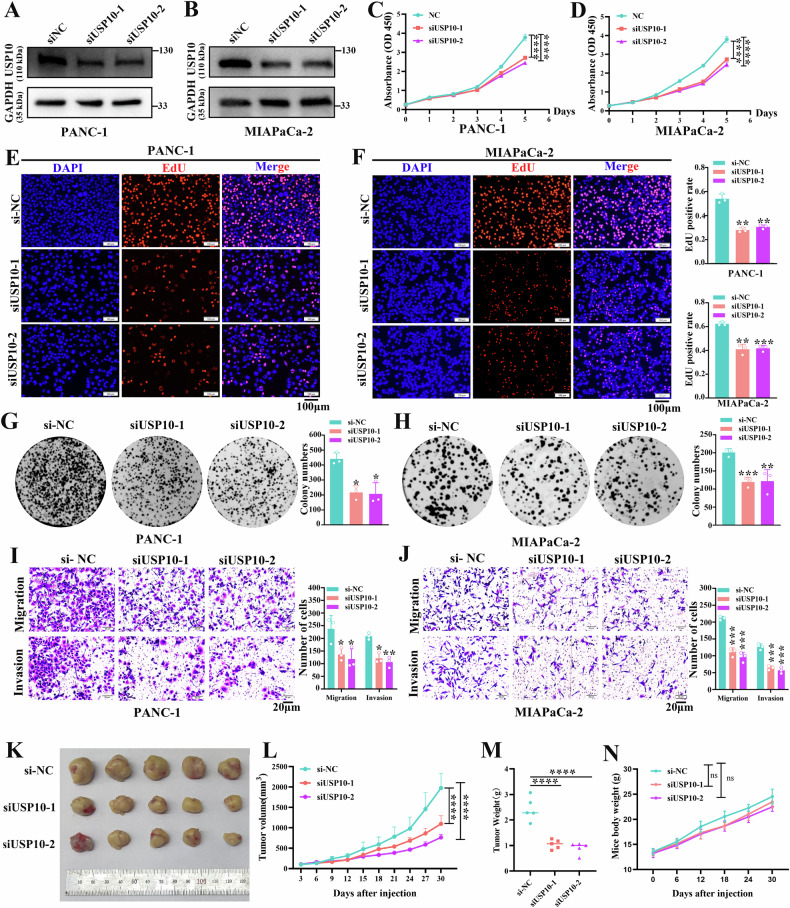
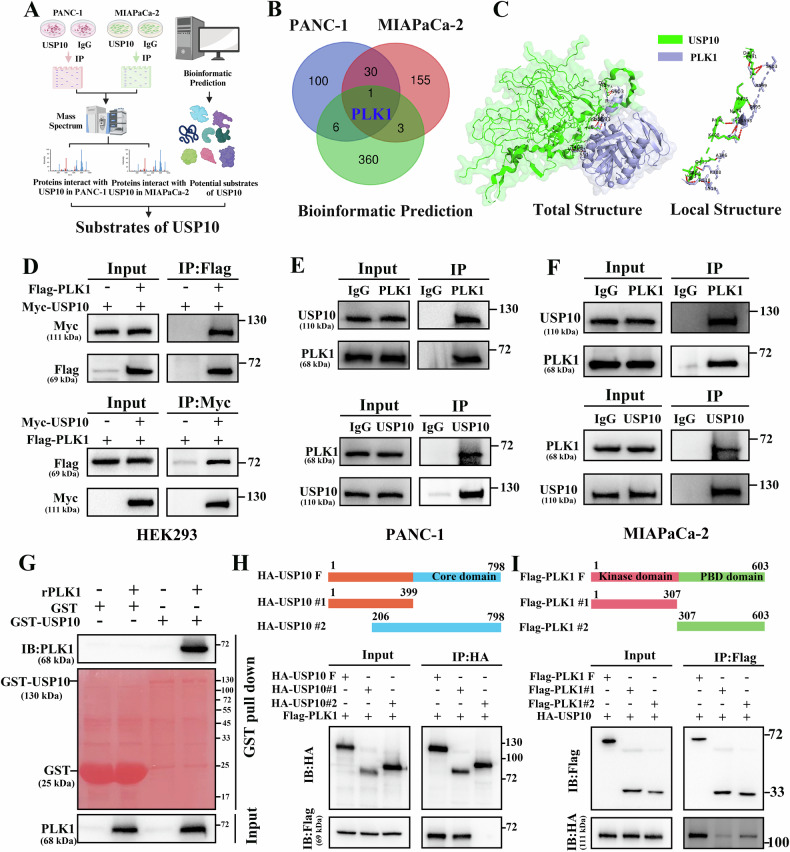
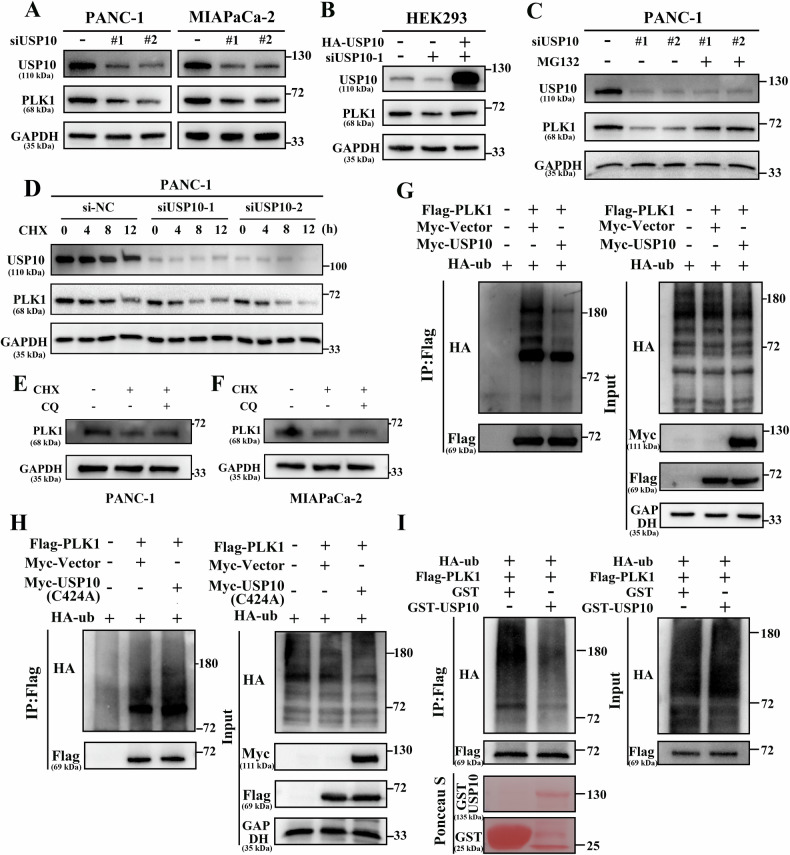
Pancreatic ductal adenocarcinoma (PDAC) is one of the most malignant tumors with limited treatment options, and chemotherapy resistance contributes to poor prognosis. An increasing number of studies have shown that ubiquitin specific peptidases (USPs), a subtype of deubiquitinases, can affect tumor progression by regulating the stability or biological function of substrate proteins. Thus, USPs are becoming attractive targets for cancer treatment. In this study, we investigated the role of USPs in PDAC. This study illustrated significant upregulation of USP10 expression in PDAC, which was found to be correlated with unfavorable prognosis. Further evaluation showed that USP10 exhibited the ability to facilitate PDAC progression in vitro and in vivo. The assays of immunoprecipitation-mass spectrometry, CO-IP, and GST pull-down suggested that USP10 directly interacted with PLK1. Deubiquitination assays indicated that USP10 could reduce the ubiquitination of PLK1 and increase protein stability. Moreover, USP10 may promote autophagy in PDAC cells through PLK1 and further attenuate the response of PDAC cells to gemcitabine (GEM). Finally, we demonstrated that the inhibition of USP10 combined with GEM synergistically inhibited the progression of PDAC in vitro and in vivo. In summary, we revealed that USP10, as a tumor promoter, promoted the progression and attenuated GEM chemotherapy sensitivity via stabilizing PLK1 in PDAC, providing a potential target for the treatment of PDAC.
胰腺导管腺癌(PDAC)是最具侵袭性的肿瘤之一,治疗选择有限,化疗耐药导致预后不良。越来越多的研究表明,泛素特异性蛋白酶(USPs)作为去泛素化酶的一种亚型,可通过调节底物蛋白的稳定性或生物学功能来影响肿瘤进展。因此,USPs正成为有吸引力的癌症治疗靶点。在本研究中,我们调查了USPs在PDAC中的作用。本研究表明,PDAC中USP10表达显著上调,且发现其与不良预后相关。进一步评估显示,USP10在体外和体内均表现出促进PDAC进展的能力。免疫沉淀-质谱分析、免疫共沉淀和谷胱甘肽-S-转移酶下拉实验表明,USP10直接与PLK1相互作用。去泛素化实验表明,USP10可减少PLK1的泛素化并增加其蛋白稳定性。此外,USP10可能通过PLK1促进PDAC细胞中的自噬,并进一步减弱PDAC细胞对吉西他滨(GEM)的反应。最后,我们证明抑制USP10与GEM联合使用可在体外和体内协同抑制PDAC的进展。总之,我们揭示了USP10作为肿瘤促进因子,通过稳定PDAC中的PLK1促进肿瘤进展并减弱GEM化疗敏感性,为PDAC治疗提供了一个潜在靶点。