Teng Yongsheng, Lv Yipin, Chen Wanyan, Mao Fangyuan, Peng Liusheng, Huang He, Li Haiyan, Shi Liwei, Zou Quanming, Zhuang Yuan, Tian Wenqing, Guo Hong
Department of Gastroenterology, Chongqing General Hospital, Chongqing University, Chongqing, China.
The 940th Hospital of Joint Logistics Support Force of PLA, Lanzhou, China.
Cell Commun Signal. 2025 Jun 15;23(1):285. doi: 10.1186/s12964-025-02302-z.
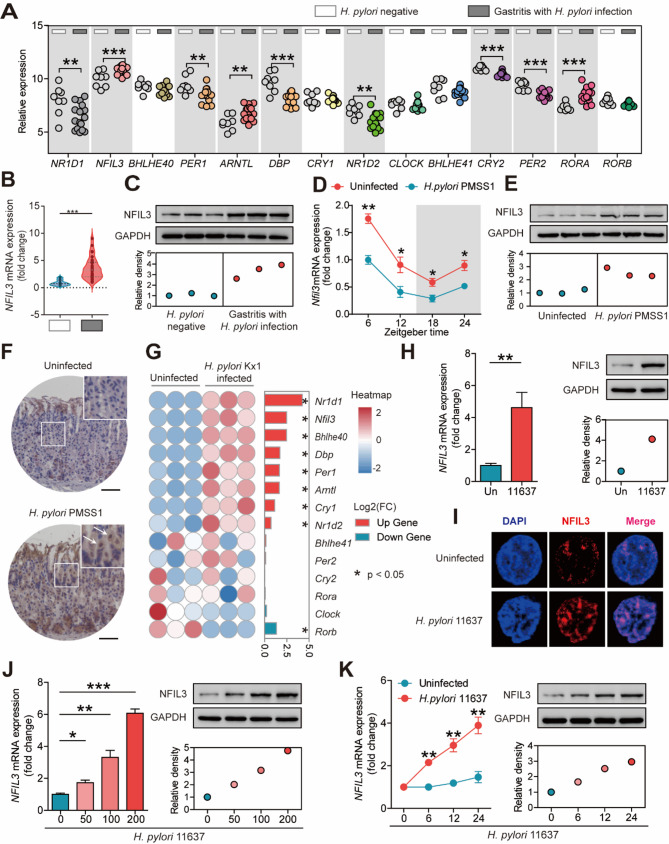
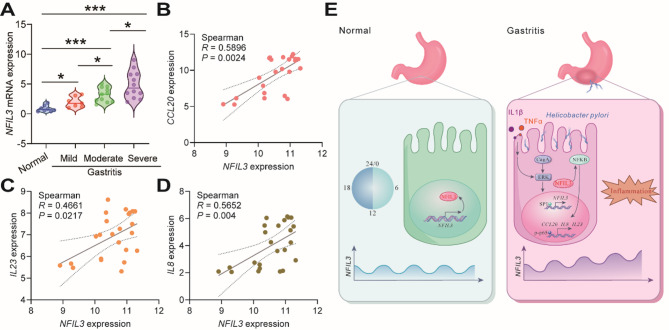
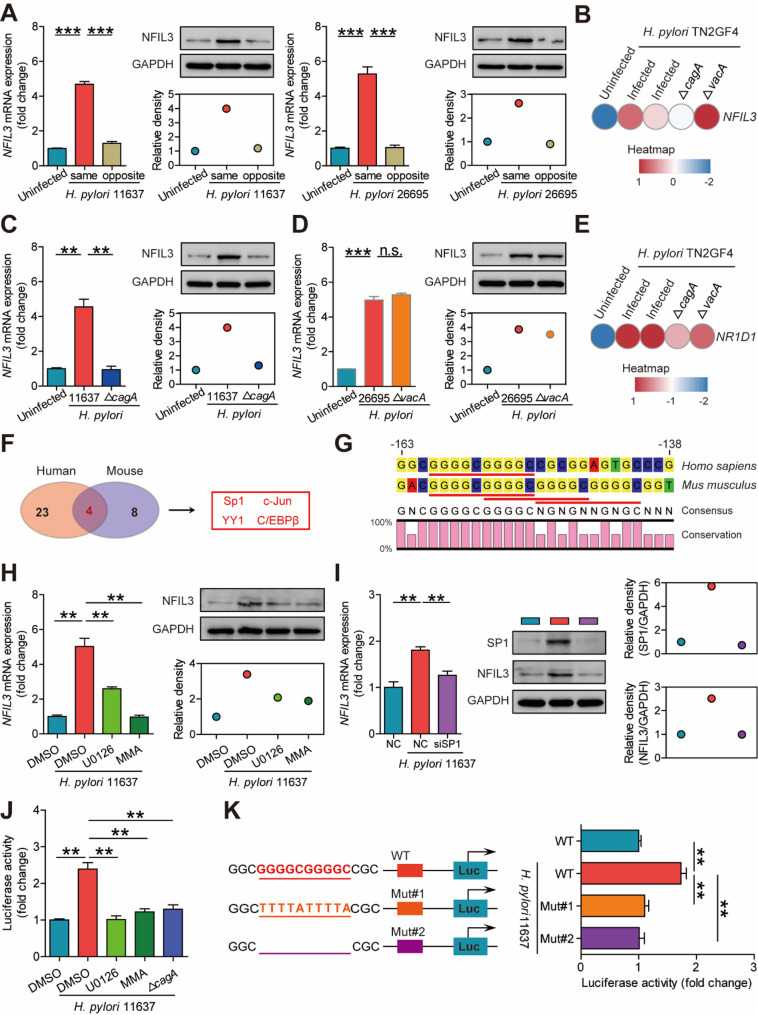
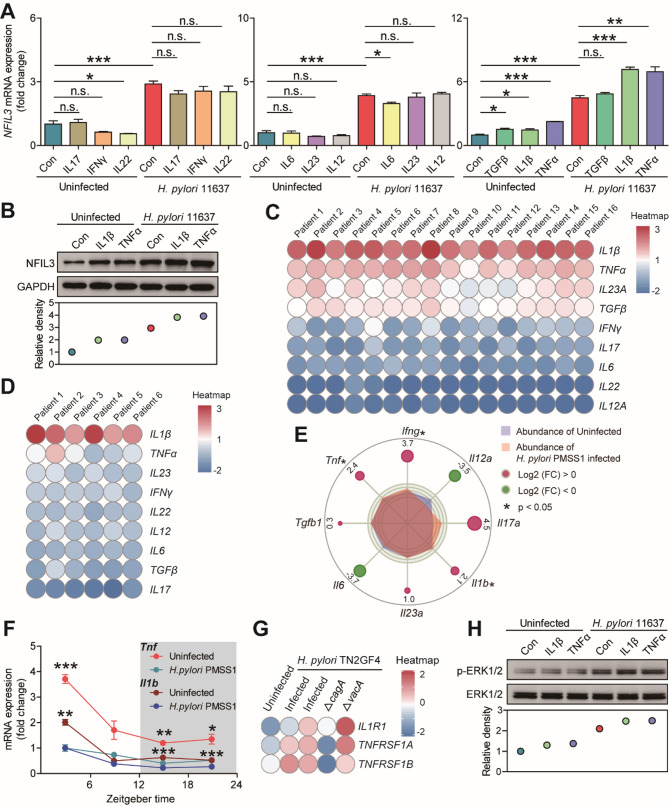
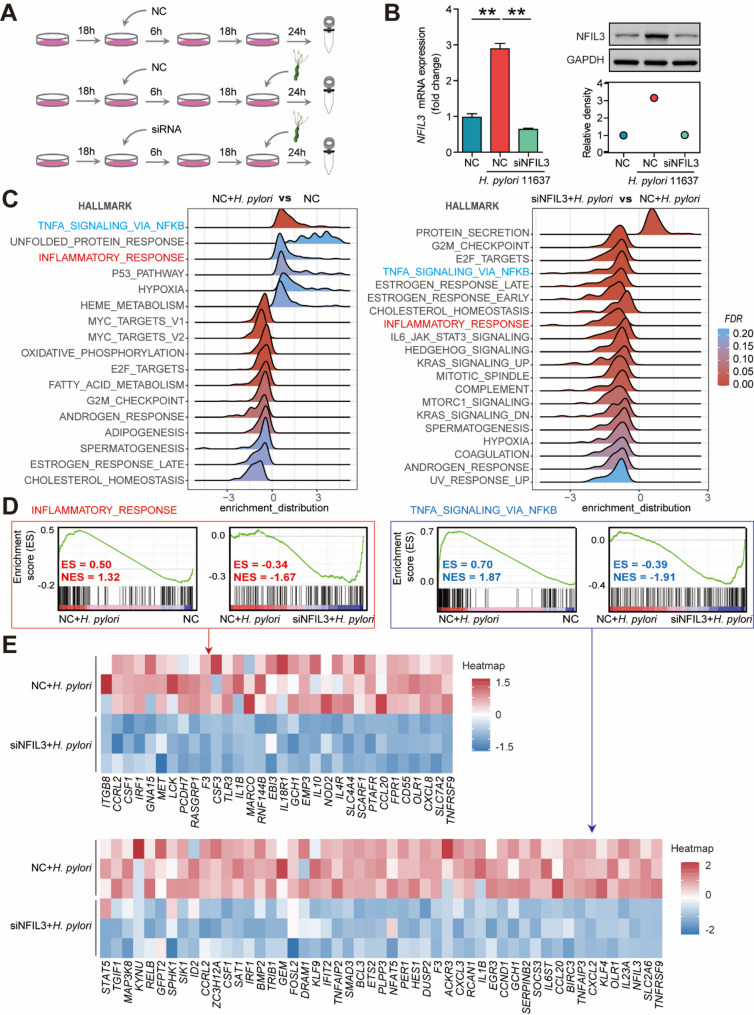
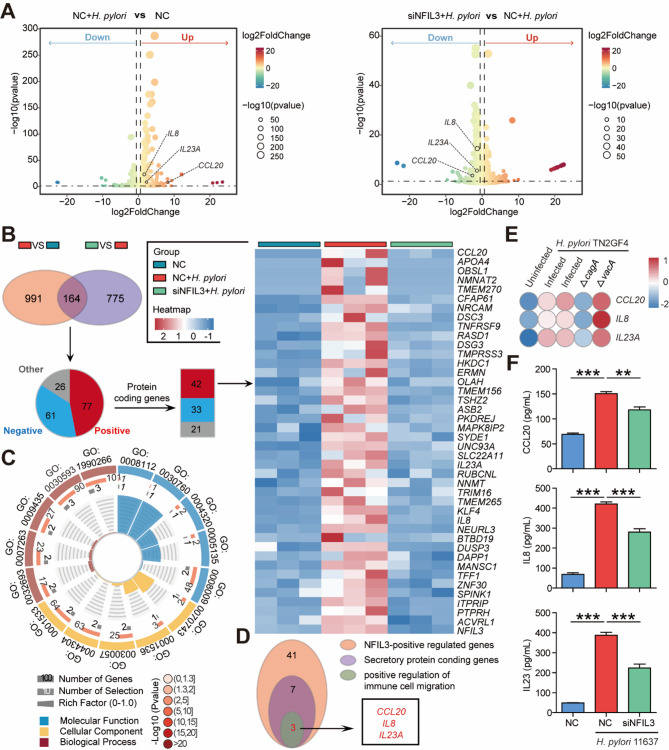
Helicobacter pylori (H. pylori) associated gastritis, marked by chronic gastric inflammation, heightens gastric cancer risk by fostering a malignancy-prone microenvironment. Disruption of the biorhythm contribute to the onset of various gastrointestinal disorders, such as gastric dyspepsia, gastric ulcers, and cancer. We aimed to investigate the functional roles and regulatory mechanisms of key biorhythm molecules in H. pylori associated gastritis. We investigated biorhythm gene expression in H. pylori-infected human gastric tissues and found significant impact on NFIL3 expression. Animal studies confirmed that H. pylori controls NFIL3 biorhythm. Clinical samples indicated a correlation between NFIL3 and gastritis severity, suggesting a regulatory role. Then, we found that H. pylori disrupt NFIL3 expression rhythm in gastric epithelial cells (GECs) through the CagA-activated ERK-SP1 pathway. Additionally, cytokines IL1β and TNFα enhance this disruption. RNA-seq and Gene set enrichment analysis (GSEA) indicated that NFIL3 positively regulates the inflammatory response during H. pylori infection. Our research highlights the crucial role of the biorhythm molecule NFIL3 in H. pylori associated gastritis. Modulating biorhythm molecules could be a promising therapeutic approach to manage disease progression, given their impact on gastrointestinal pathology.
幽门螺杆菌(H. pylori)相关性胃炎以慢性胃炎症为特征,通过营造易于发生恶性肿瘤的微环境增加胃癌风险。生物节律的紊乱会导致各种胃肠道疾病的发生,如胃消化不良、胃溃疡和癌症。我们旨在研究关键生物节律分子在幽门螺杆菌相关性胃炎中的功能作用和调控机制。我们调查了幽门螺杆菌感染的人胃组织中的生物节律基因表达,发现其对NFIL3表达有显著影响。动物研究证实幽门螺杆菌控制NFIL3生物节律。临床样本表明NFIL3与胃炎严重程度之间存在相关性,提示其具有调控作用。然后,我们发现幽门螺杆菌通过CagA激活的ERK-SP1途径破坏胃上皮细胞(GECs)中NFIL3的表达节律。此外,细胞因子IL1β和TNFα会加剧这种破坏。RNA测序和基因集富集分析(GSEA)表明,NFIL3在幽门螺杆菌感染期间正向调节炎症反应。我们的研究突出了生物节律分子NFIL3在幽门螺杆菌相关性胃炎中的关键作用。鉴于生物节律分子对胃肠道病理的影响,调节它们可能是控制疾病进展的一种有前景的治疗方法。