Kim Tae-Hyung, Tran Le Minh-Tam, Oh Mijung, Vazquez-Hidalgo Esteban, Chavez Bryanna, Lamkin Donald M, Abdou Alexander, Tan Xing Haw Marvin, Christodoulides Alexei, Farris Carly M, Lee Changhoon, Chiou Pei-Yu, Sloan Erica K, Katira Parag, Rowat Amy C
Department of Integrative Biology and Physiology, University of California, Los Angeles, Los Angeles, CA, USA.
Department of Pathology, School of Medicine, University of New Mexico, Albuquerque, NM, USA.
iScience. 2025 May 15;28(6):112676. doi: 10.1016/j.isci.2025.112676. eCollection 2025 Jun 20.
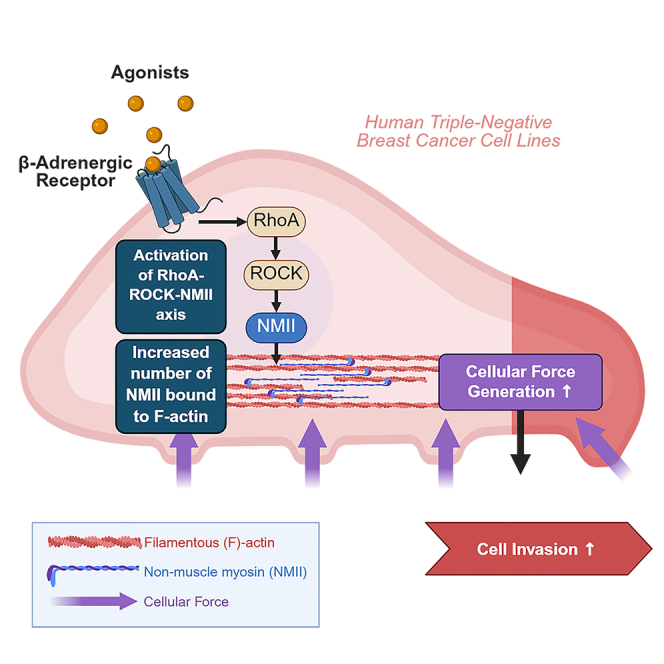
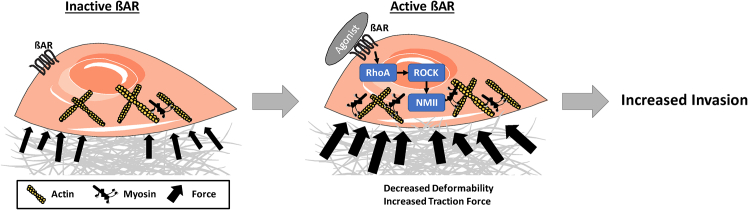
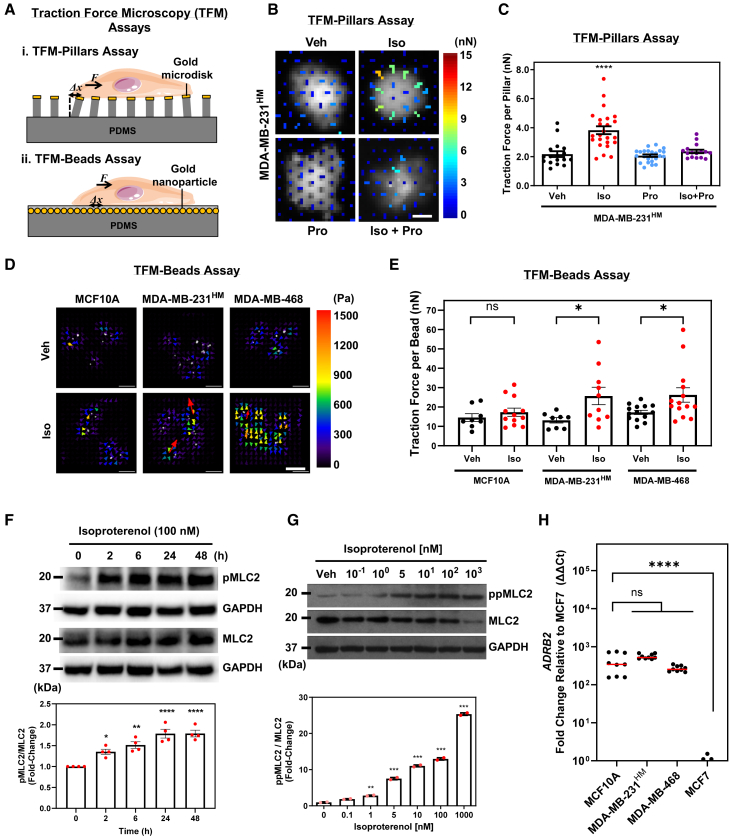
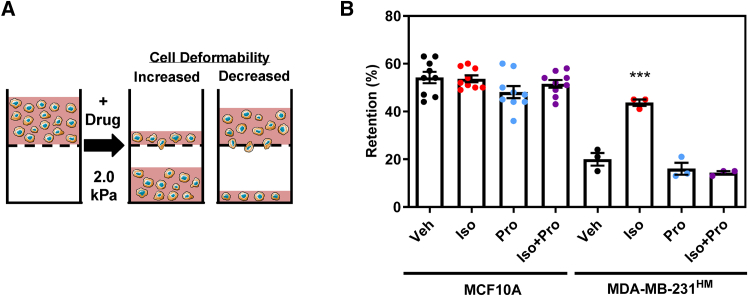
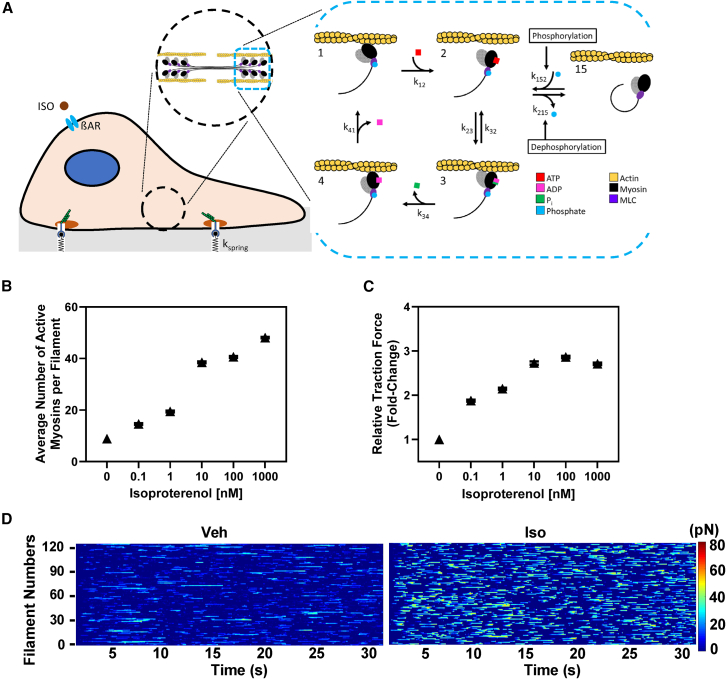
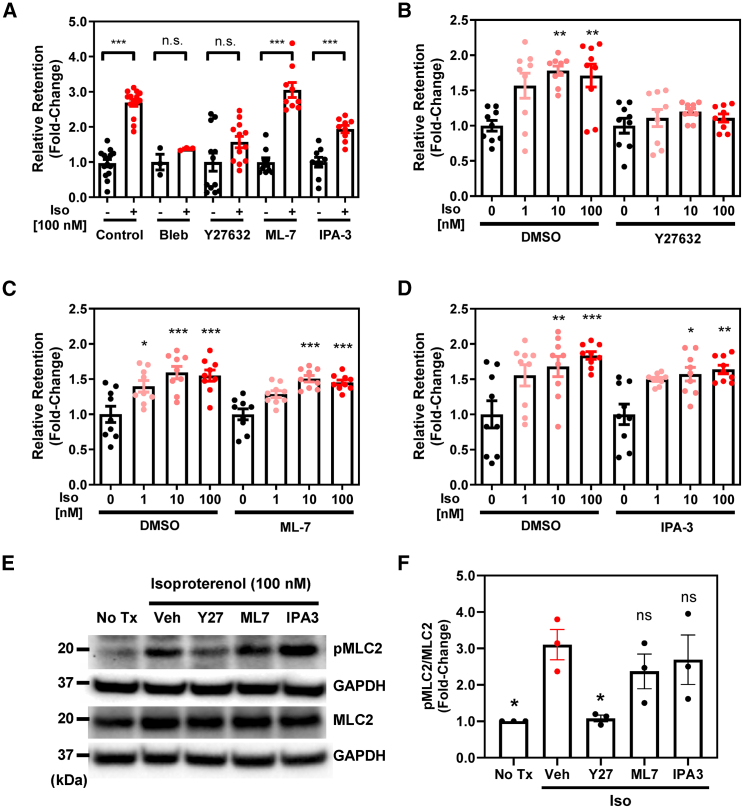
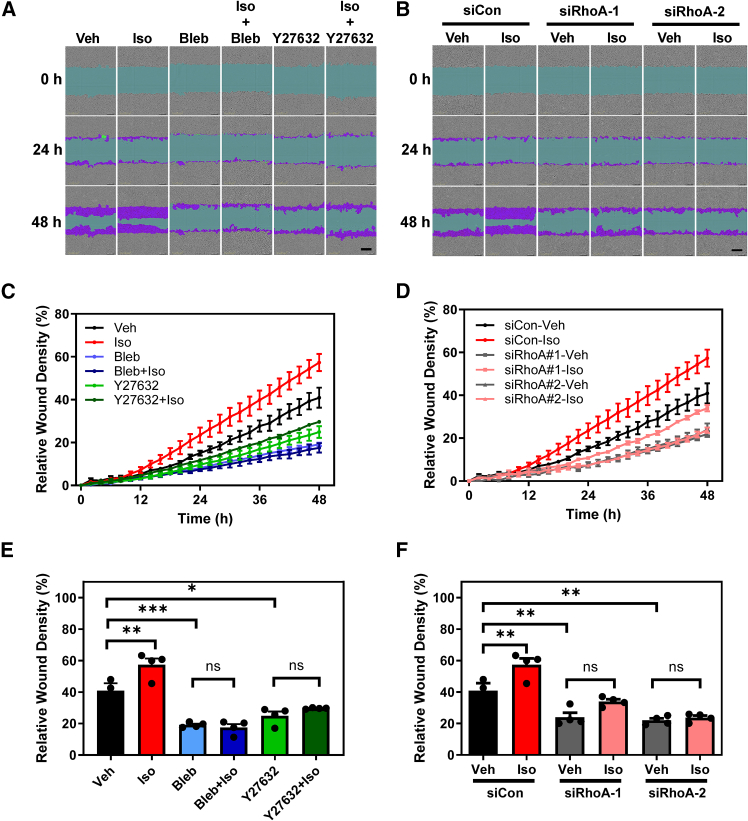
The ability of cancer cells to deform and generate force is implicated in metastasis. We previously showed that β-adrenergic agonists increase cancer cell stiffness, which was associated with enhanced motility and invasion. Here, we investigate how β-adrenoceptor (βAR) activation alters the mechanical behaviors of triple-negative breast cancer cells. We find that βAR activation increases traction forces in metastatic MDA-MB-231 and MDA-MB-468 cells, but not in non-tumorigenic MCF10A cells. Using computational modeling, we show that βAR activation increases the number of active myosin motors via myosin light chain phosphorylation. To identify molecular regulators, we use a deformability assay to screen for pharmacologic and genetic perturbations. Our results define a βAR-RhoA-ROCK-non-muscle myosin II (NMII) signaling axis that modulates the mechanical behaviors of MDA-MB-231 and MDA-MB-468 cells. These findings provide insight into how stress signaling regulates cancer cell mechanics and suggest potential targets to block metastasis in triple-negative breast cancer.
癌细胞的变形和产生力的能力与转移有关。我们之前表明,β-肾上腺素能激动剂会增加癌细胞的硬度,这与增强的运动性和侵袭性相关。在此,我们研究β-肾上腺素能受体(βAR)激活如何改变三阴性乳腺癌细胞的力学行为。我们发现βAR激活会增加转移性MDA-MB-231和MDA-MB-468细胞中的牵引力,但在非致瘤性MCF10A细胞中则不会。通过计算建模,我们表明βAR激活通过肌球蛋白轻链磷酸化增加了活性肌球蛋白马达的数量。为了识别分子调节因子,我们使用变形性测定法来筛选药理学和基因扰动。我们的结果确定了一个βAR-RhoA-ROCK-非肌肉肌球蛋白II(NMII)信号轴,该信号轴调节MDA-MB-231和MDA-MB-468细胞的力学行为。这些发现为应激信号如何调节癌细胞力学提供了见解,并提示了在三阴性乳腺癌中阻断转移的潜在靶点。