Wu Fugen, Xia Xing, Han Yuqi, Huang Zihao, Xu Yitianhe, Tao Zihao, Wang Yunzhi, Shen Dingchao, Song Shengnan, Zhu Wanling, Chen Ruijie, Shi Xianbao, Jiang Xinyu, Kou Longfa
Department of Pediatrics, Wenling Hospital of Wenzhou Medical University, Wenling, 317500, China.
Wenzhou Municipal Key Laboratory of Pediatric Pharmacy, Department of Pharmacy, The Second Affiliated Hospital and Yuying Children's Hospital of Wenzhou Medical University, Wenzhou, 325027, China.
Mater Today Bio. 2025 May 23;32:101887. doi: 10.1016/j.mtbio.2025.101887. eCollection 2025 Jun.
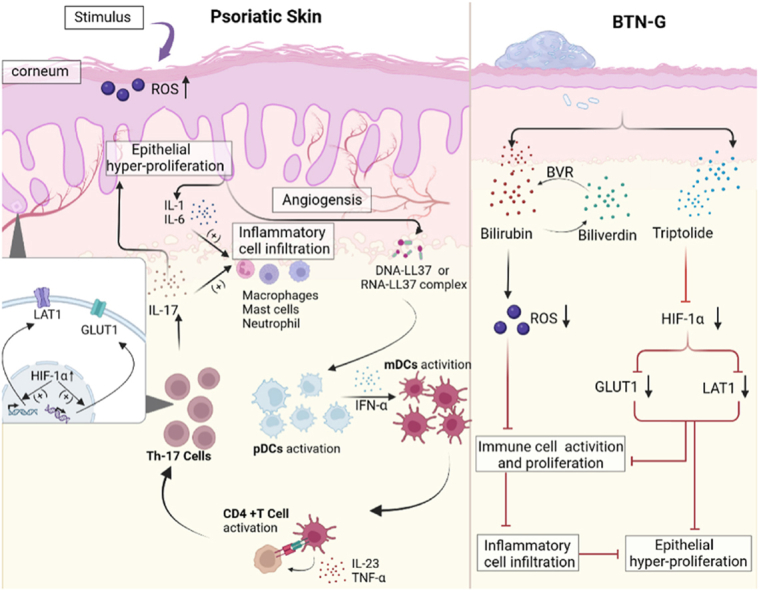
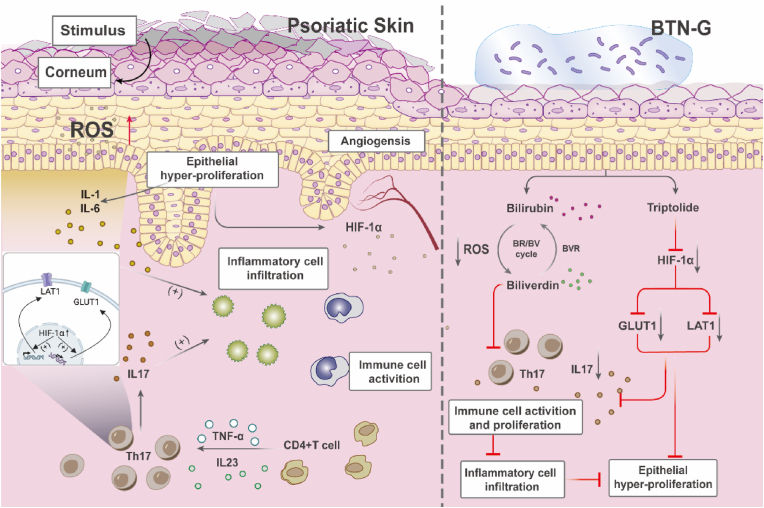
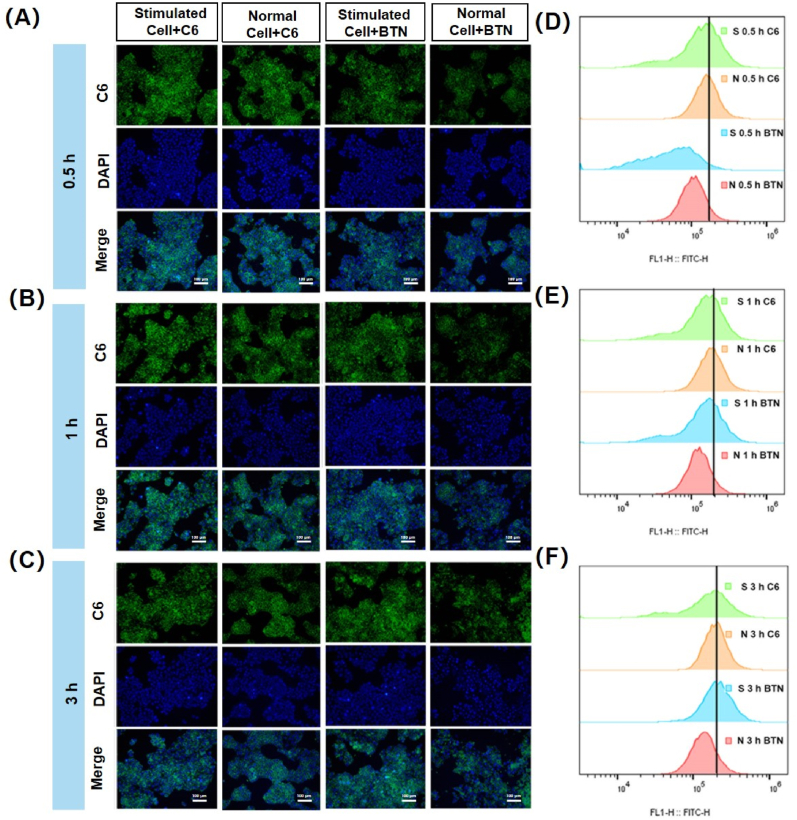
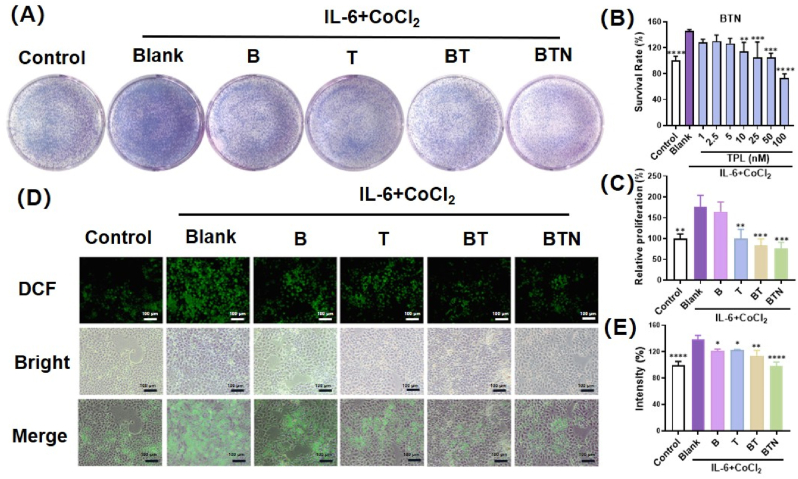
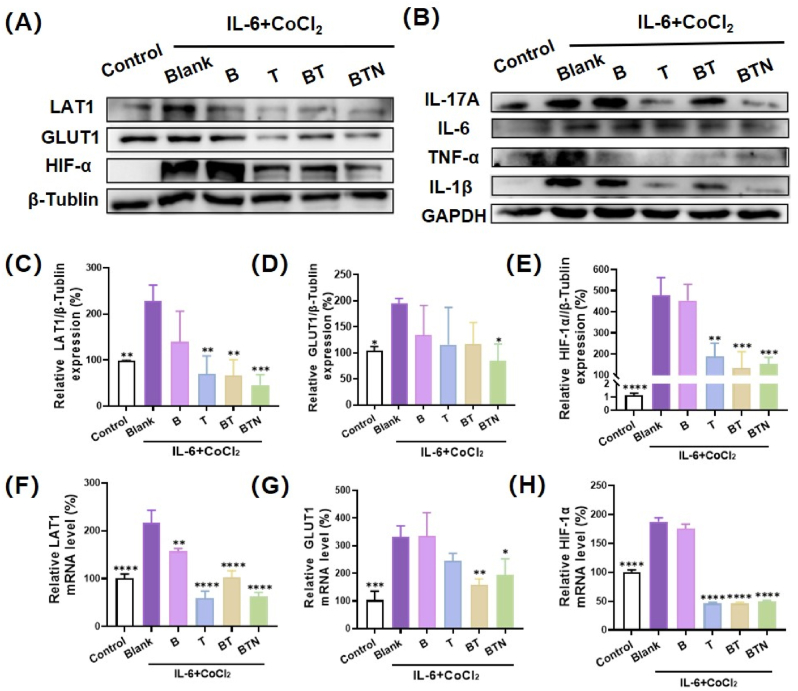
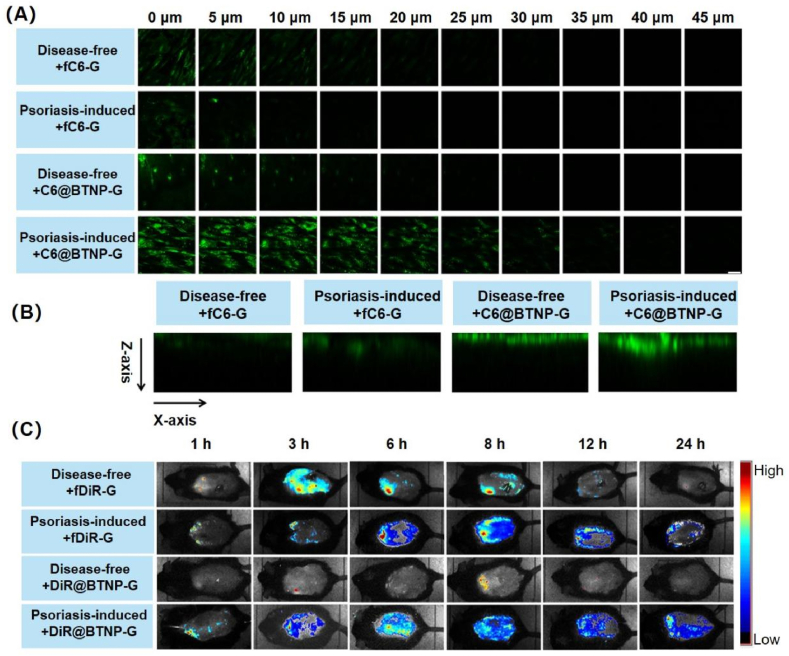
Psoriasis is a chronic skin disorder characterized by dysregulation of immune and epithelial cells, resulting in persistent symptoms such as erythema, scaling, and induration. The abnormal metabolism and increased oxidative stress in psoriasis lesions have been identified as key drivers in the pathogenesis of psoriasis, forming a positive feedback loop within psoriatic skin. Therefore, targeting this feedback loop through modulation of local metabolism and alleviation of oxidative stress could be a rational and promising therapeutic strategy for addressing psoriasis. Herein, we designed a carrier-free nanomedicine (BTN) incorporating bilirubin (BR) and triptolide (TPL) to specifically target two key pathological features of psoriasis: inflammation induced by enhanced reactive oxygen species (ROS) and aberrant proliferation/immune activation driven by heightened nutrient metabolism. In vitro studies demonstrated that BTN effectively improved the water solubility of BR and TPL while facilitating efficient drug delivery to inflammatory keratinocytes. Mechanistically, BTN was found to alleviate the inflammatory cascade caused by oxidative stress and inhibit the IL-23/IL-17 axis. Importantly, downregulation of HIF-1α in keratinocytes resulted in blocking glucose transportation via GLUT-1 as well as amino acid transportation via LAT1, ultimately impeding excessive proliferation by disrupting nutritional requirements. In an imiquimod-induced psoriasis model, BTN effectively permeated inflamed skin epithelium with long-term retention effect. As a multifunctional nanomedicine combining ROS scavenging properties with regulation of nutrition metabolism, BTN shows great promise for reducing inflammatory cell infiltration and suppressing keratinocyte proliferation. Our findings demonstrated the great potential of BTN in ameliorating psoriasis symptoms by restoring the metabolic imbalance and mitigating oxidative stress between the epithelial and immune compartments.
银屑病是一种慢性皮肤疾病,其特征在于免疫细胞和上皮细胞的失调,导致出现红斑、鳞屑和硬结等持续症状。银屑病皮损中的异常代谢和氧化应激增加已被确定为银屑病发病机制的关键驱动因素,在银屑病皮肤中形成了一个正反馈回路。因此,通过调节局部代谢和减轻氧化应激来靶向这个反馈回路,可能是治疗银屑病的一种合理且有前景的治疗策略。在此,我们设计了一种无载体纳米药物(BTN),它包含胆红素(BR)和雷公藤内酯醇(TPL),以特异性靶向银屑病的两个关键病理特征:由活性氧(ROS)增强引起的炎症以及由营养代谢增强驱动的异常增殖/免疫激活。体外研究表明,BTN有效提高了BR和TPL的水溶性,同时促进了药物向炎症性角质形成细胞的有效递送。从机制上讲,发现BTN可减轻氧化应激引起的炎症级联反应并抑制IL-23/IL-17轴。重要的是,角质形成细胞中HIF-1α的下调导致通过GLUT-1的葡萄糖转运以及通过LAT1的氨基酸转运受阻,最终通过破坏营养需求来阻碍过度增殖。在咪喹莫特诱导的银屑病模型中,BTN有效地渗透到炎症皮肤上皮中并具有长期保留效果。作为一种将ROS清除特性与营养代谢调节相结合的多功能纳米药物,BTN在减少炎症细胞浸润和抑制角质形成细胞增殖方面显示出巨大潜力。我们的研究结果表明,BTN在通过恢复上皮和免疫区室之间的代谢失衡以及减轻氧化应激来改善银屑病症状方面具有巨大潜力。