Fletcher Erika A K, Cordfunke Robert A, Nasi Aikaterini, Törnqvist Gunilla, Valentijn Rob R P M, Bergqvist Anna, Westhrin Marita, Rasch Wenche, Lindqvist Frida, Dillmann Inken, Lord Martin, Bouwman Neanke, Neefjes Jacques J, Franken Kees L M C, McArdle Stephanie, Ahmad Murrium, Johansson Silvia, Ossendorp Ferry, Haggman Michael, Lampinen Maria, Ullenhag Gustav, Ladjevardi Sam, Leja-Jarblad Justyna, Lilleby Wolfgang, Drijfhout Jan Wouter, Mangsbo Sara M
Department of Pharmacy, Science for Life Laboratory, Uppsala University, 751 24 Uppsala, Sweden.
Immuneed AB, 753 41 Uppsala, Sweden.
Mol Ther Oncol. 2025 Feb 20;33(2):200954. doi: 10.1016/j.omton.2025.200954. eCollection 2025 Jun 18.
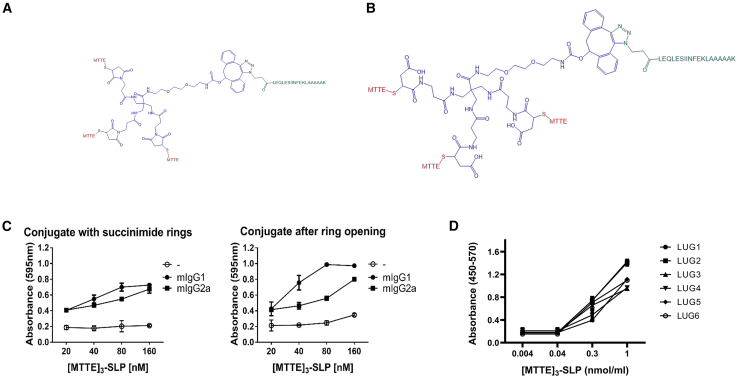
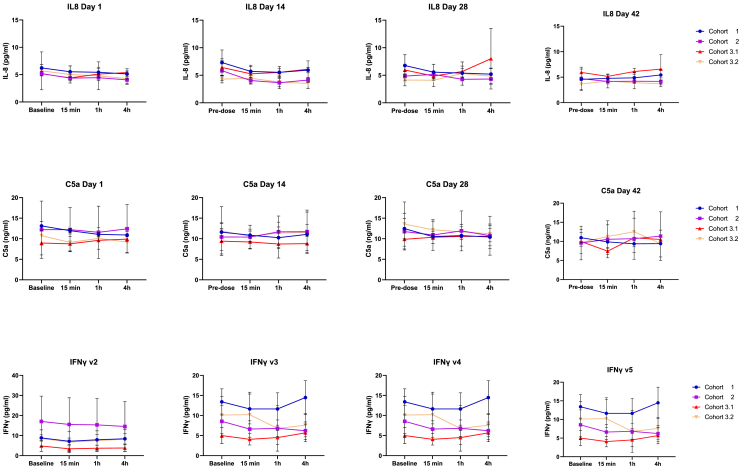
Peptide-based vaccines can be used to deliver tumor-specific antigens to dendritic cells (DCs), leading to tumor-directed T cell responses. We previously developed a peptide-peptide conjugate technology enabling cross-linking of pre-existing tetanus toxin-directed antibodies, facilitating antigen delivery to, and activation of DCs. To achieve this, multiple identical tetanus toxin-derived B cell epitopes (MTTEs) are conjugated to synthetically produce target antigens of choice. Herein, we describe the generation of a prostate cancer vaccine candidate (TENDU) based on this technology. It includes long synthetic peptides harboring epitopes (CD4 and CD8) from prostate-specific antigen (PAP) and prostate-specific membrane antigen (PSMA). The preclinical efficacy of TENDU was assessed in experimental systems, and safety was evaluated in a rabbit toxicity study and a human whole blood loop assay. We also report the first clinical safety assessment of TENDU. Experimental studies showed that prostate cancer patients mounted anti-MTTE antibodies in response to tetanus vaccination with recall T cell responses detected in two patients. Transgenic humanized HLA-DR4 mice displayed T cell responses and increased anti-MTTE IgG levels after vaccination with a peptide construct including an HLA-DR4 epitope. The vaccine candidate was found safe, and a positive correlation between T cell responses and anti-MTTE antibodies was noted in the first-in-human study.
基于肽的疫苗可用于将肿瘤特异性抗原递送至树突状细胞(DC),从而引发针对肿瘤的T细胞反应。我们之前开发了一种肽-肽偶联技术,能够交联预先存在的破伤风毒素导向抗体,促进抗原递送至DC并激活DC。为实现这一目的,将多个相同的破伤风毒素衍生的B细胞表位(MTTE)进行偶联,以合成生产所需的靶抗原。在此,我们描述了基于该技术的一种前列腺癌候选疫苗(TENDU)的产生。它包括含有来自前列腺特异性抗原(PAP)和前列腺特异性膜抗原(PSMA)的表位(CD4和CD8)的长合成肽。在实验系统中评估了TENDU的临床前疗效,并在兔毒性研究和人全血循环试验中评估了其安全性。我们还报告了TENDU的首次临床安全性评估。实验研究表明,前列腺癌患者在接受破伤风疫苗接种后产生了抗MTTE抗体,在两名患者中检测到了回忆性T细胞反应。转基因人源化HLA-DR4小鼠在接种包含HLA-DR4表位的肽构建体后表现出T细胞反应,并提高了抗MTTE IgG水平。该候选疫苗被证明是安全的,并且在首次人体研究中发现T细胞反应与抗MTTE抗体之间存在正相关。