Duttenhefner Jenna N, Reindl Katie M
Department of Biological Sciences, North Dakota State University, Fargo, ND, USA.
Mol Cell Oncol. 2025 Jun 14;12(1):2518773. doi: 10.1080/23723556.2025.2518773. eCollection 2025.
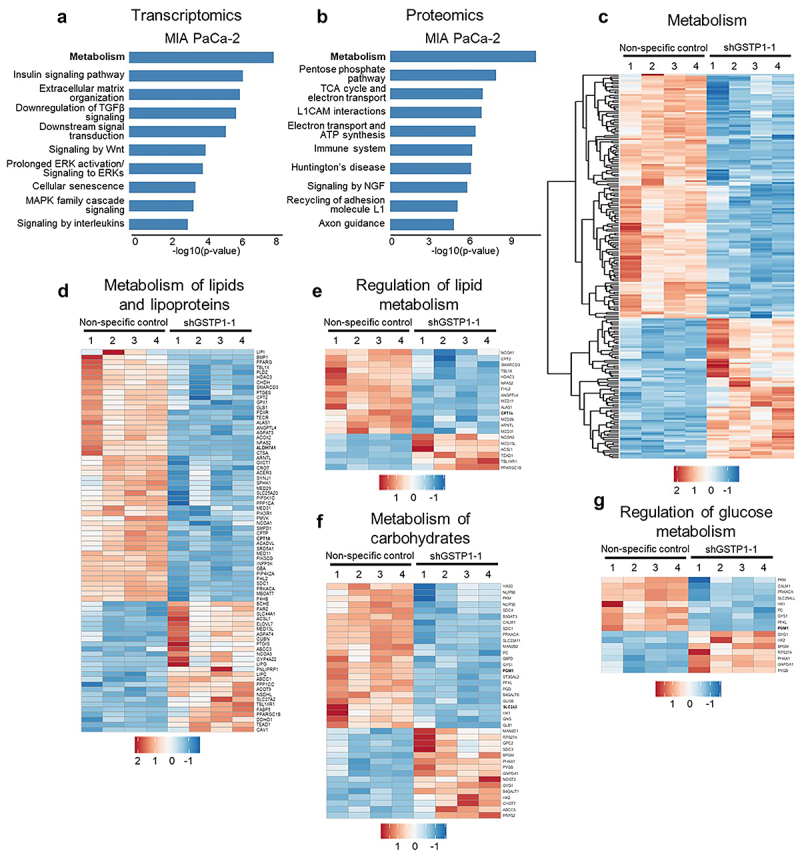
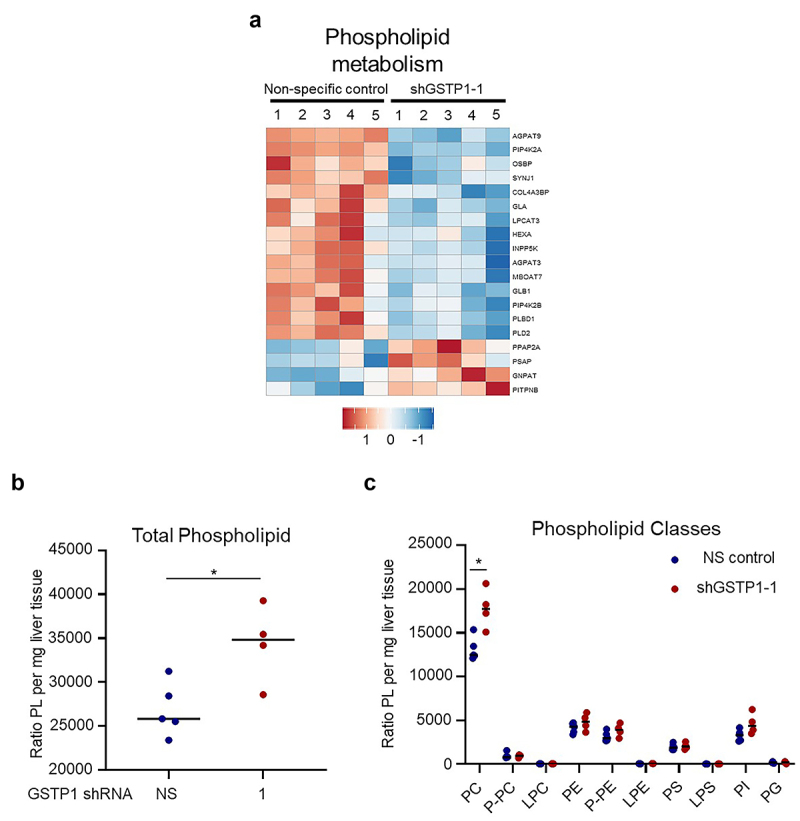
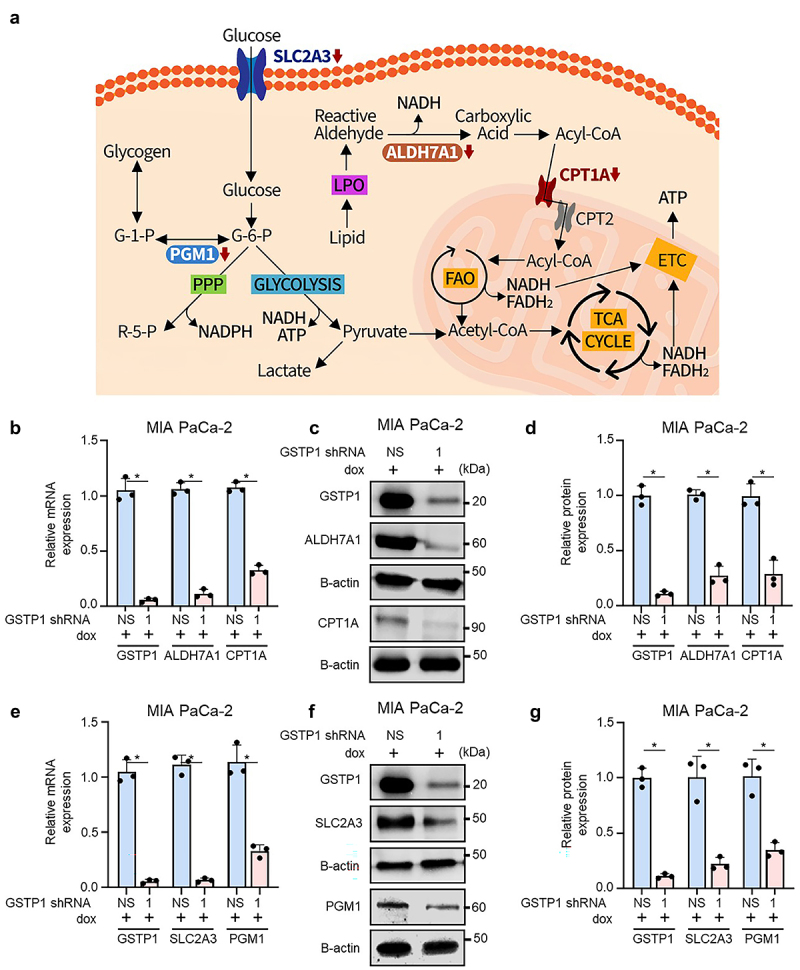
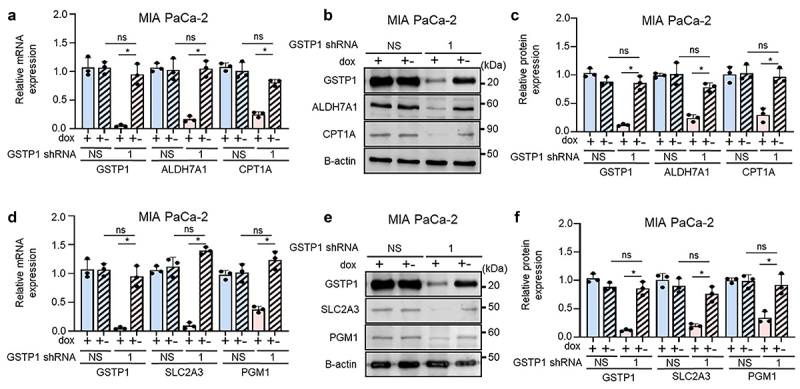
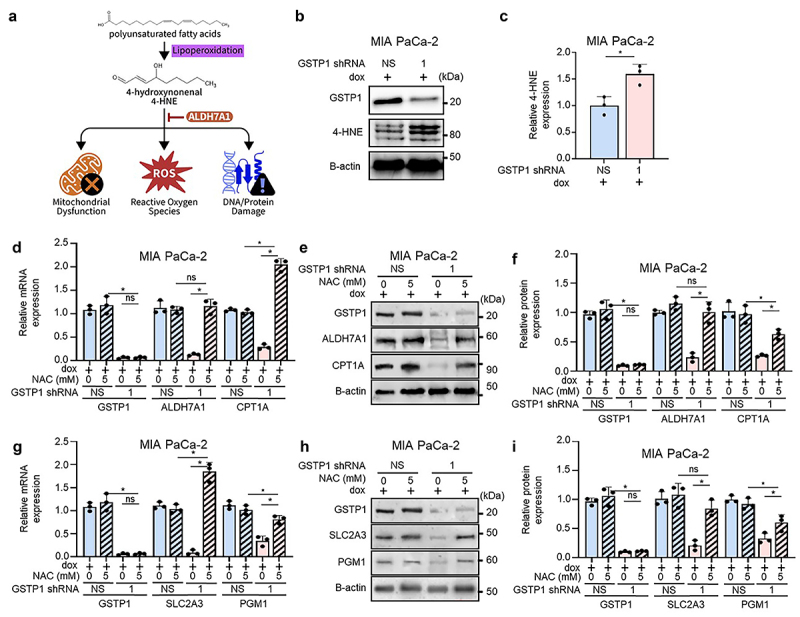
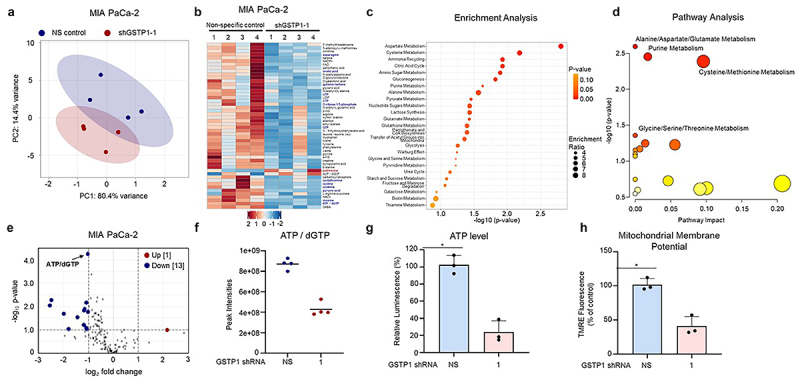
Pancreatic ductal adenocarcinoma (PDAC) is an aggressive cancer with limited treatment options, underscoring the need for novel therapeutic targets. Metabolic reprogramming is a hallmark of PDAC, enabling tumor cells to sustain rapid proliferation and survive under nutrient-deprived conditions. While glutathione S-transferase pi 1 (GSTP1) is a known regulator of redox homeostasis in PDAC, its role in metabolic adaptation remains unclear. Here, we show that GSTP1 knockdown disrupts PDAC metabolism, leading to downregulation of key metabolic enzymes (ALDH7A1, CPT1A, SLC2A3, PGM1), ATP depletion, mitochondrial dysfunction, and phospholipid remodeling. Phospholipid remodeling, including an increase in phosphatidylcholine (PC) levels, further suggests a compensatory response to metabolic stress. Importantly, GSTP1 knockdown led to elevated lipid peroxidation, increasing 4-hydroxynonenal (4-HNE) accumulation. Treatment with the antioxidant N-acetyl cysteine (NAC) partially restored metabolic gene expression, reinforcing GSTP1's role in the interplay between redox regulation and metabolism in PDAC. By disrupting multiple metabolic pathways, GSTP1 depletion creates potential therapeutic vulnerabilities that could be targeted through metabolic and oxidative stress-inducing therapies to enhance treatment efficacy.
胰腺导管腺癌(PDAC)是一种侵袭性癌症,治疗选择有限,这突出了对新型治疗靶点的需求。代谢重编程是PDAC的一个标志,使肿瘤细胞能够在营养缺乏的条件下维持快速增殖并存活。虽然谷胱甘肽S-转移酶pi 1(GSTP1)是PDAC中氧化还原稳态的已知调节因子,但其在代谢适应中的作用仍不清楚。在这里,我们表明GSTP1敲低会破坏PDAC代谢,导致关键代谢酶(ALDH7A1、CPT1A、SLC2A3、PGM1)下调、ATP耗竭、线粒体功能障碍和磷脂重塑。磷脂重塑,包括磷脂酰胆碱(PC)水平的增加,进一步表明对代谢应激的补偿反应。重要的是,GSTP1敲低导致脂质过氧化升高,增加了4-羟基壬烯醛(4-HNE)的积累。用抗氧化剂N-乙酰半胱氨酸(NAC)治疗部分恢复了代谢基因表达,加强了GSTP1在PDAC氧化还原调节与代谢相互作用中的作用。通过破坏多种代谢途径,GSTP1缺失产生了潜在的治疗弱点,可通过代谢和氧化应激诱导疗法进行靶向治疗,以提高治疗效果。