Xu Jialiang, Zhang Mengke, Yan Yi, Li Zhe, Lu Xin
School of Light Industry Science and Engineering, Beijing Technology and Business University, Beijing, China.
National Key Laboratory of Intelligent Tracking and Forecasting for Infectious Diseases, National Institute for Communicable Disease Control and Prevention, Chinese Center for Disease Control and Prevention, Beijing, China.
Front Cell Infect Microbiol. 2025 Jun 3;15:1564810. doi: 10.3389/fcimb.2025.1564810. eCollection 2025.
Plasmid-driven horizontal transfer of resistance genes in bacterial communities is a major factor in the spread of resistance worldwide. The gut microbiome, teeming with billions of microorganisms, serves as a reservoir for resistance genes. The metabolites of gut microorganisms strongly influence the physiology of their microbial community, but the role of the metabolites in the transfer of resistance genes remains unclear.
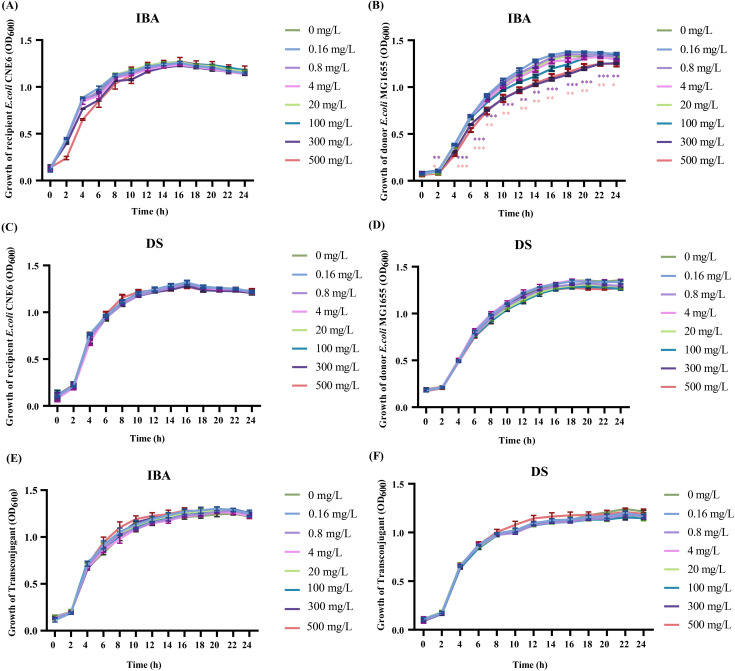
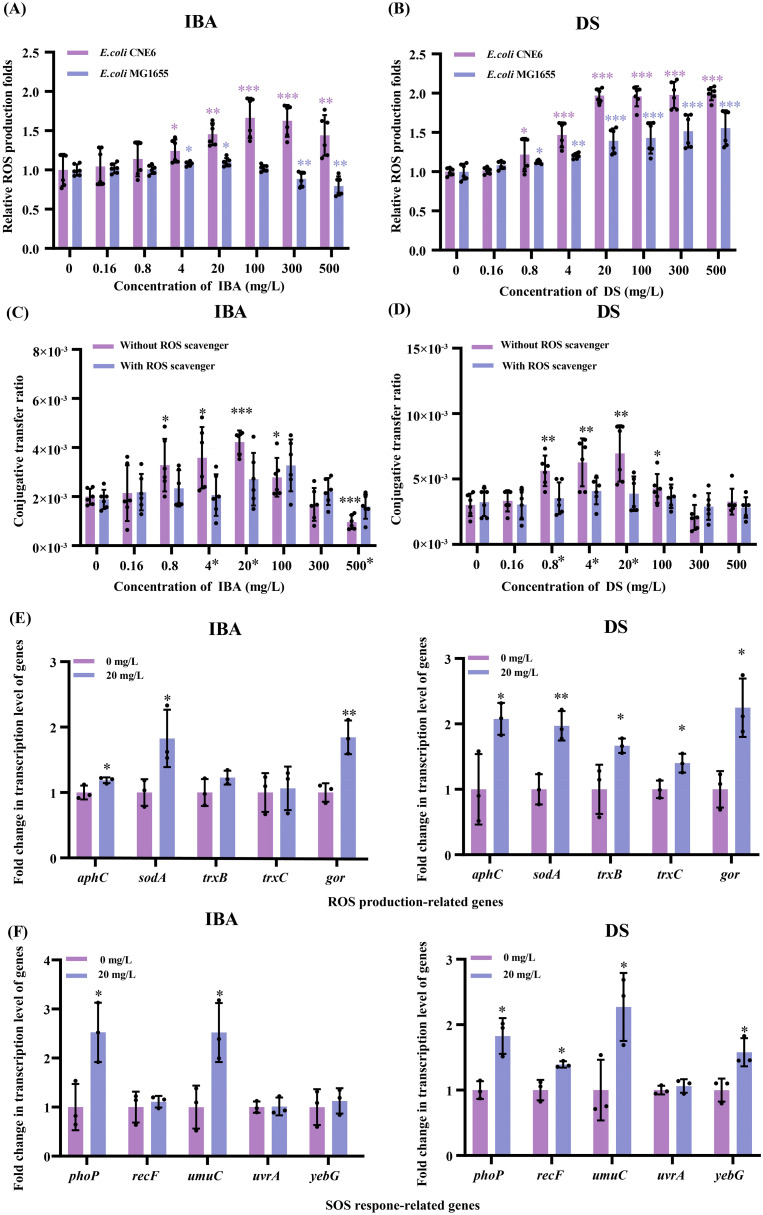
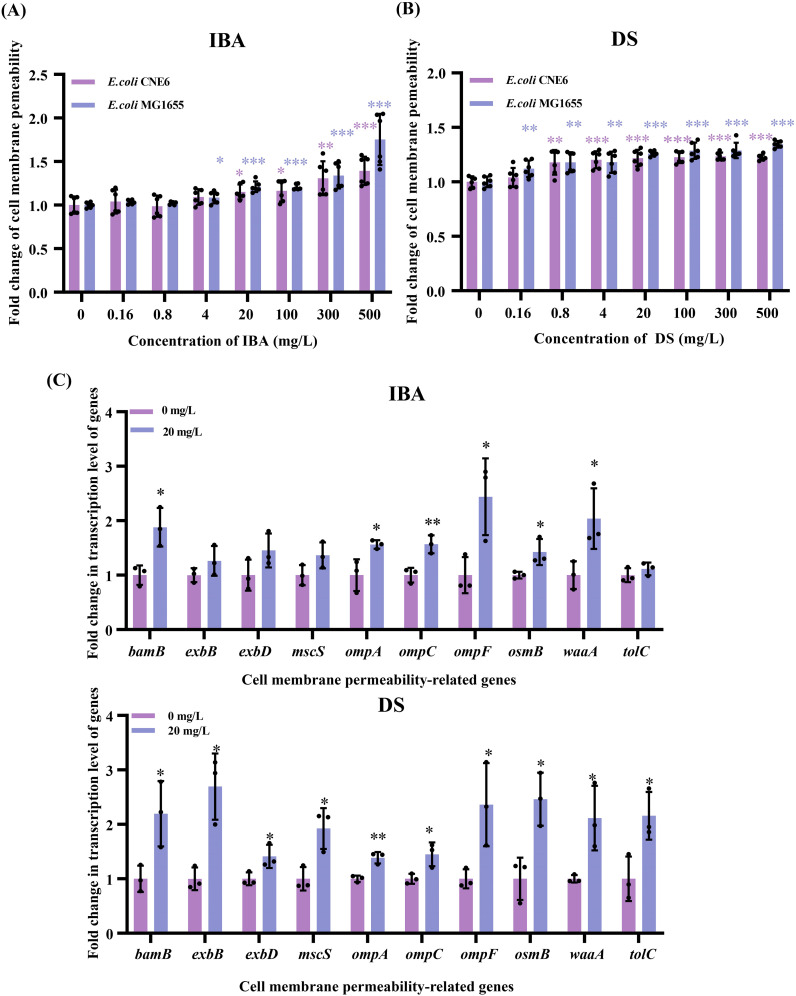
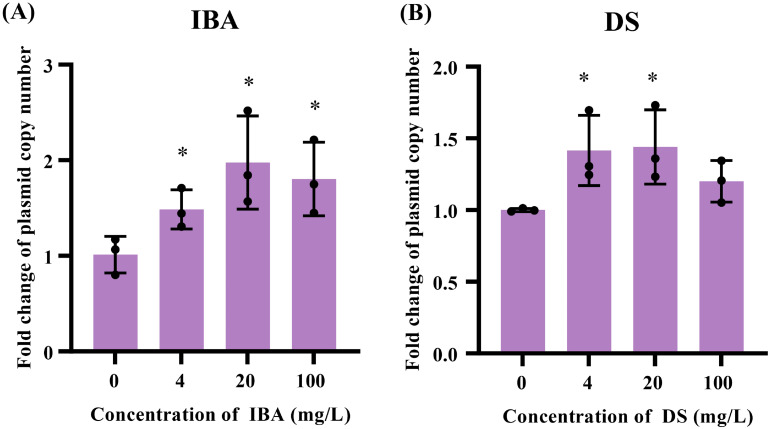
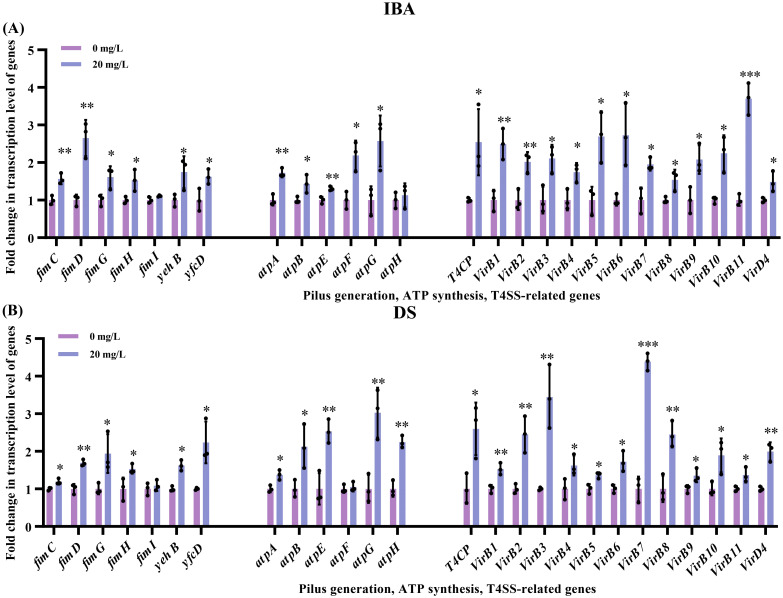
A dual-fluorescence conjugation model was established. We assessed the effects of different concentrations of indole-3-butyric acid (IBA) and disodium succinate (DS) on plasmid transfer using conjugation assays. The growth of bacteria (donors, recipients, and transconjugants), the reactive oxygen species (ROS) levels and membrane permeability were measured under IBA and DS exposure. The plasmid copy number, and transcriptional levels of conjugation-related genes (including the related genes of the regulation of ROS production, the SOS response, cell membrane permeability, pilus generation, ATP synthesis, and the type IV secretion system (T4SS) ) were evaluated by qPCR.
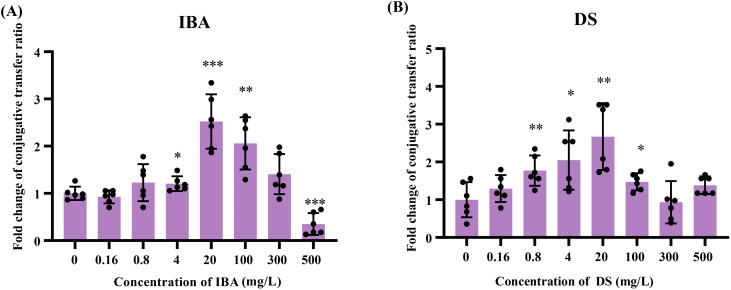
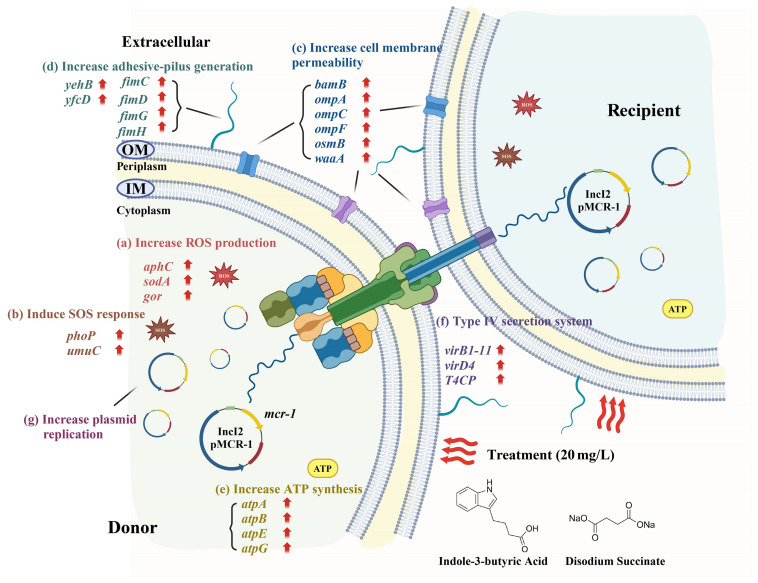
In this study, we demonstrated that IBA and DS at low concentrations, which can also be ingested through diet, enhance the interspecies transfer ratio of IncI2 -carrying plasmid in . At 20 mg/L, the transfer ratios in the presence of IBA or DS increased by 2.5- and 2.7-fold compared to that of the control, respectively. Exposure to this concentration of IBA or DS increased the production of reactive oxygen species (ROS), the SOS response, cell membrane permeability, and plasmid copy number. The transcription of genes of the related pathways and of pilus, ATP, and the T4SS was upregulated.
Our findings revealed that low-dose gut microbiota metabolites-particularly those with dietary origins-promote plasmid-mediated resistance gene dissemination through multifaceted mechanisms involving oxidative stress, SOS activation, and conjugation machinery enhancement. This highlights potential public health risks associated with microbiota metabolites, especially those utilized in food production.
细菌群落中由质粒驱动的抗性基因水平转移是全球抗性传播的一个主要因素。肠道微生物群中充斥着数十亿微生物,是抗性基因的储存库。肠道微生物的代谢产物强烈影响其微生物群落的生理学,但这些代谢产物在抗性基因转移中的作用仍不清楚。
建立了双荧光结合模型。我们使用结合试验评估了不同浓度的吲哚 - 3 - 丁酸(IBA)和琥珀酸钠(DS)对质粒转移的影响。在IBA和DS暴露下测量细菌(供体、受体和接合子)的生长、活性氧(ROS)水平和膜通透性。通过qPCR评估质粒拷贝数以及接合相关基因(包括ROS产生调节、SOS反应、细胞膜通透性、菌毛生成、ATP合成和IV型分泌系统(T4SS)的相关基因)的转录水平。
在本研究中,我们证明低浓度的IBA和DS(也可通过饮食摄入)可提高携带IncI2质粒在中的种间转移率。在20 mg/L时,与对照相比,IBA或DS存在时的转移率分别提高了2.5倍和2.7倍。暴露于该浓度的IBA或DS会增加活性氧(ROS)的产生、SOS反应、细胞膜通透性和质粒拷贝数。相关途径以及菌毛、ATP和T4SS基因的转录上调。
我们的研究结果表明,低剂量的肠道微生物群代谢产物 - 特别是那些来源于饮食的代谢产物 - 通过涉及氧化应激、SOS激活和接合机制增强的多方面机制促进质粒介导的抗性基因传播。这突出了与微生物群代谢产物相关的潜在公共卫生风险,尤其是那些用于食品生产的代谢产物。