Ye Sheng, Eura Yuka, Matsumoto Masanori, Kokame Koichi
Department of Molecular Pathogenesis, National Cerebral and Cardiovascular Center, Suita, Osaka, Japan.
Department of Cardiovascular System Research, Nara Medical University, Kashihara, Nara, Japan.
Res Pract Thromb Haemost. 2025 May 17;9(4):102888. doi: 10.1016/j.rpth.2025.102888. eCollection 2025 May.
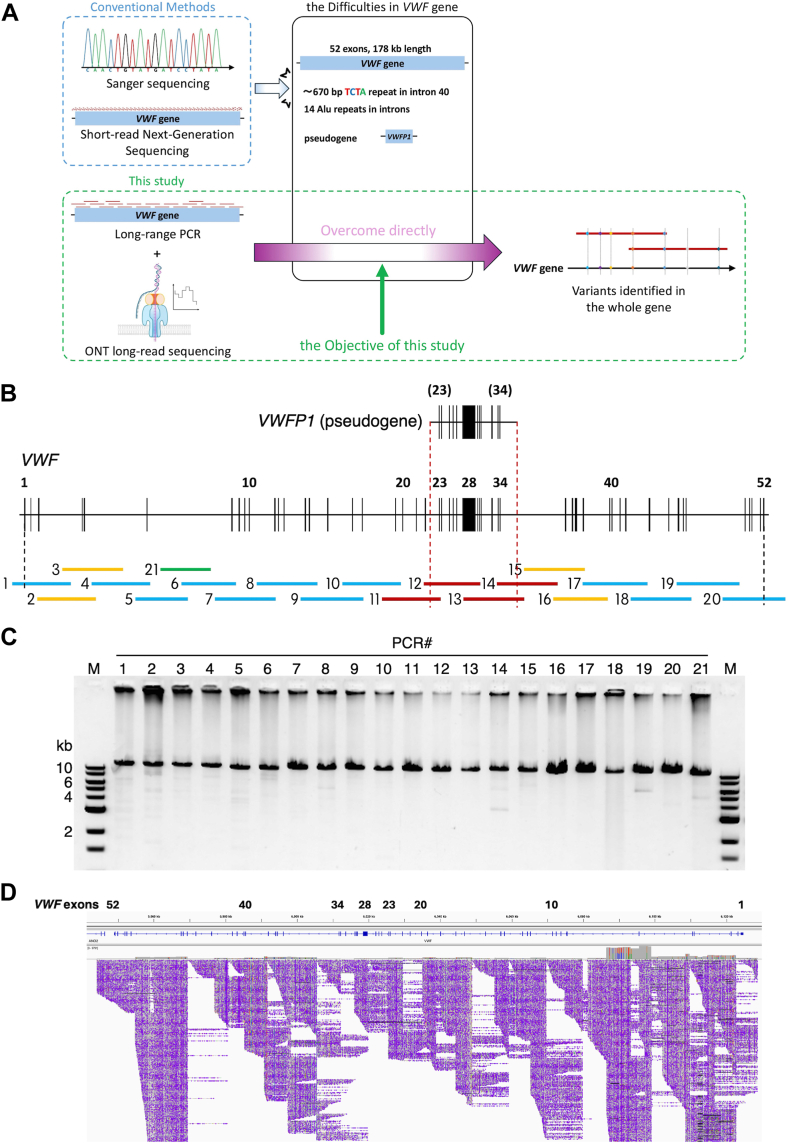
Genetic defects in von Willebrand factor (VWF) can lead to von Willebrand disease (VWD). Identifying causative or modifier variants of is crucial for the diagnosis, classification, and clinical management of VWF disorders. However, owing to the length (178 kb) and complexity of and the presence of the pseudogene , Sanger sequencing or short-read next-generation sequencing is often challenging.
This study aimed to establish a long-read sequencing method using Oxford nanopore technology (ONT) to overcome difficulties associated with gene analysis.
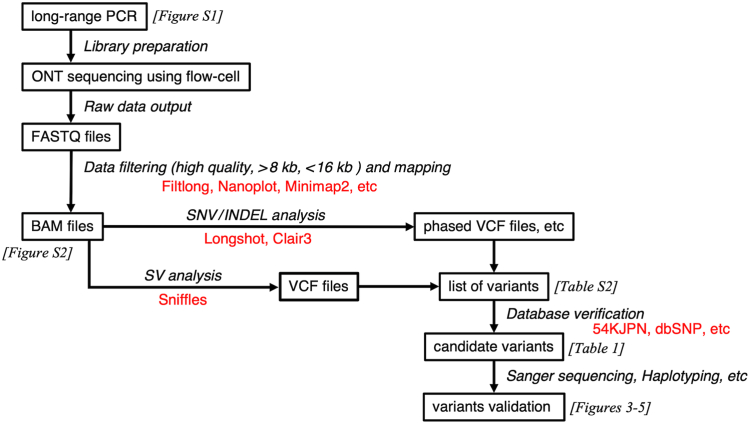
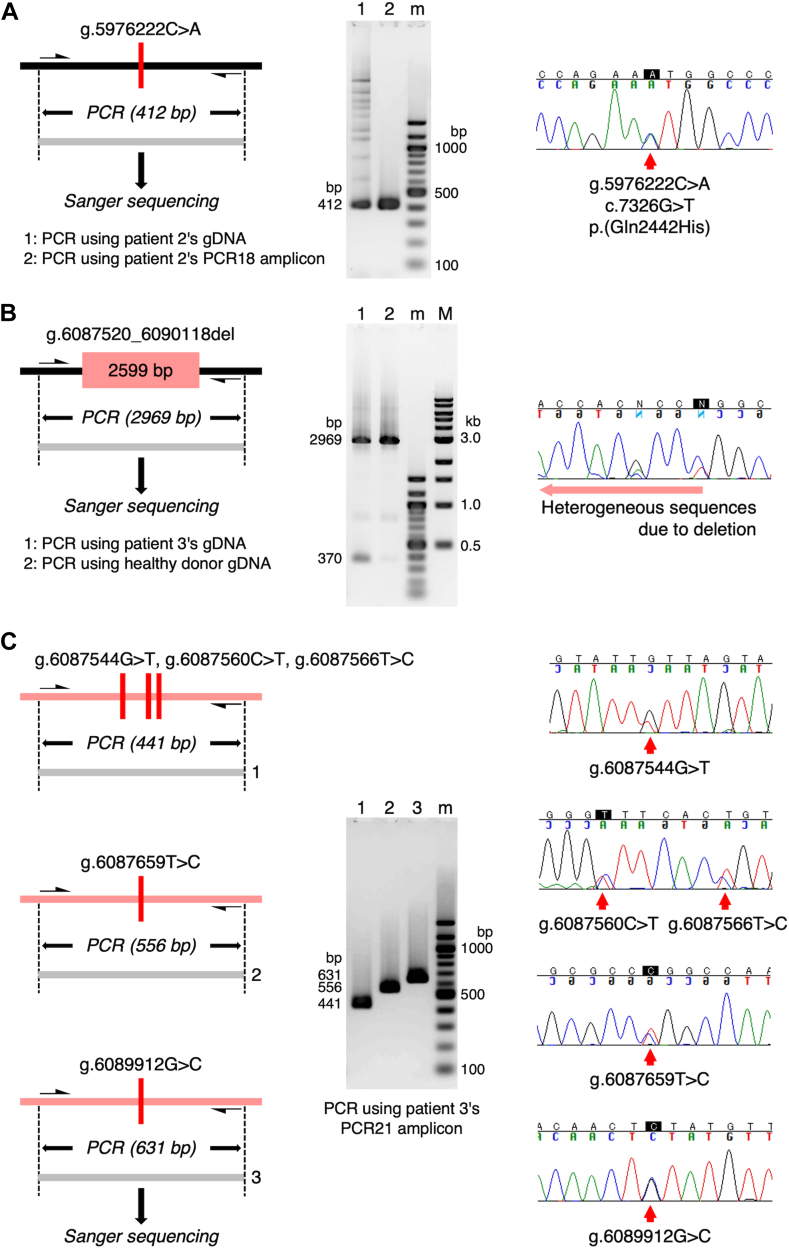
Genetic analyses were established using genomic DNA from a healthy donor and validated using 3 VWF disorder patient samples. Long-range (∼15 kb) polymerase chain reaction was optimized to obtain 21 amplicons covering the entire gene, avoiding unwanted amplification due to repetitive sequences and . ONT nanopore sequencing data were analyzed using software programs, including Clair3, Longshot, and Sniffles. The identified candidate variants were verified by several approaches such as Sanger sequencing and haplotyping.
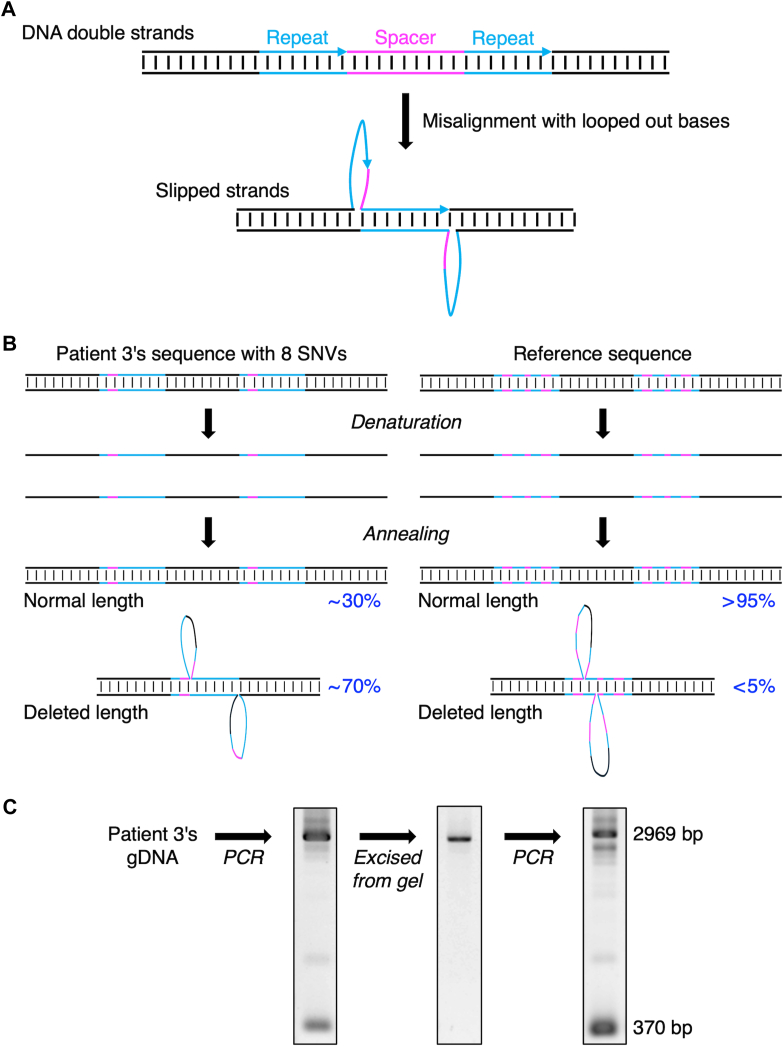
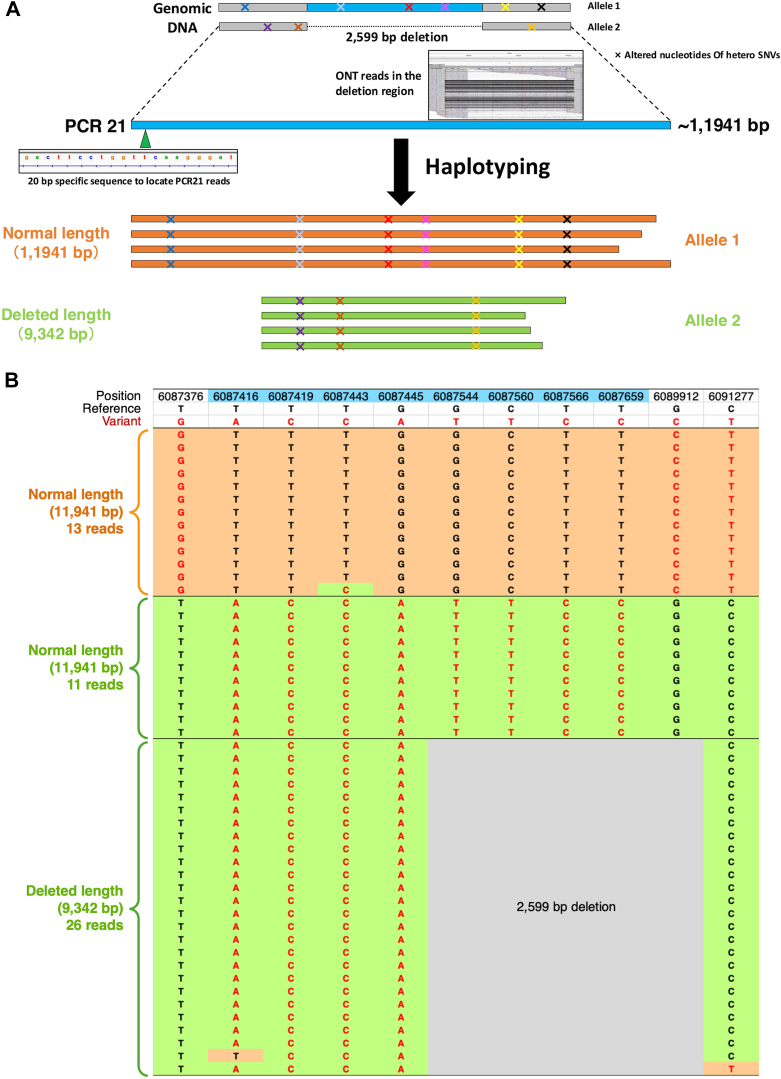
The entire gene was successfully read using ONT nanopore sequencing, with >200 variants called in each patient sample. A rare missense variant, p.(Gln2442His) and a rare 2599 bp deletion were identified in patients 2 and 3, respectively. However, the deletion was confirmed as long-range polymerase chain reaction artifacts, which warrant attention when using this method.
This study presents an optimal solution using ONT nanopore sequencing to identify variants in , which may improve the diagnosis of VWF disorders.
血管性血友病因子(VWF)的基因缺陷可导致血管性血友病(VWD)。识别VWF的致病或修饰变异对于VWF疾病的诊断、分类和临床管理至关重要。然而,由于VWF基因长度(178 kb)和复杂性以及假基因的存在,桑格测序或短读长下一代测序往往具有挑战性。
本研究旨在建立一种使用牛津纳米孔技术(ONT)的长读长测序方法,以克服与VWF基因分析相关的困难。
使用来自健康供体的基因组DNA建立基因分析,并使用3个VWF疾病患者样本进行验证。优化长距离(约15 kb)聚合酶链反应,以获得覆盖整个VWF基因的21个扩增子,避免由于重复序列和假基因导致的不必要扩增。使用包括Clair3、Longshot和Sniffles在内的软件程序分析ONT纳米孔测序数据。通过桑格测序和单倍型分析等多种方法验证鉴定出的候选变异。
使用ONT纳米孔测序成功读取了整个VWF基因,每个患者样本中检测到>200个变异。分别在患者2和患者3中鉴定出一个罕见的错义变异p.(Gln2442His)和一个罕见的2599 bp缺失。然而,该缺失被确认为长距离聚合酶链反应假象,在使用该方法时应予以注意。
本研究提出了一种使用ONT纳米孔测序识别VWF基因变异的最佳解决方案,这可能会改善VWF疾病的诊断。