He Mengzao, Zhao Yejun, Jiang Jinping, Fan Ling, Mo Weinong, Yao Qiang, Wang Yanwen, He Minzhi, Shen Fangfang
Department of Neonatology, Hangzhou Women's Hospital (Hangzhou Maternity and Child Health Care Hospital).
Department of Anesthesiology, The Second Affiliated Hospital Zhejiang University School of Medicine, Hangzhou.
Neuroreport. 2025 Aug 6;36(11):609-622. doi: 10.1097/WNR.0000000000002184. Epub 2025 Jun 13.
Neonatal hypoxic-ischemic brain damage (HIBD) can cause short- and long-term neurological damage. MicroRNA (miR)-204-5p is closely associated with nerve injury caused by brain injury, but its mechanism in HIBD is not very clear.
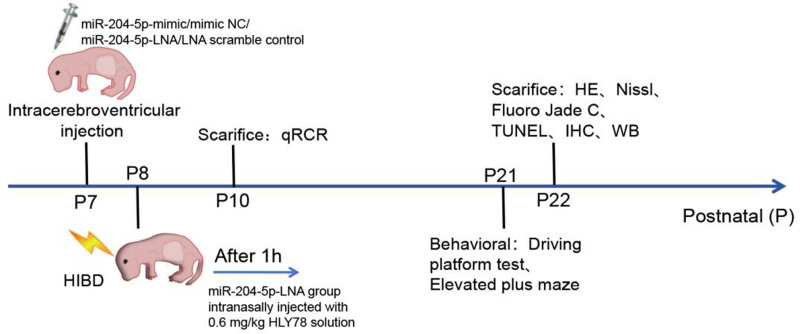
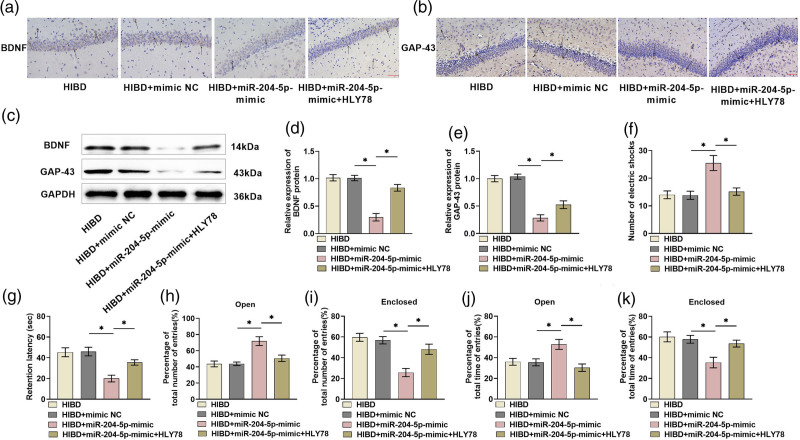
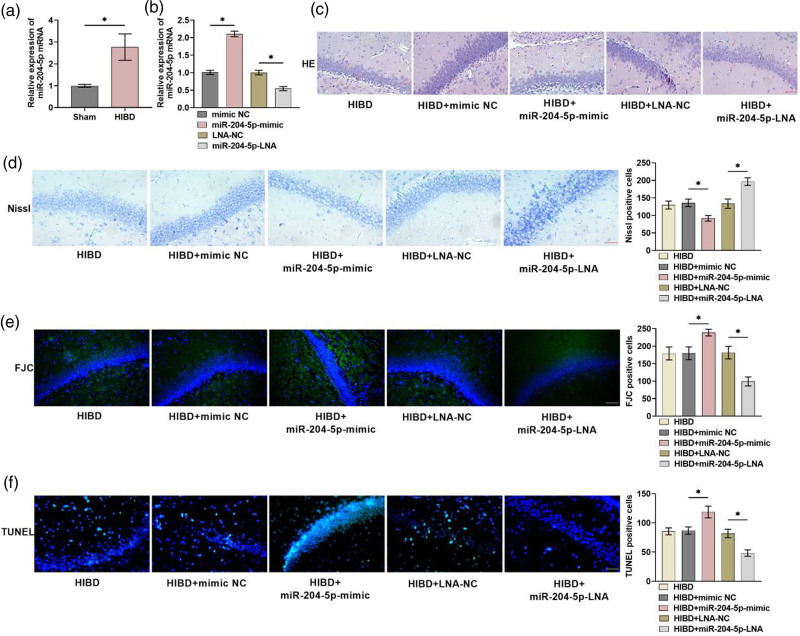
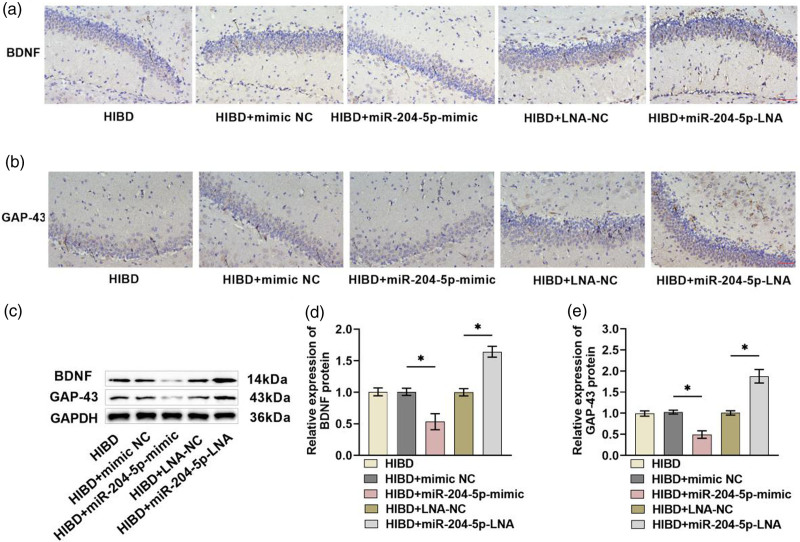
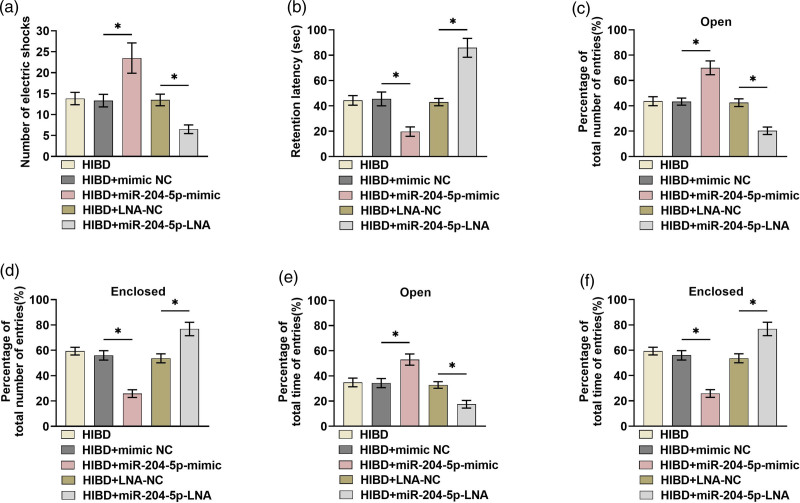
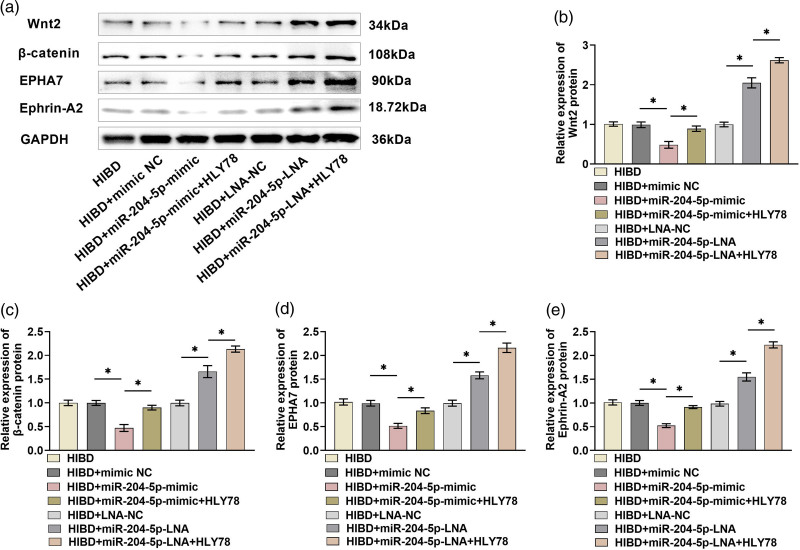
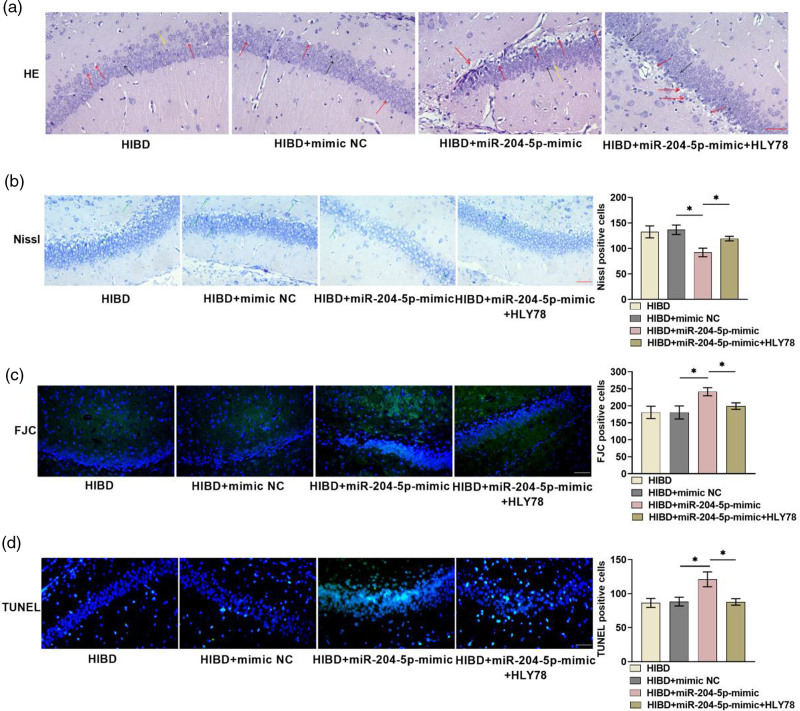
The neonatal rat's HIBD model was constructed by the modified Rice-Vannucci method, and the expression of miR-204-5p was detected. After overexpression or knockdown of miR-204-5p and application of Wnt2 activator HLY78, the histopathological changes and neuronal degeneration in the hippocampal CA1 region were observed with pathological staining. The neurological function was assessed with a diving platform test and elevated plus-maze test. Nerve regeneration-related protein and Wnt2/Ephrin-A2 (Eph receptor-interacting proteins)/EphA7 (erythropoi-etin-producing hepatomocellular receptor) signaling pathway protein levels were detected by immunohistochemistry and western blot, respectively.
miR-204-5p was highly expressed in HIBD. When miR-204-5p was knocked down, the morphology of nerve cells and Nissl bodies was notably improved, Fluoro-Jade C and terminal deoxynucleotidyl transferase-mediated dUTP nick end labeling-positive cells number was significantly reduced. The levels of brain-derived neurotrophic factor and growth-associated protein 43 were significantly increased, and the behavioral indicators of the diving platform and elevated plus-maze test were significantly alleviated. The nerve injury was repaired, and the Wnt2/Ephrin-A2/EphA7 signaling pathway protein was notably elevated. The overexpressed miR-204-5p aggravated the nerve injury in HIBD rats. After the application of HLY78, the neuropathological damage of HIBD rats was further repaired, and the nerve regeneration and function were also significantly improved.
Knockdown of miR-204-5p can improve HIBD in neonatal rats by activating the Wnt2/Ephrin-A2/EphA7 signaling pathway to encourage nerve regeneration and functional recovery.
新生儿缺氧缺血性脑损伤(HIBD)可导致短期和长期的神经损伤。微小RNA(miR)-204-5p与脑损伤所致神经损伤密切相关,但其在HIBD中的作用机制尚不完全清楚。
采用改良的Rice-Vannucci法构建新生大鼠HIBD模型,检测miR-204-5p的表达。在过表达或敲低miR-204-5p并应用Wnt2激活剂HLY78后,通过病理染色观察海马CA1区的组织病理学变化和神经元变性。采用水迷宫试验和高架十字迷宫试验评估神经功能。分别通过免疫组织化学和蛋白质印迹法检测神经再生相关蛋白以及Wnt2/埃菲林-A2(Eph受体相互作用蛋白)/EphA7(促红细胞生成素产生肝细胞受体)信号通路蛋白水平。
miR-204-5p在HIBD中高表达。敲低miR-204-5p后,神经细胞和尼氏体的形态明显改善,氟玉髓C和末端脱氧核苷酸转移酶介导的dUTP缺口末端标记阳性细胞数量显著减少。脑源性神经营养因子和生长相关蛋白43水平显著升高,水迷宫和高架十字迷宫试验的行为指标明显改善。神经损伤得到修复,Wnt2/埃菲林-A2/EphA7信号通路蛋白显著升高。过表达miR-204-5p加重了HIBD大鼠的神经损伤。应用HLY78后,HIBD大鼠的神经病理损伤进一步修复,神经再生和功能也显著改善。
敲低miR-204-5p可通过激活Wnt2/埃菲林-A2/EphA7信号通路促进神经再生和功能恢复,从而改善新生大鼠的HIBD。