Dziobak Miranda K, Curtin Tita, Wells Randall S, Takeshita Ryan, Smith Cynthia R, Zolman Eric, Toms Christina N, Allen Robyn F, Hart Leslie B
Department of Health and Human Performance, School of Health Sciences, College of Charleston, Charleston, SC, United States.
Department of Environmental Health Sciences, Arnold School of Public Health, University of South Carolina, Columbia, SC, United States.
Front Mar Sci. 2025;12. doi: 10.3389/fmars.2025.1554075. Epub 2025 May 11.
Exposure to phthalate esters has previously been documented in bottlenose dolphins () inhabiting an urban estuary (Sarasota Bay, FL, USA; 2010-2019). Phthalates are chemicals commonly added to plastic products and consumer goods to enhance qualities such as flexibility, fragrance, and stability. Chemical leaching from products into the marine environment leaves wildlife vulnerable to reproductive, developmental, and metabolic impairment. Environmental phthalate exposure has been shown to vary relative to human activity and urbanization.
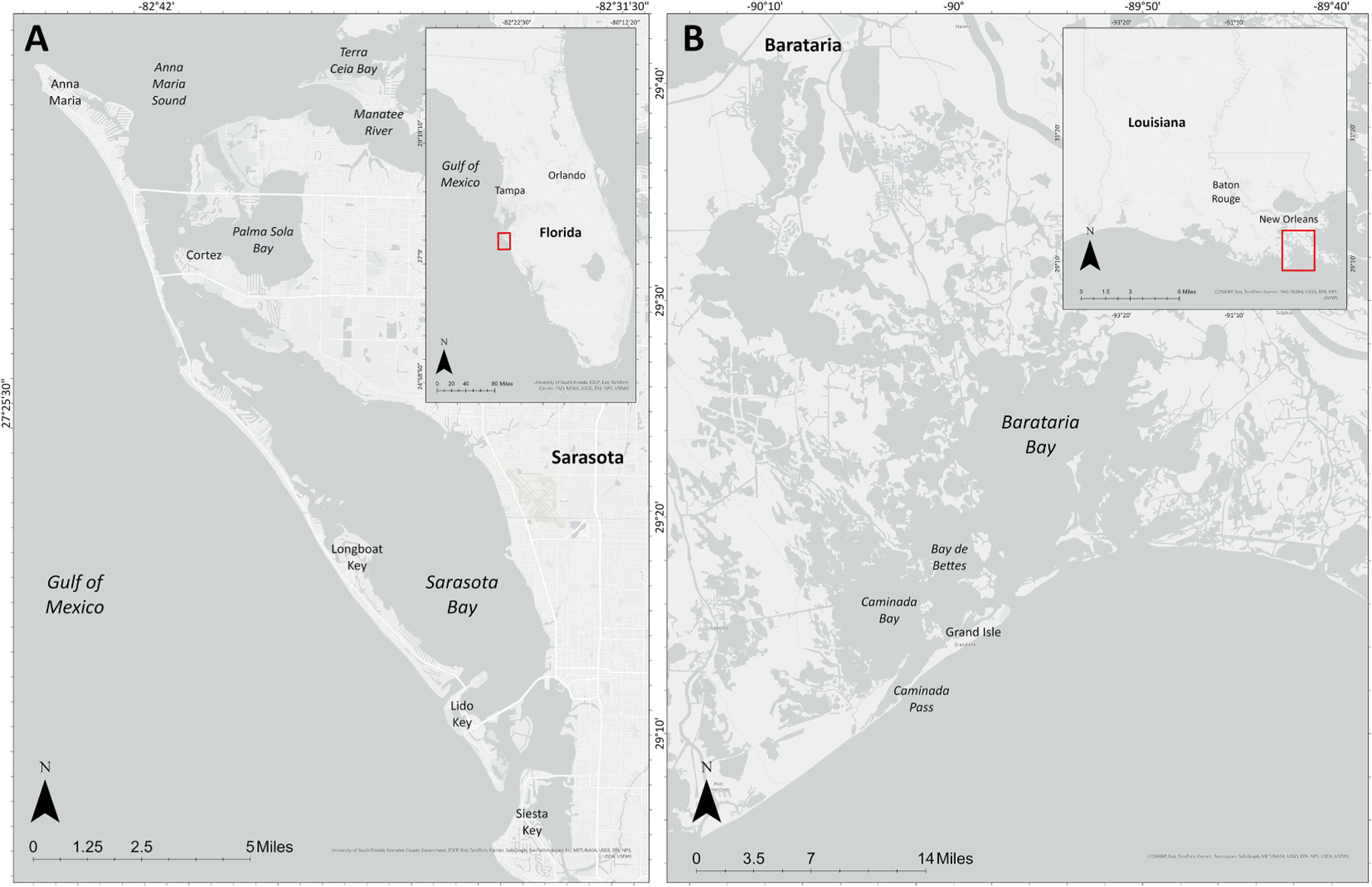
To evaluate potential differences in dolphin exposure risk, urine was collected from free-ranging bottlenose dolphins residing in an urban (Sarasota Bay, FL, USA; 2010-2024; n=71) and rural estuary (Barataria Bay, LA, USA; 2011-2023; n=45). Urinary phthalate metabolite concentrations were quantified with high-performance liquid chromatography (HPLC; Agilent 1100; WatersXBridge BEH C18, 2.5 μm, 2.1×50 mm analytical column) coupled to a triple quadrupole mass spectrometer (MS; Applied Biosystems Sciex API 4000) with an electrospray ionization (ESI negative) interface.
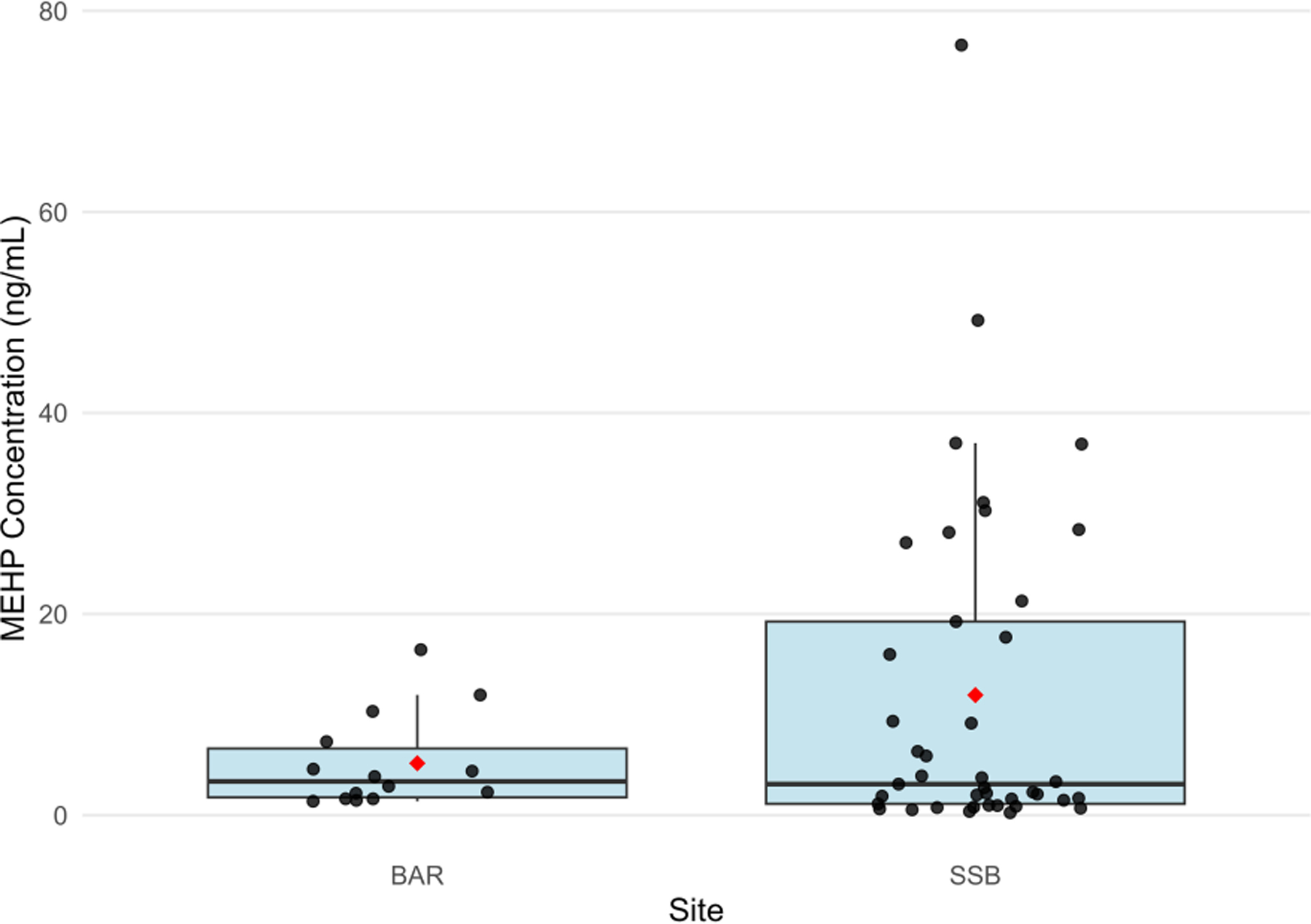
The magnitude of MEHP detection did not differ significantly between sampling sites (p=0.97); however, MEHP was detected more frequently in Sarasota Bay dolphins (73.24%; n=52; 95% CI: 61.20-82.73) than Barataria Bay dolphins (33.33%; n=15; 95% CI: 20.00-48.95%). Dolphins from Sarasota Bay may be exposed to a greater diversity of phthalates compared to Barataria Bay dolphins, indicated by differences in the detected phthalate metabolite profile.
Notably, dolphins from Barataria Bay were impacted by the Deepwater Horizon oil spill, with evidence suggesting long-term negative health outcomes. The endocrine-disrupting effects of phthalates could exacerbate metabolic, reproductive, or immune dysfunction in dolphins, especially those with compromised health. The higher phthalate detection frequency in Sarasota Bay dolphins suggests increased urban exposure risks; however, detection in dolphins from Barataria Bay raises concerns for dolphins in recovering ecosystems. Further research is needed to assess potential synergistic impacts of chemical mixtures, and targeted mitigation strategies in contaminated environments.
此前已有文献记载,栖息于城市河口(美国佛罗里达州萨拉索塔湾;2010 - 2019年)的宽吻海豚体内存在邻苯二甲酸酯暴露情况。邻苯二甲酸酯是一类通常添加到塑料制品和消费品中的化学物质,用于增强柔韧性、香味和稳定性等特性。这些化学物质从产品中渗出进入海洋环境,使野生动物易受生殖、发育和代谢损害。已表明环境中邻苯二甲酸酯暴露情况因人类活动和城市化程度而异。
为评估海豚暴露风险的潜在差异,从生活在城市河口(美国佛罗里达州萨拉索塔湾;2010 - 2024年;n = 71)和农村河口(美国路易斯安那州巴拉塔里亚湾;2011 - 2023年;n = 45)的自由放养宽吻海豚中收集尿液。采用高效液相色谱(HPLC;安捷伦1100;沃特世XBridge BEH C18,2.5μm,2.1×50mm分析柱)结合配备电喷雾电离(ESI负离子模式)接口的三重四极杆质谱仪(MS;应用生物系统公司Sciex API 4000)对尿中邻苯二甲酸酯代谢物浓度进行定量分析。
两个采样点间单(2 - 乙基己基)邻苯二甲酸酯(MEHP)的检测量差异不显著(p = 0.97);然而,在萨拉索塔湾的海豚中检测到MEHP的频率更高(73.24%;n = 52;95%置信区间:61.20 - 82.73),高于巴拉塔里亚湾的海豚(33.33%;n = 15;95%置信区间:20.00 - 48.95%)。从检测到的邻苯二甲酸酯代谢物谱差异表明,与巴拉塔里亚湾的海豚相比,萨拉索塔湾的海豚可能接触到更多种类的邻苯二甲酸酯。
值得注意的是,巴拉塔里亚湾的海豚受到了深水地平线石油泄漏事件的影响,有证据表明存在长期负面健康后果。邻苯二甲酸酯的内分泌干扰作用可能会加剧海豚的代谢、生殖或免疫功能障碍,尤其是那些健康状况不佳的海豚。萨拉索塔湾海豚中邻苯二甲酸酯检测频率较高表明城市暴露风险增加;然而,在巴拉塔里亚湾海豚中的检测结果引发了对生态系统正在恢复地区海豚的担忧。需要进一步研究以评估化学混合物的潜在协同影响,以及在受污染环境中的针对性缓解策略。