Dihlmann Susanne, Kaduk Carolin, Passek Karola H, Spieler Anja, Böckler Dittmar, Peters Andreas S
Department of Vascular and Endovascular Surgery, University Hospital Heidelberg, Im Neuenheimer Feld 420, 69120, Heidelberg, Germany.
Department of Vascular and Endovascular Surgery, University Hospital Frankfurt, Theodor-Stern-Kai 7, 60590, Frankfurt Am Main, Germany.
Sci Rep. 2025 Jun 20;15(1):20196. doi: 10.1038/s41598-025-06220-5.
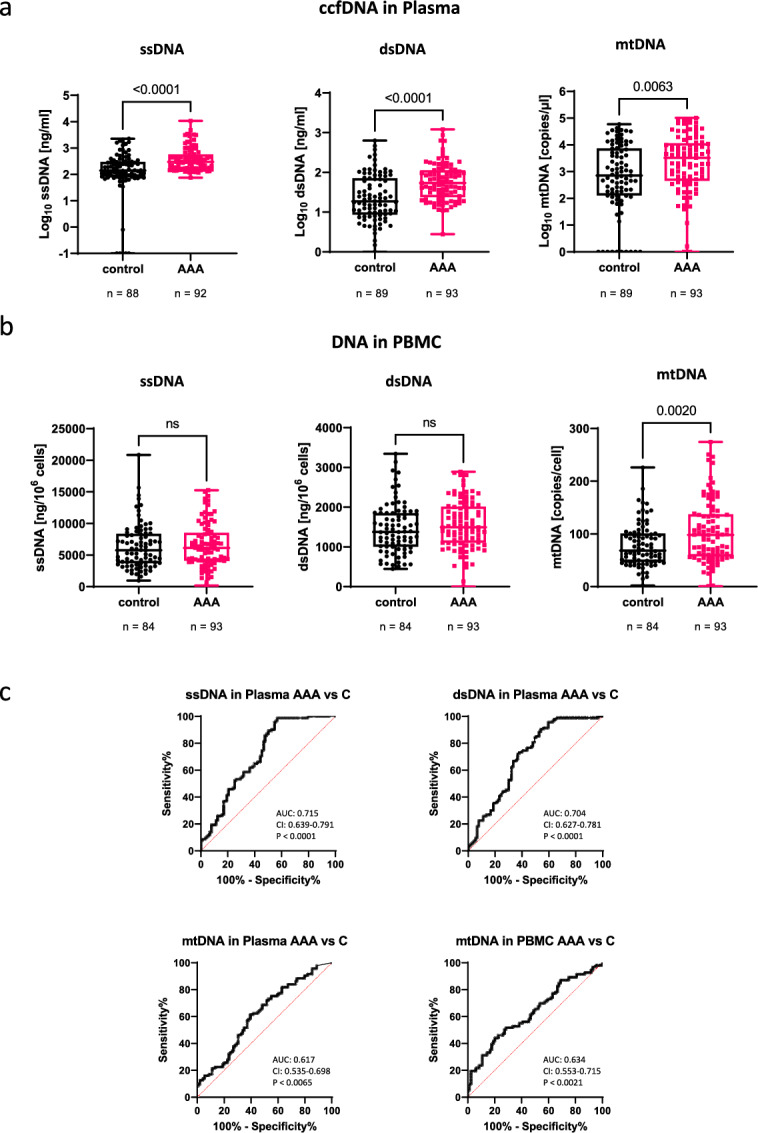
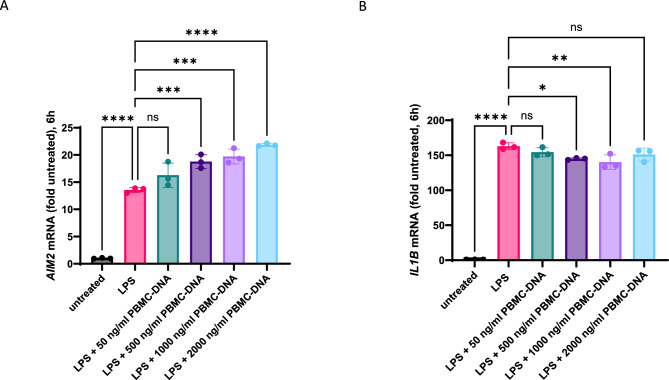
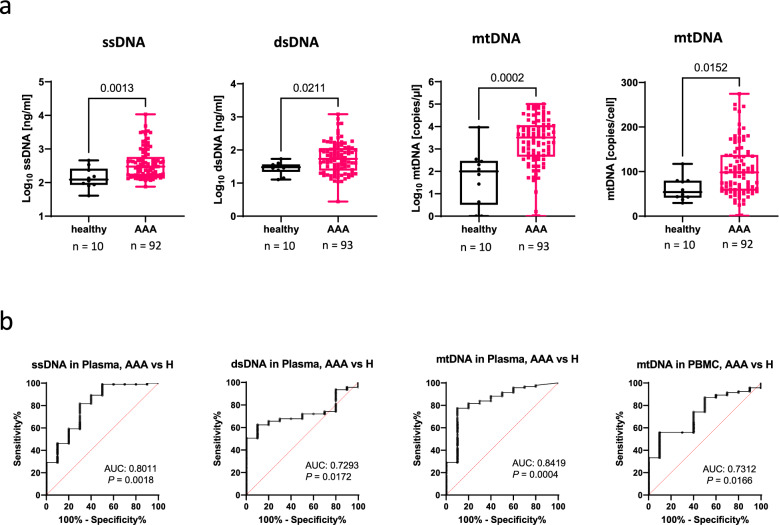
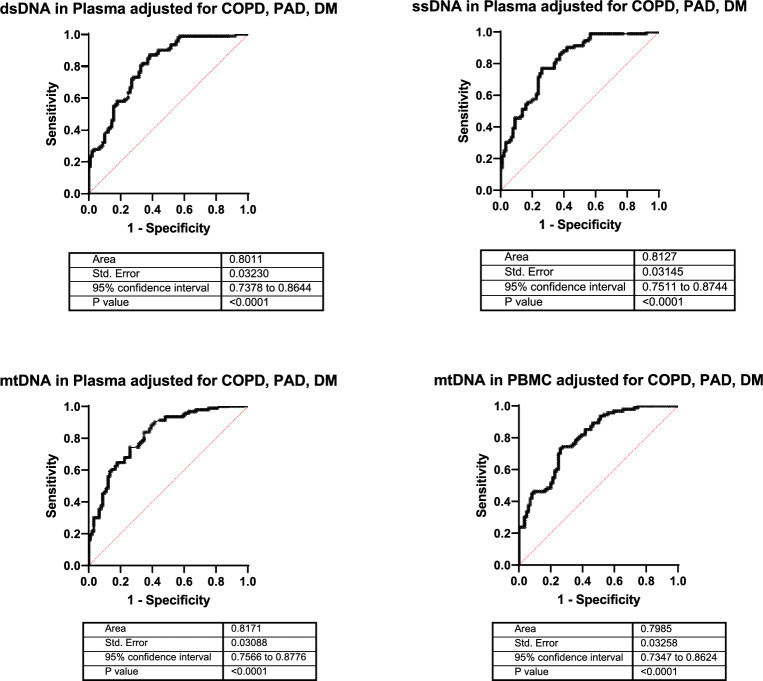
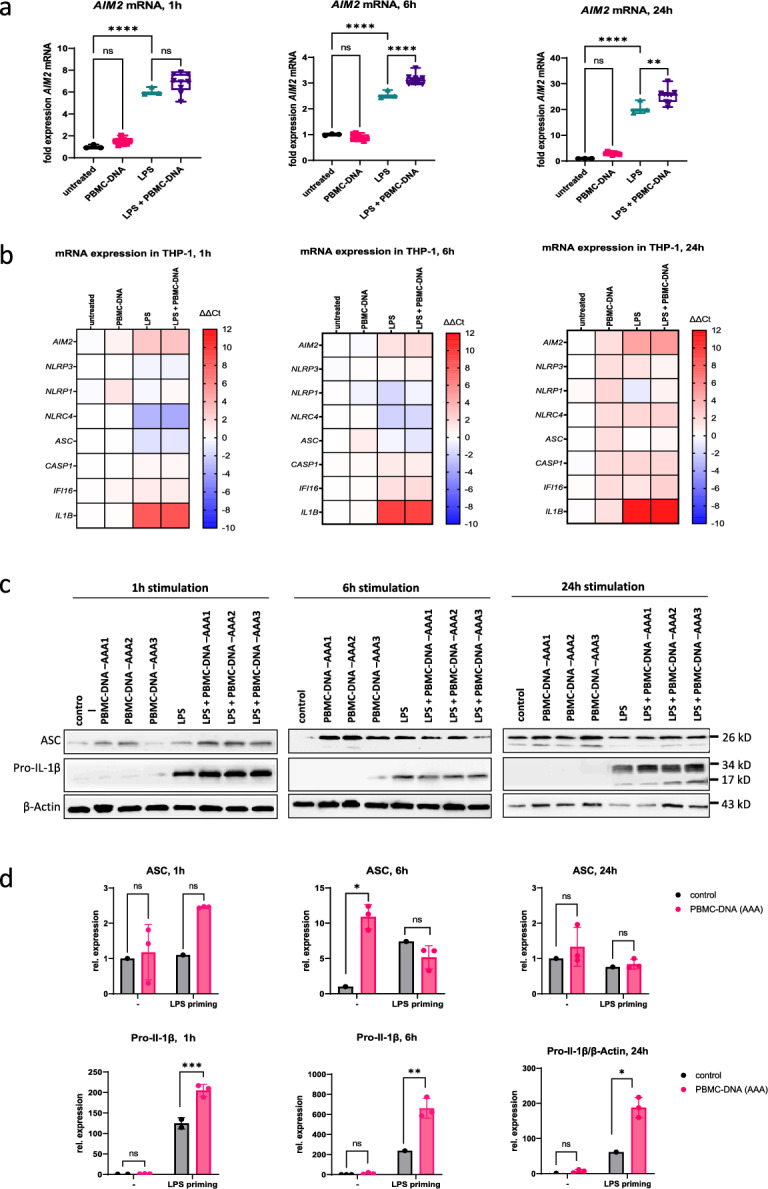
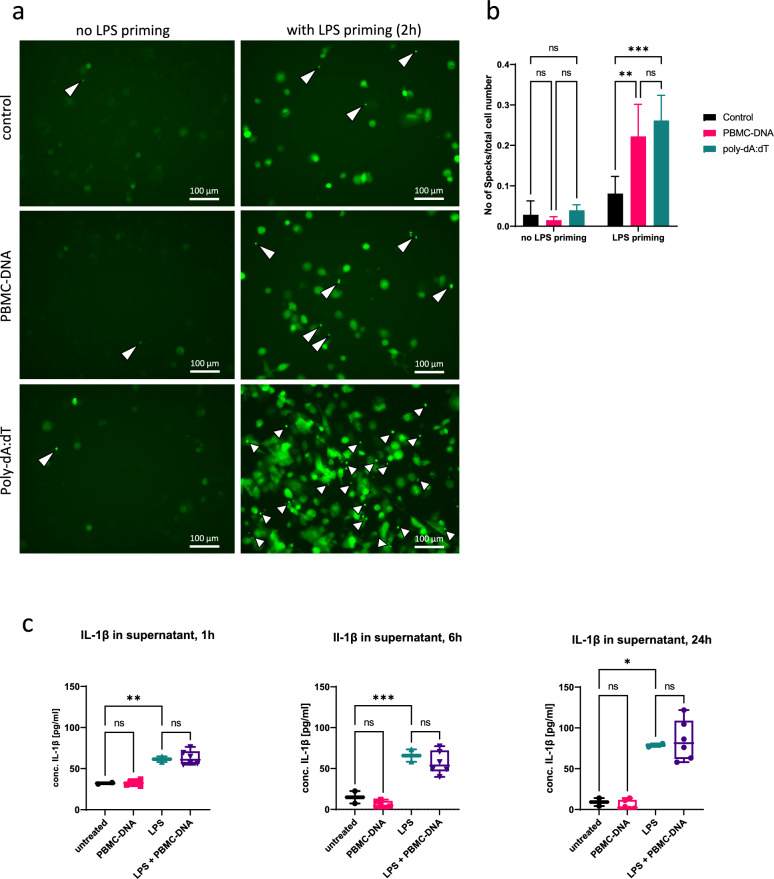
Circulating cell-free (cf) DNA in blood plasma is considered a diagnostic and prognostic biomarker of tissue damage and could be a driver of chronic inflammation by stimulating the innate immune response via activation of inflammasomes. Increased AIM2-inflammasome activity in the aortic wall is associated with abdominal aortic aneurysm (AAA). We here hypothesized that cfDNAs are elevated in the plasma of AAA patients and are associated with chronic inflammation. Single strand (ss)DNA, double strand (ds)DNA and mitochondrial (mt)DNA levels were explored in plasma and leucocytes from 93 AAA patients, 89 controls (non-AAA patients) and 10 healthy subjects, using fluorescence-based quantification and real-time qPCR, respectively. To analyse inflammasome activation by cfDNA, differentiated THP-1 macrophages were primed with lipopolysaccharide (LPS) and then stimulated for one, six or 24 h with DNA extracted from peripheral blood mononuclear cells (PBMC) of AAA patients. Our analysis revealed significantly increased levels of ssDNA, dsDNA and mtDNA levels in plasma from AAA patients compared with non-AAA patients and healthy subjects. In addition, the mtDNA copy number was significantly higher in PBMC from AAA patients. Stimulation of THP-1 cells with PBMC-DNA resulted in increased expression of inflammasome genes, especially the DNA sensors AIM2 and IFI16. At early time points, PBMC-DNA stimulated THP-1 showed significantly increased apoptosis-associated speck-like protein with a CARD (ASC) and Pro-Interleukin-1β protein levels compared to untreated or only LPS-primed cells, resulting in the formation of significantly more ASC specks after 24 h, a sign of inflammasome activation. We conclude from our data that cfDNA of AAA patients triggers a proinflammatory response in macrophages by activating the AIM2 inflammasome and thus could be a driving force for the chronic inflammation observed in these patients.
血浆中循环的游离(cf)DNA被认为是组织损伤的诊断和预后生物标志物,并且可能通过激活炎性小体刺激先天免疫反应而成为慢性炎症的驱动因素。主动脉壁中AIM2炎性小体活性增加与腹主动脉瘤(AAA)相关。我们在此假设,AAA患者血浆中的cfDNA升高且与慢性炎症相关。分别使用基于荧光的定量分析和实时定量PCR,对93例AAA患者、89例对照(非AAA患者)和10名健康受试者的血浆和白细胞中的单链(ss)DNA、双链(ds)DNA和线粒体(mt)DNA水平进行了检测。为了分析cfDNA对炎性小体的激活作用,用脂多糖(LPS)预处理分化的THP-1巨噬细胞,然后用从AAA患者外周血单核细胞(PBMC)中提取的DNA刺激1、6或24小时。我们的分析显示,与非AAA患者和健康受试者相比,AAA患者血浆中的ssDNA、dsDNA和mtDNA水平显著升高。此外,AAA患者PBMC中的mtDNA拷贝数显著更高。用PBMC-DNA刺激THP-1细胞导致炎性小体基因表达增加,尤其是DNA传感器AIM2和IFI16。在早期时间点,与未处理或仅用LPS预处理的细胞相比,PBMC-DNA刺激的THP-1细胞显示凋亡相关斑点样含CARD蛋白(ASC)和前白细胞介素-1β蛋白水平显著增加,导致24小时后形成显著更多的ASC斑点,这是炎性小体激活的标志。我们从数据中得出结论,AAA患者的cfDNA通过激活AIM2炎性小体在巨噬细胞中引发促炎反应,因此可能是这些患者中观察到的慢性炎症的驱动力。