Liu Ling-Li, Cao Wei-Lin, Chen Jian-Sheng, Wang Jian-Ping
Qingdao Hospital, University of Health and Rehabilitation Sciences (Qingdao Municipal Hospital), Qingdao, China.
Qingdao University, Qingdao, China.
Discov Oncol. 2025 Jun 23;16(1):1180. doi: 10.1007/s12672-025-02964-8.
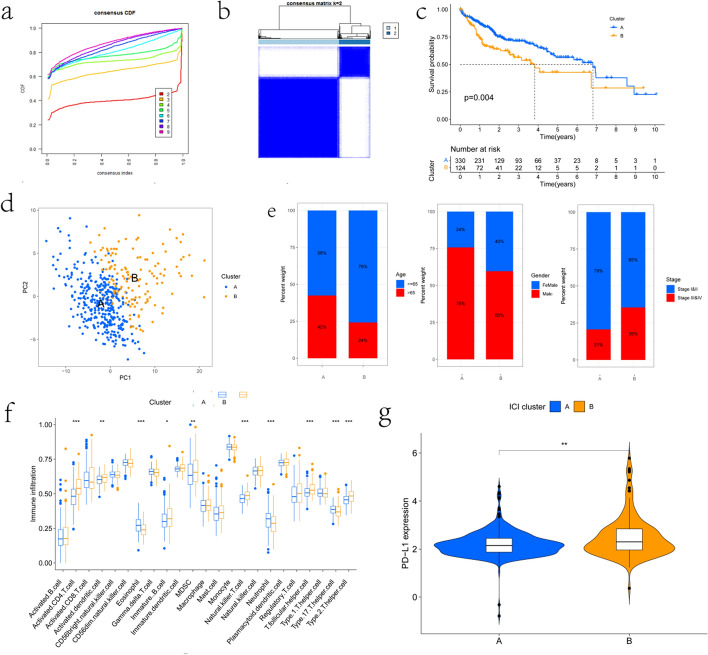
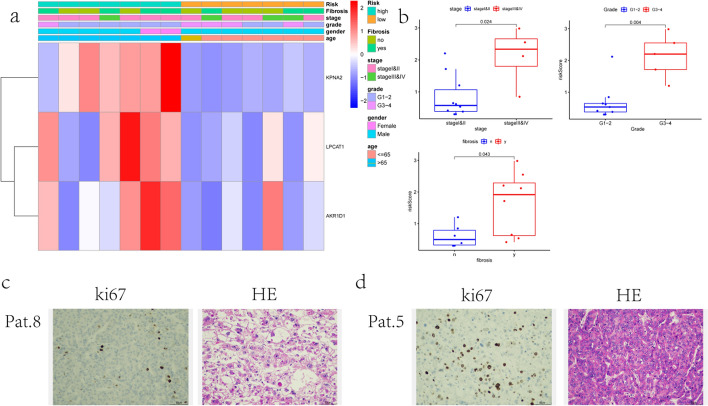
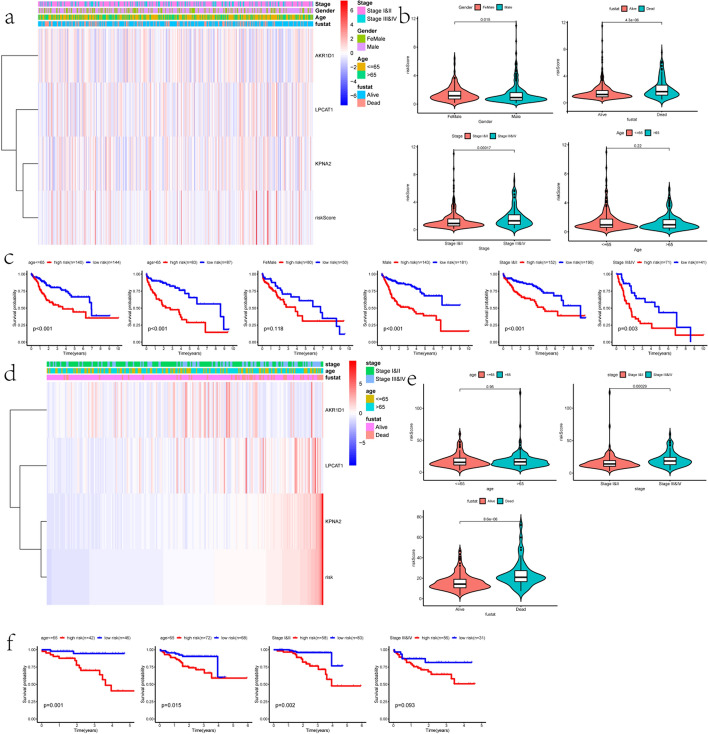
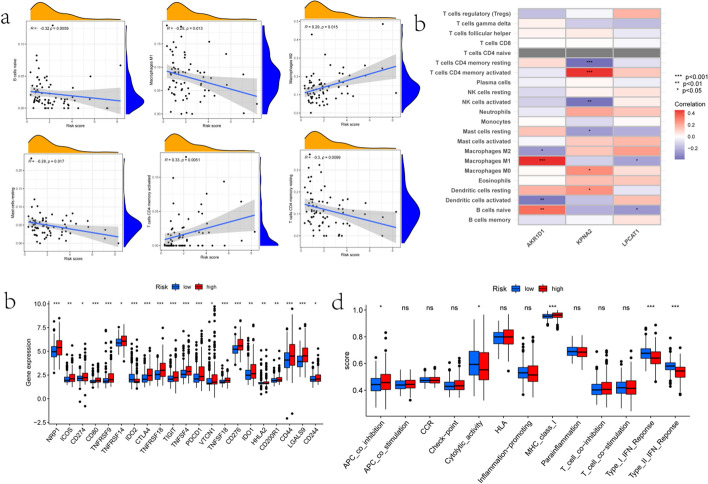
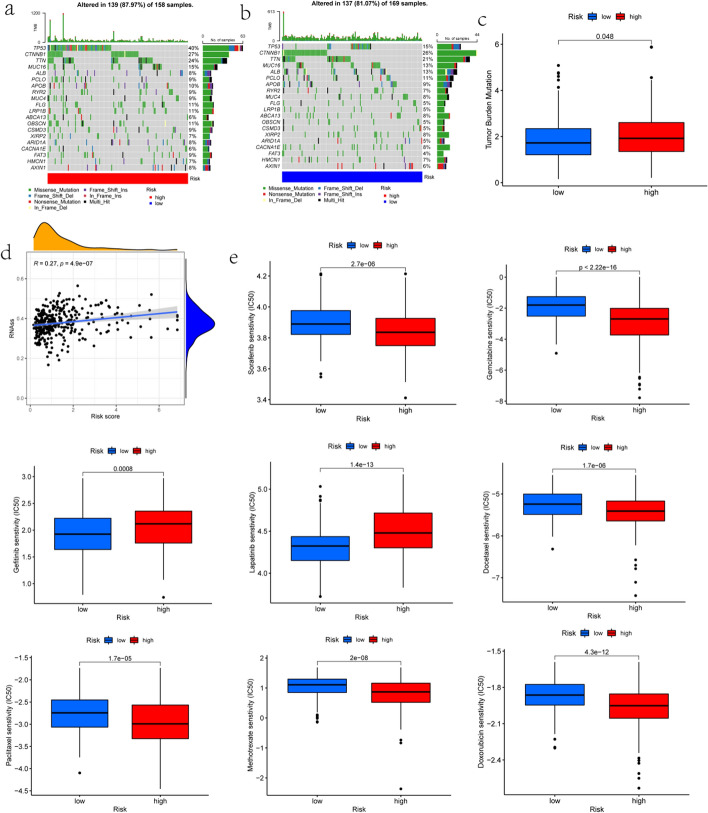
We identified novel Molecular subtypes according to the expression of fibrosis-related genes (FRGs) and constructed a prognostic model using different expression genes (DEGs) for patients with Hepatocellular carcinoma (HCC). We downloaded the clinical data and transcriptome data of HCC from The Cancer Genome Atlas (TCGA) database, Gene Expression Omnibus (GEO) database, and International Cancer Genome Consortium (ICGC) database. We identified two fibrosis-related molecular subtypes of HCC by consensus unsupervised clustering analysis. Interestingly, these two molecular subtypes significantly differed in overall survival (OS) and clinical characteristics. Besides, the most minor absolute shrinkage and selection operator (Lasso) and multivariate Cox regression analysis were performed to develop a novel prognostic model by three genes (including KPNA2, LPCAT1, and AKR1D1). There was a statistically significant difference in OS between the high-risk and low-risk groups. The area under the ROC curve (AUC) of OS in 1-, 3-, and 5-year were satisfactory. Besides, the risk score was connected with critical clinical characteristics and could be an independent factor in predicting prognosis. Then, the nomogram was built by incorporating risk scores with clinical parameters. Additionally, the risk score was remarkedly correlated with TME and drug susceptibility. Finally, the results of H&E staining and immunohistochemistry of Ki67 showed that the tumor of higher-risk patients are more malignant. The FRGs-based subtype and signature explain the HCC heterogeneity, which might provide a new method to develop a more efficient treatment.
我们根据纤维化相关基因(FRGs)的表达确定了新的分子亚型,并使用肝细胞癌(HCC)患者的差异表达基因(DEGs)构建了一个预后模型。我们从癌症基因组图谱(TCGA)数据库、基因表达综合数据库(GEO)和国际癌症基因组联盟(ICGC)数据库下载了HCC的临床数据和转录组数据。通过一致性无监督聚类分析,我们确定了HCC的两种纤维化相关分子亚型。有趣的是,这两种分子亚型在总生存期(OS)和临床特征上有显著差异。此外,通过最小绝对收缩和选择算子(Lasso)和多变量Cox回归分析,利用三个基因(包括KPNA2、LPCAT1和AKR1D1)建立了一个新的预后模型。高风险组和低风险组的OS存在统计学显著差异。1年、3年和5年OS的ROC曲线下面积(AUC)令人满意。此外,风险评分与关键临床特征相关,可能是预测预后的独立因素。然后,通过将风险评分与临床参数相结合构建了列线图。此外,风险评分与肿瘤微环境(TME)和药物敏感性显著相关。最后,H&E染色和Ki67免疫组化结果显示,高风险患者的肿瘤恶性程度更高。基于FRGs的亚型和特征解释了HCC的异质性,这可能为开发更有效的治疗方法提供一种新方法。