
印度西孟加拉邦喜马拉雅山地区抗拟除虫菊酯野生致倦库蚊种群中细胞色素P450和酯酶基因的过表达
Overexpression of cytochrome P450 and esterase genes in pyrethroid-resistant wild Culex quinquefasciatus populations from sub-Himalayan West Bengal, India.
作者信息
Saha Abhirup, Das Prapti, Das Subhajit, Saha Dhiraj
机构信息
Insect Biochemistry and Molecular Biology Laboratory, Department of Zoology, University of North Bengal, Raja Rammohunpur, P.O. NBU, District: Darjeeling, Siliguri, West Bengal, 734013, India.
出版信息
Parasitol Res. 2025 Jun 25;124(6):68. doi: 10.1007/s00436-025-08487-z.
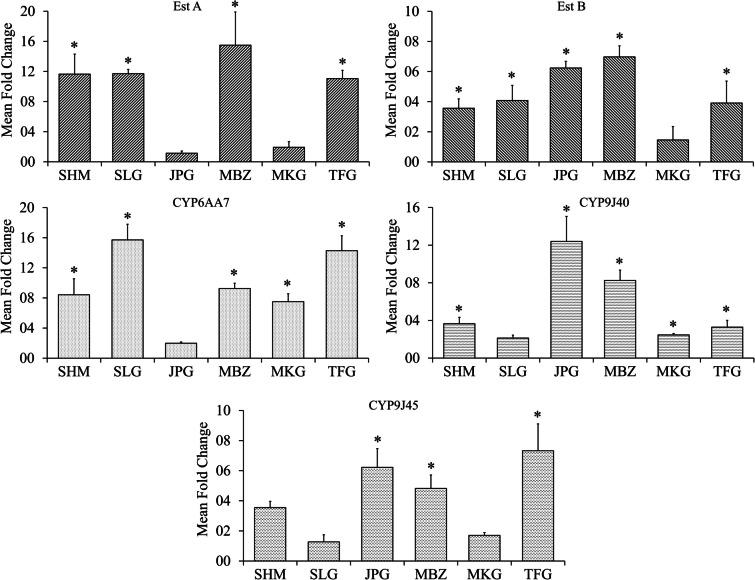
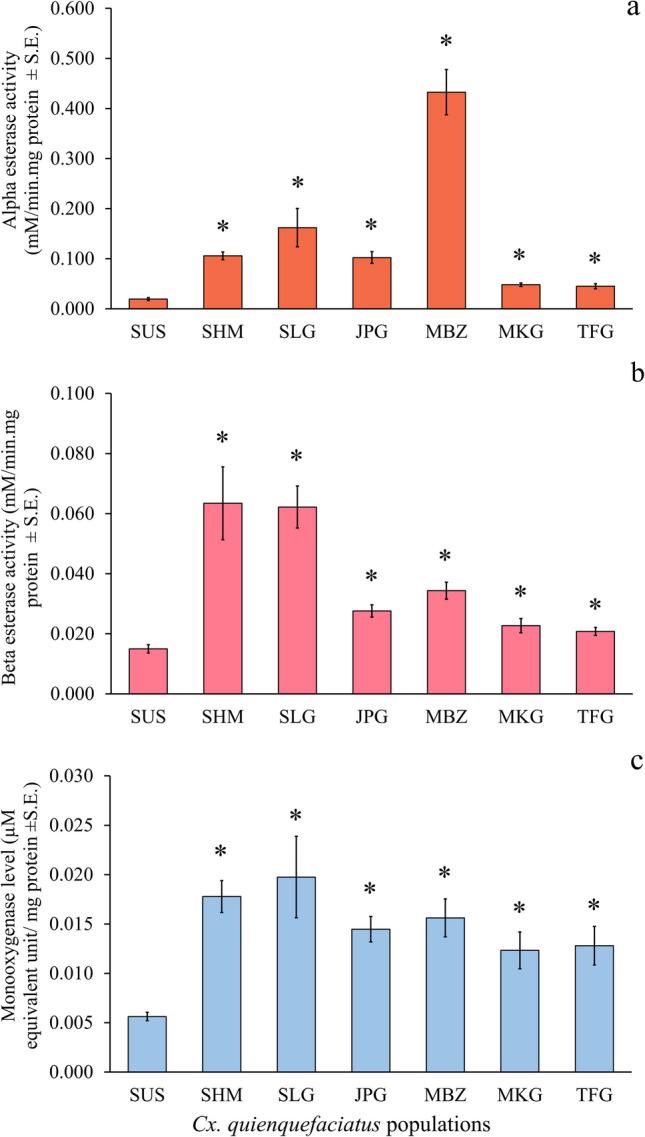
Culex quinquefasciatus Say (Diptera: Culicidae) is an important vector that spreads a number of diseases like lymphatic filariasis, Rift Valley fever, West Nile fever, Zika virus, and Saint Louis encephalitis. Due to long-term exposure to insecticides applied during vector control programs, these mosquito populations exhibit varying degrees of resistance in response to distinct selection pressures. Therefore, it is imperative to assess their resistance status before deploying any control programs. The present study examined the resistance status of wild Cx. quinquefasciatus mosquito larvae against two commonly used insecticides (cyphenothrin and temephos) from sub-Himalayan West Bengal. This study also examined the activity of carboxylesterases and the levels of cytochrome P450 enzymes in wild larvae of Cx. quinquefasciatus mosquitoes from three districts in the northern part of West Bengal. The expression pattern of selected P450 and esterase genes (Est A, Est B, CYP6AA7, CYP9J40, CYP9J45) has been assessed to investigate their involvement in metabolic resistance in this mosquito species. Most of the populations were fully resistant to cyphenothrin, whereas few were resistant to temephos. Significantly high activities and levels of targeted detoxifying enzymes were observed among all the wild populations. Overexpression of the Est B, CYP6AA7, and CYP9J40 genes was observed in most wild populations compared to susceptible ones. From this study, it can be suggested that metabolic resistance has an important role in developing resistance among Cx. quinquefasciatus populations of this region. Proper mapping of insecticide resistance should be done before using any insecticides.
致倦库蚊(双翅目:蚊科)是一种重要的病媒,可传播多种疾病,如淋巴丝虫病、裂谷热、西尼罗热、寨卡病毒和圣路易斯脑炎。由于在病媒控制项目中长期接触所使用的杀虫剂,这些蚊虫种群针对不同的选择压力表现出不同程度的抗性。因此,在开展任何控制项目之前评估它们的抗性状况势在必行。本研究检测了来自喜马拉雅山脉南麓西孟加拉邦的野生致倦库蚊幼虫对两种常用杀虫剂(苯醚菊酯和双硫磷)的抗性状况。本研究还检测了西孟加拉邦北部三个地区野生致倦库蚊幼虫中羧酸酯酶的活性以及细胞色素P450酶的水平。已评估了选定的P450和酯酶基因(Est A、Est B、CYP6AA7、CYP9J40、CYP9J45)的表达模式,以研究它们在该蚊种代谢抗性中的作用。大多数种群对苯醚菊酯完全抗性,而对双硫磷有抗性的种群较少。在所有野生种群中均观察到目标解毒酶的活性和水平显著升高。与敏感种群相比,在大多数野生种群中均观察到Est B、CYP6AA7和CYP9J40基因过表达。从本研究可以看出,代谢抗性在该地区致倦库蚊种群抗性形成中起重要作用。在使用任何杀虫剂之前,应进行杀虫剂抗性的适当测绘。

 Zotero 插件