
氧化应激、能量代谢紊乱、线粒体损伤以及miR-144参与了4-辛基苯酚所致鲤鱼心脏自噬损伤的分子机制。
Oxidative Stress, Energy Metabolism Disorder, Mitochondrial Damage, and miR-144 Participated in Molecular Mechanisms of 4-Octylphenol-Caused Cardiac Autophagic Damage in Common Carps ( L.).
作者信息
Qiu Minna, Jiang Chunyu, Liang Jiatian, Zhou Qin, Liu Yuhao, Hao Zhiyu, Liu Yuhang, Liu Xiumei, Teng Xiaohua, Sun Wei, Tang You
机构信息
College of Animal Science and Technology, Northeast Agricultural University, Harbin 150030, China.
College of Life Sciences, Yantai University, Yantai 264005, China.
出版信息
Metabolites. 2025 Jun 11;15(6):391. doi: 10.3390/metabo15060391.
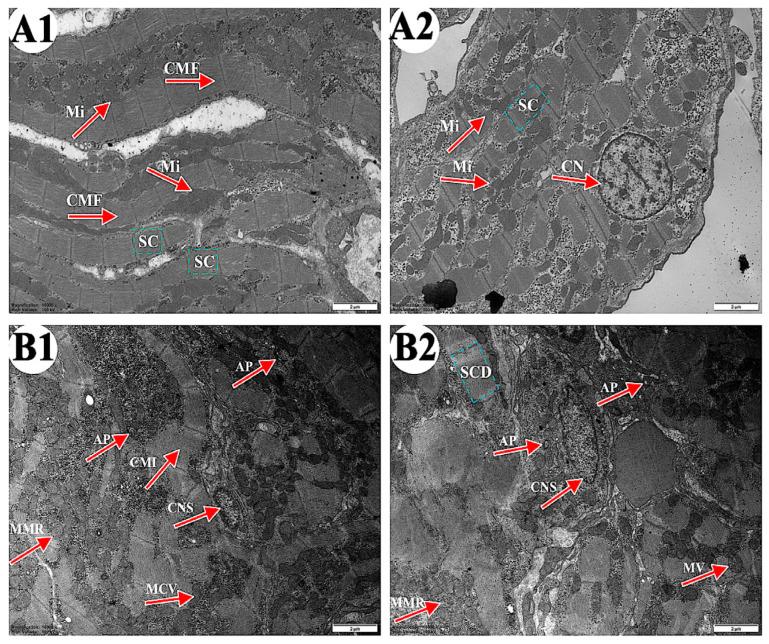
: In 4-octylphenol (4-OP), a toxic environmental pollutant with endocrine disruptive effect, the use of 4-OP causes pollution in the freshwater environment and poses risks to aquatic organisms. Common carps ( L.) live in freshwater and are experimental animals for studying the toxic effects of environmental pollutants on fish. Its heart is susceptible to toxicants. However, whether 4-OP has a toxic effect on common carp heart remains unknown. : Here, we conducted a common carp 4-OP exposure experiment (carp treated with 17 μg/L 4-OP for 45 days), aiming to investigate whether 4-OP has a toxic effect on common carp hearts. We observed the microstructure and ultrastructure of carp heart and detected autophagy genes, mitochondrial fission genes, mitochondrial fusion genes, glycolytic enzymes, AMPK, ATPase, and oxidative stress factors, to investigate the molecular mechanism of 4-OP induced damage in common carp hearts. : Our results showed that 4-OP exposure caused mitochondrial damage, autophagy, and damage in common carp hearts. 4-OP exposure increased the levels of miR-144, and eight autophagy factors (Beclin1, RB1CC1, ULK1, LC3-I, LC3-II, ATG5, ATG12, and ATG13), and decreased the levels of four autophagy factors (PI3K, AKT, mTOR, and SQSTM1). Furthermore, 4-OP exposure induced the imbalance between mitochondrial fission and fusion and mitochondrial dynamics imbalance, as demonstrated by the increase in three mitochondrial fission factors (Mff, Drp1, and Fis1) and the decrease in three mitochondrial fusion factors (Mfn1, Mfn2, and Opa1). Moreover, excess 4-OP treatment caused energy metabolism disorder, as demonstrated by the reduction in four ATPase (NaK-ATPase, CaMg-ATPase, Ca-ATPase, and Mg-ATPase), elevation in four glycolysis genes (HK1, HK2, LDHA, and PGK1), reduction in glycolysis gen (PGAM2), and the elevation in energy-sensing AMPK. Finally, 4-OP treatment induced the imbalance between antioxidant and oxidant and oxidative stress, as demonstrated by the increase in oxidant HO, and the decreases in five antioxidant factors (CAT, SOD, T-AOC, Nrf2, and HO-1). : miR-144 mediated autophagy by targeting PI3K, mTOR, and SQSTM1, and the miR-144/PI3K-AKT-mTOR/ULK1 pathway was involved in 4-OP-induced autophagy. Mff-Drp1 axis took part in 4-OP-caused mitochondrial dynamics imbalance, and mitochondrial dynamics imbalance mediated autophagy via Mfn2-SQSTM1, Mfn2/Beclin1, and Mff-LC3-II axes. Energy metabolism disorder mediated mitochondrial dynamics imbalance through the AMPK-Mff-Drp1 pathway. Oxidative stress mediated energy metabolism disorder via the HO-AMPK axis. Taken together, oxidative stress triggered energy metabolism disorder, induced mitochondrial dynamics imbalance, and caused autophagy via the HO-AMPK-Mff-LC3-II pathway. Our study provided references for the toxic effects of endocrine disruptor on common carp hearts, and provided a basis for assessing environmental pollutant-induced damage in common carp heart. We only studied the toxic effects of 4-OP on common carp, and the toxic effects of 4-OP on other fish species need to be further studied.
4-辛基酚(4-OP)是一种具有内分泌干扰作用的有毒环境污染物,4-OP的使用会造成淡水环境污染并对水生生物构成风险。鲤鱼生活在淡水中,是用于研究环境污染物对鱼类毒性作用的实验动物。其心脏对毒物敏感。然而,4-OP是否对鲤鱼心脏有毒性作用尚不清楚。
在此,我们进行了一项鲤鱼4-OP暴露实验(鲤鱼用17μg/L 4-OP处理45天),旨在研究4-OP是否对鲤鱼心脏有毒性作用。我们观察了鲤鱼心脏的微观结构和超微结构,并检测了自噬基因、线粒体分裂基因、线粒体融合基因、糖酵解酶、AMPK、ATP酶和氧化应激因子,以探究4-OP诱导鲤鱼心脏损伤的分子机制。
我们的结果表明,4-OP暴露导致鲤鱼心脏线粒体损伤、自噬和损伤。4-OP暴露增加了miR-144以及八个自噬因子(Beclin1、RB1CC1、ULK1、LC3-I、LC3-II、ATG5、ATG12和ATG13)的水平,并降低了四个自噬因子(PI3K、AKT、mTOR和SQSTM1)的水平。此外,4-OP暴露诱导了线粒体分裂与融合之间的失衡以及线粒体动力学失衡,三个线粒体分裂因子(Mff、Drp1和Fis1)增加以及三个线粒体融合因子(Mfn1、Mfn2和Opa1)减少证明了这一点。此外,过量的4-OP处理导致能量代谢紊乱,四个ATP酶(NaK-ATP酶、CaMg-ATP酶、Ca-ATP酶和Mg-ATP酶)减少、四个糖酵解基因(HK1、HK2、LDHA和PGK1)升高、糖酵解基因(PGAM2)减少以及能量感应AMPK升高证明了这一点。最后,4-OP处理诱导了抗氧化剂与氧化剂之间的失衡以及氧化应激,氧化剂HO增加以及五个抗氧化因子(CAT、SOD、T-AOC、Nrf2和HO-1)减少证明了这一点。
miR-144通过靶向PI3K、mTOR和SQSTM1介导自噬,且miR-144/PI3K-AKT-mTOR/ULK1通路参与4-OP诱导的自噬。Mff-Drp1轴参与4-OP导致的线粒体动力学失衡,且线粒体动力学失衡通过Mfn2-SQSTM1、Mfn2/Beclin1和Mff-LC3-II轴介导自噬。能量代谢紊乱通过AMPK-Mff-Drp1通路介导线粒体动力学失衡。氧化应激通过HO-AMPK轴介导能量代谢紊乱。综上所述,氧化应激引发能量代谢紊乱,诱导线粒体动力学失衡,并通过HO-AMPK-Mff-LC3-II通路导致自噬。我们的研究为内分泌干扰物对鲤鱼心脏的毒性作用提供了参考,并为评估环境污染物诱导的鲤鱼心脏损伤提供了依据。我们仅研究了4-OP对鲤鱼的毒性作用,4-OP对其他鱼类的毒性作用有待进一步研究。




 Zotero 插件