Park Suah, Jee Hee-Jung
Department of Information Statistics, Chungbuk National University, Cheongju 28644, Republic of Korea.
Healthcare (Basel). 2025 Jun 10;13(12):1384. doi: 10.3390/healthcare13121384.
: Metabolic syndrome (MetS), characterized by the co-occurrence of obesity, hypertension, hyperglycemia, and dyslipidemia, substantially increases the risk of cardiovascular disease and type 2 diabetes. In South Korea, the prevalence of MetS is steadily increasing. While physical activity is known to mitigate this risk, recent evidence suggests that the timing of activity, not just its volume, may also be important. : We analyzed accelerometer data from Korean adults who participated in the 2014-2016 Korea National Health and Nutrition Examination Survey (KNHANES). Functional principal component analysis (FPCA) was applied to minute-level physical activity trajectories to extract key temporal patterns. Logistic regression models assessed associations between the resulting principal component (PC) scores and MetS, adjusting for demographic, behavioral, and occupational factors, as well as total moderate-to-vigorous physical activity (MVPA). : Among the four extracted components, the third principal component (PC3)-reflecting higher morning and evening activity with reduced afternoon variability-was significantly associated with increased risk of MetS in the fully adjusted model (adjusted OR = 1.117; 95% CI: 1.003-1.244). : These findings suggest that temporal patterns of physical activity, particularly reduced variability in the afternoon, may be linked to adverse metabolic outcomes. Beyond overall activity volume, the timing and distribution of daily physical activity should be considered in metabolic health research and interventions.
代谢综合征(MetS)以肥胖、高血压、高血糖和血脂异常同时出现为特征,会大幅增加心血管疾病和2型糖尿病的风险。在韩国,代谢综合征的患病率正在稳步上升。虽然已知体育活动可降低这种风险,但最近的证据表明,活动的时间安排,而不仅仅是活动量,可能也很重要。
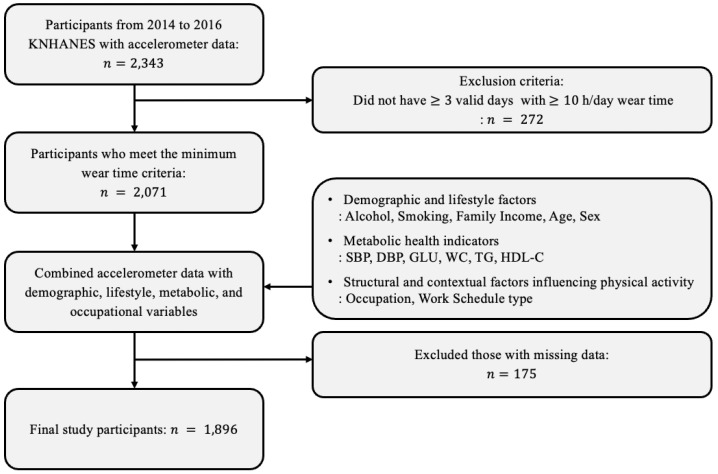
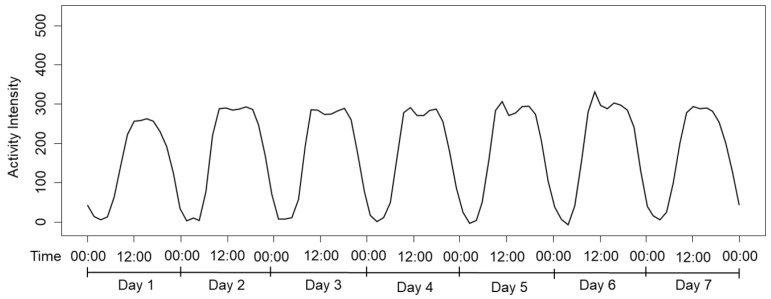
我们分析了参与2014 - 2016年韩国国家健康与营养检查调查(KNHANES)的韩国成年人的加速度计数据。应用功能主成分分析(FPCA)对分钟级体育活动轨迹进行分析,以提取关键的时间模式。逻辑回归模型评估了所得主成分(PC)得分与代谢综合征之间的关联,并对人口统计学、行为和职业因素以及总的中等到剧烈体育活动(MVPA)进行了调整。
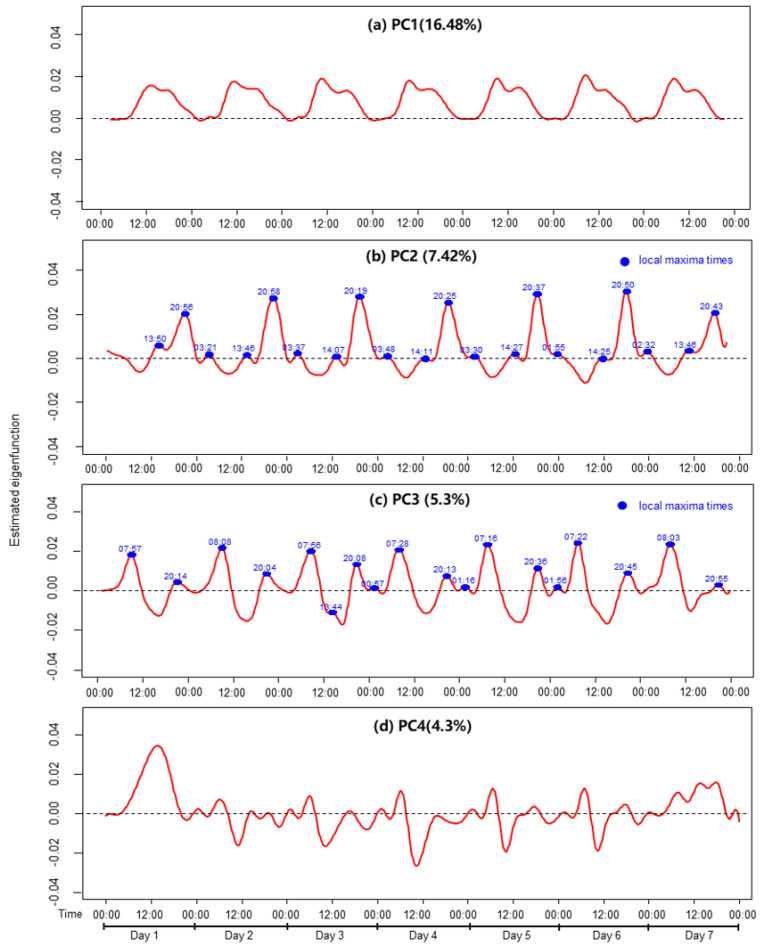
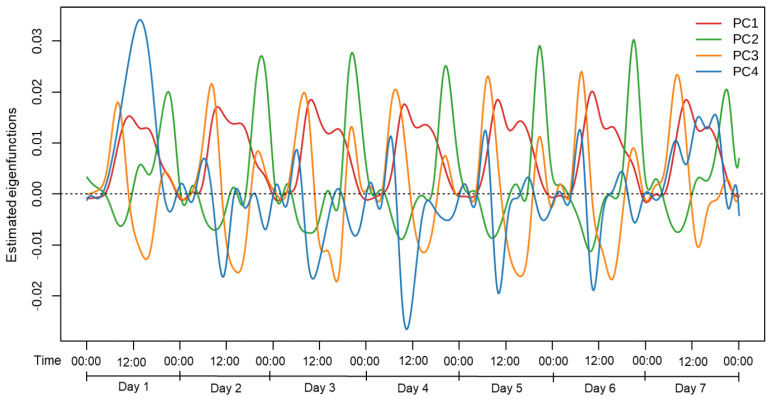
在提取的四个成分中,第三个主成分(PC3)——反映出上午和晚上活动较多且下午变异性降低——在完全调整模型中与代谢综合征风险增加显著相关(调整后的OR = 1.117;95% CI:1.003 - 1.244)。
这些发现表明,体育活动的时间模式,特别是下午变异性降低,可能与不良代谢结果有关。除了总体活动量之外,在代谢健康研究和干预中应考虑日常体育活动的时间安排和分布。