Gosselé Katherine A, Latino Irene, Laul Eleen, Kirillova Mariia S, Pascanu Vlad, Carloni Emanuele, Bedi Rajiv K, Pizzichetti Chiara, Caflisch Amedeo, F González Santiago, Nevado Cristina
Department of Chemistry, University of Zurich, Zurich CH-8057, Switzerland.
Department of Biochemistry, University of Zurich, Zurich CH-8057, Switzerland.
JACS Au. 2025 Jun 5;5(6):2491-2499. doi: 10.1021/jacsau.5c00085. eCollection 2025 Jun 23.
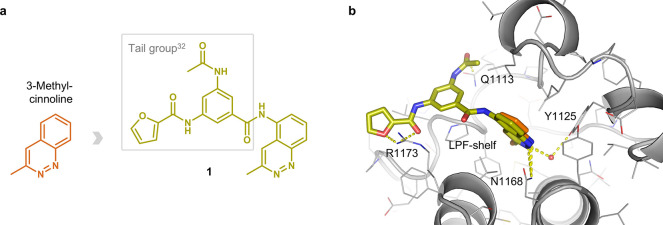
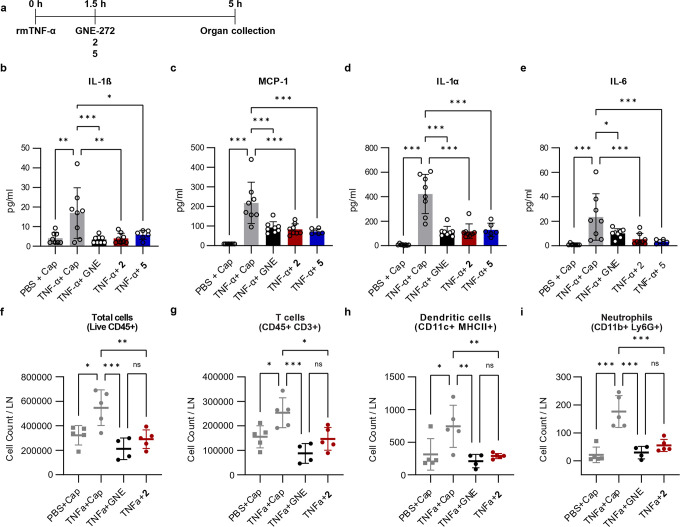
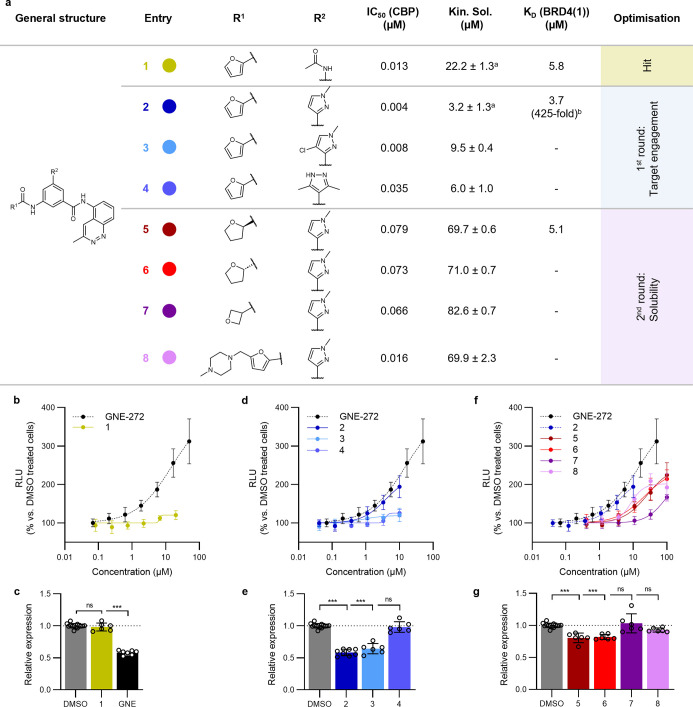
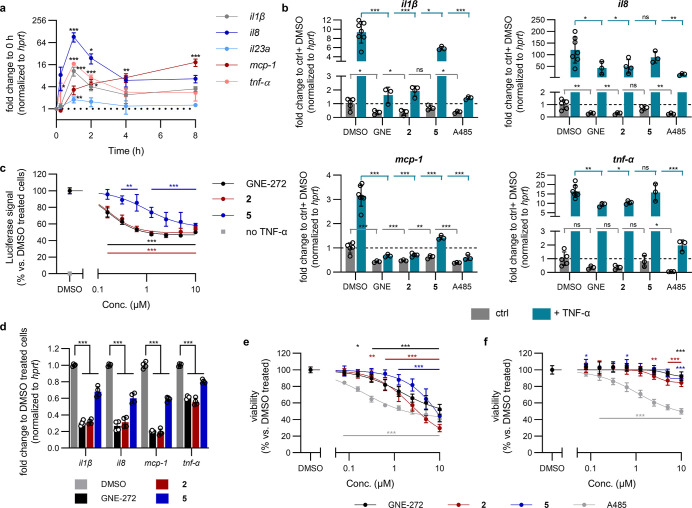
Tumor necrosis factor α (TNF-α) is a central driver of inflammation in autoimmune conditions such as Crohn's disease and rheumatoid arthritis (RA). Targeting epigenetic regulators involved in cytokine expression holds therapeutic promise, yet the precise role of the CBP/EP300 bromodomains (BRDs) in modulating immune responses remains poorly understood. Here, we introduce a distinct class of selective CBP/EP300-BRD inhibitors based on a unique 3-methylcinnoline acetyl-lysine mimic, identified through high-throughput fragment docking. These inhibitors significantly reduce TNF-α-driven cytokine expression by blocking NFκB signaling in immune cells. , BRD inhibition led to a robust anti-inflammatory effect, decreasing cytokine secretion (including IL-1β, MCP-1, IL-1α, and IL-6) and preventing immune cell migration to inflamed lymph nodes in a TNF-α-stimulated murine model. Our findings highlight CBP/EP300-BRDs as promising targets for autoimmune therapy, with these non-cytotoxic inhibitors offering a potential complementary approach for RA and other TNF-α-mediated inflammatory conditions.
肿瘤坏死因子α(TNF-α)是自身免疫性疾病(如克罗恩病和类风湿性关节炎(RA))炎症的核心驱动因素。靶向参与细胞因子表达的表观遗传调节因子具有治疗前景,但CBP/EP300溴结构域(BRD)在调节免疫反应中的精确作用仍知之甚少。在此,我们基于一种独特的3-甲基噌啉乙酰赖氨酸模拟物,通过高通量片段对接鉴定出一类独特的选择性CBP/EP300-BRD抑制剂。这些抑制剂通过阻断免疫细胞中的NFκB信号通路,显著降低TNF-α驱动的细胞因子表达。此外,BRD抑制导致强大的抗炎作用,减少细胞因子分泌(包括IL-1β、MCP-1、IL-1α和IL-6),并在TNF-α刺激的小鼠模型中阻止免疫细胞迁移至炎症淋巴结。我们的研究结果突出了CBP/EP300-BRDs作为自身免疫治疗有前景的靶点,这些无细胞毒性的抑制剂为RA和其他TNF-α介导的炎症性疾病提供了一种潜在的补充治疗方法。