Zhao Bolun, Ban Fazhan, Li Yuehua, Shi Qiong, Guo Sen, Yi Xiuli, Wang Huina, Gao Tianwen, Li Chunying, Zhu Guannan
Department of Dermatology, Xijing Hospital, Fourth Military Medical University, Xi'an, China.
Dermatology Hospital, Southern Medical University, Guangzhou, China.
Cell Death Dis. 2025 Jul 1;16(1):482. doi: 10.1038/s41419-025-07766-y.
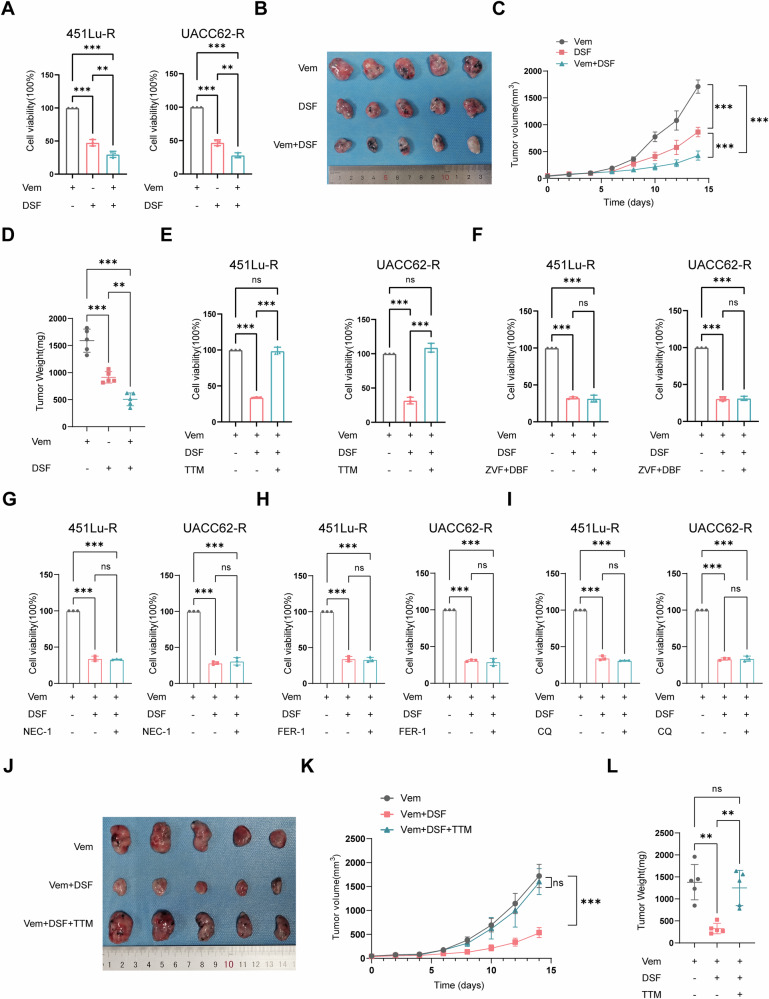
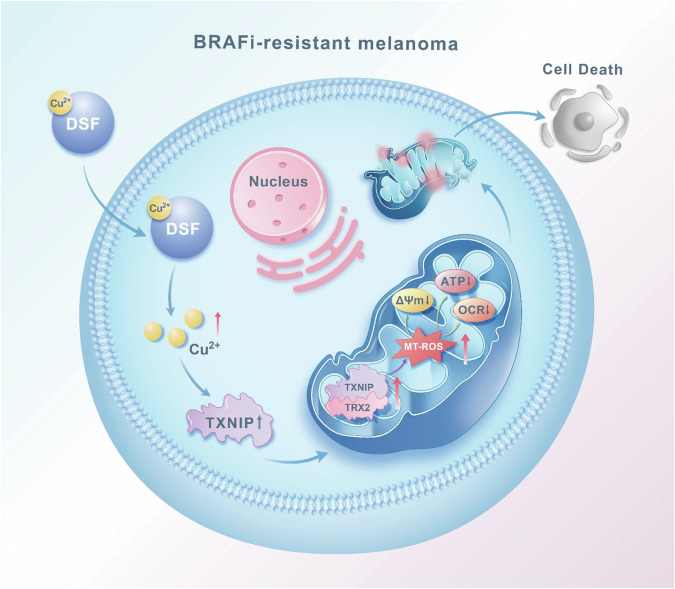
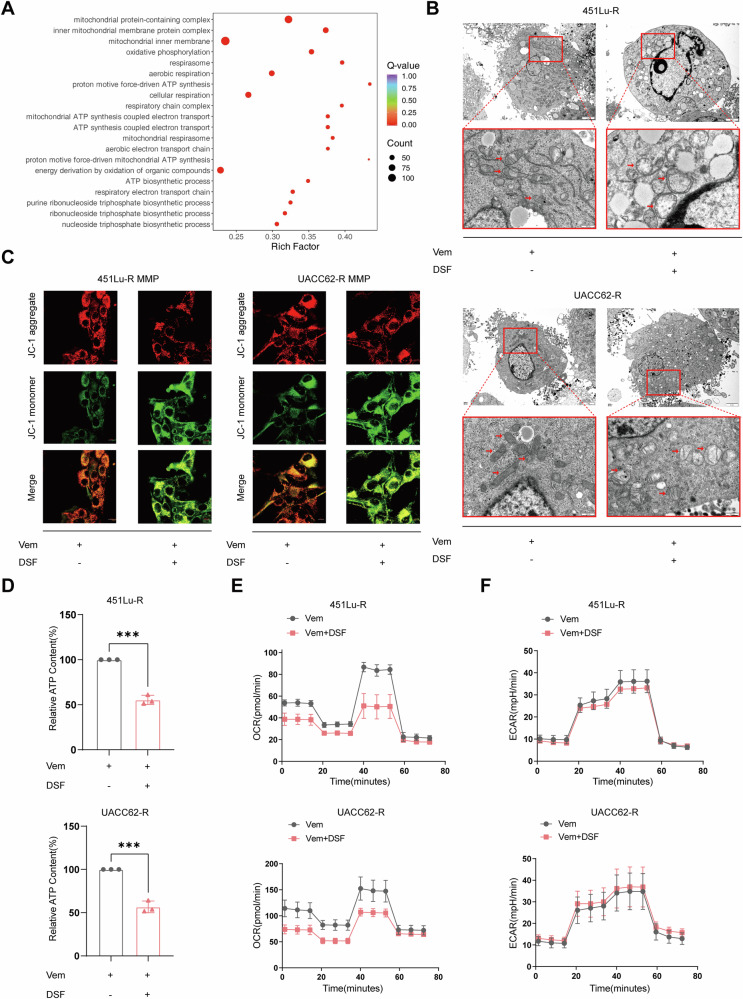
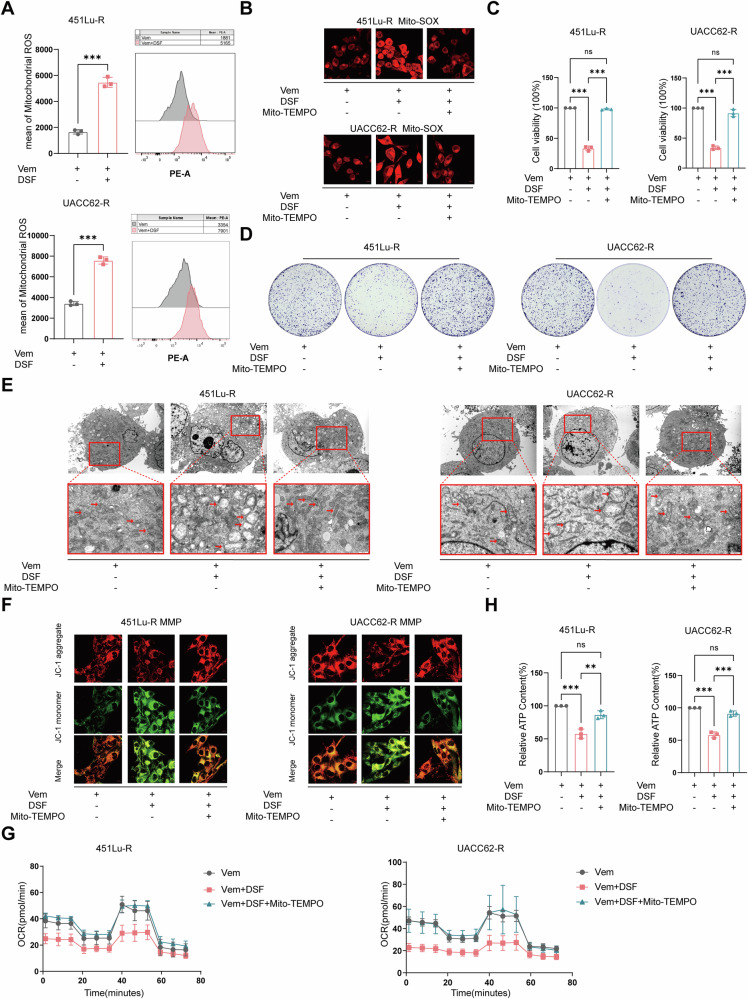
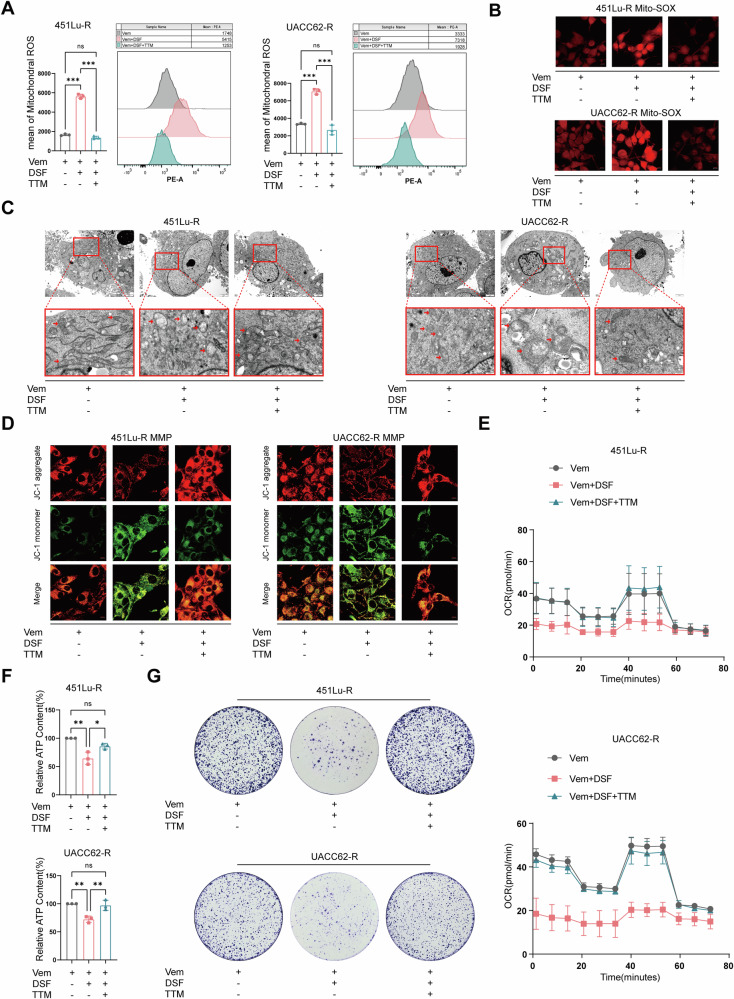
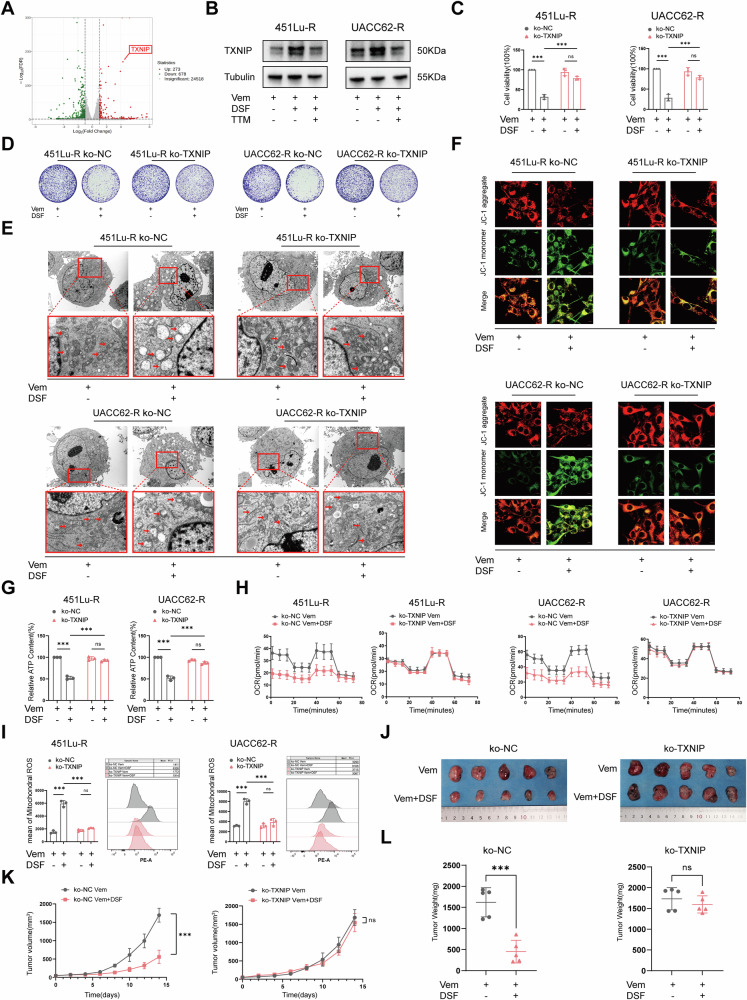
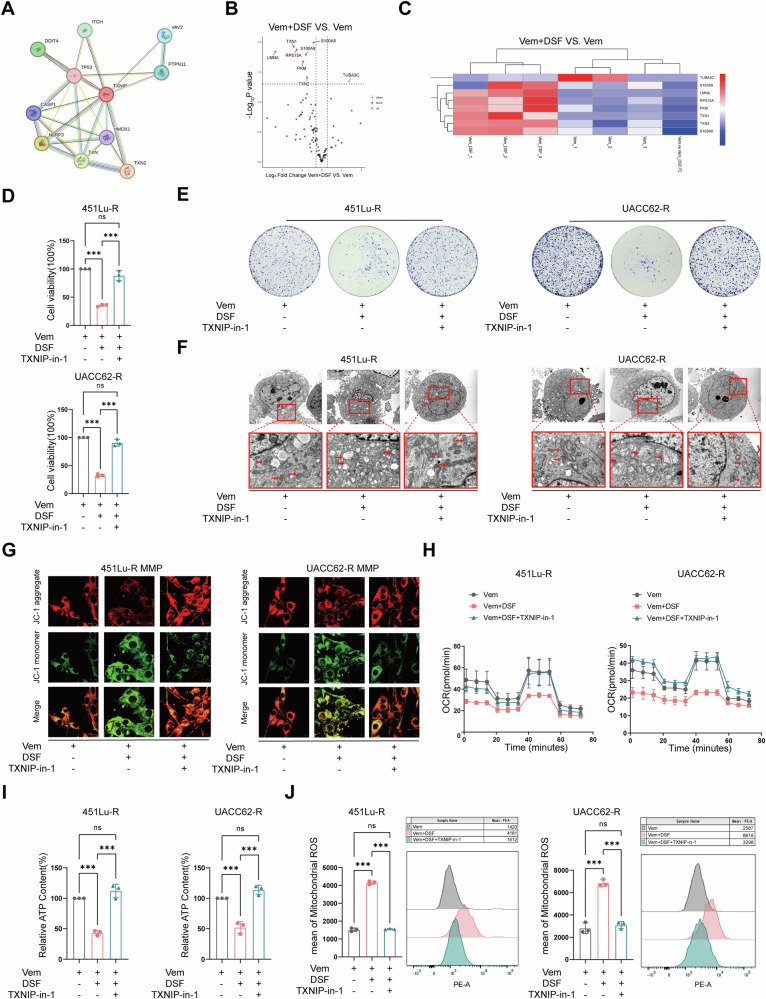
Resistance to targeted therapies poses a significant challenge in advanced melanoma with BRAF mutations. Even with a BRAF + MEK inhibitor combination, about 70% of patients experience disease progression within two years, highlighting the need for novel strategies beyond MAPK signaling inhibition. This study investigates whether mitochondrial dysfunction induced by the copper ionophore disulfiram (DSF) can effectively counteract resistance to BRAF inhibitors. We established two BRAF inhibitor (BRAFi)-resistant melanoma cell lines using BRAF mutant 451Lu and UACC62. In vivo experiments were conducted using subcutaneous implantation in nude mice. Cell viability and colony formation assays assessed treatment efficacy, while mitochondrial morphology was evaluated via transmission electron microscopy. Mitochondrial respiration was measured using a Seahorse metabolic analyzer, and oxidative stress was assessed through flow cytometry and confocal microscopy. RNA sequencing identified downstream factors regulated by intracellular copper levels, and the CRISPR-Cas9 system was used to knock out candidate genes in BRAFi-resistant cells for mechanistic validation. We provided evidence that DSF induced cell death in BRAFi-resistant melanoma in a copper-dependent manner, severely impairing mitochondrial structure and function through increased oxidative stress. RNA-seq and immunoblotting revealed that thioredoxin-interacting protein (TXNIP) expression significantly increased in response to DSF. TXNIP knockout reduced DSF-induced cytotoxicity by mitigating oxidative stress. These findings were supported by in vivo experiments. Furthermore, we demonstrated that the oxidative damage mediated by TXNIP involved its interaction with thioredoxin 2 (TRX2). In conclusion, targeting mitochondrial function with disulfiram effectively inhibits BRAFi-resistant melanoma cells, independent of MAPK signaling blockage. These results point to the potential of combining disulfiram with BRAF inhibitors as a promising strategy to overcome BRAFi resistance.
对靶向治疗产生耐药性是晚期BRAF突变黑色素瘤面临的重大挑战。即使使用BRAF+MEK抑制剂联合治疗,仍有大约70%的患者在两年内出现疾病进展,这凸显了除抑制MAPK信号通路之外采用新策略的必要性。本研究调查了铜离子载体双硫仑(DSF)诱导的线粒体功能障碍是否能有效对抗对BRAF抑制剂的耐药性。我们使用BRAF突变体451Lu和UACC62建立了两种对BRAF抑制剂(BRAFi)耐药的黑色素瘤细胞系。通过在裸鼠皮下植入进行体内实验。细胞活力和集落形成试验评估治疗效果,而线粒体形态则通过透射电子显微镜进行评估。使用海马代谢分析仪测量线粒体呼吸,并通过流式细胞术和共聚焦显微镜评估氧化应激。RNA测序确定了受细胞内铜水平调节的下游因子,并使用CRISPR-Cas9系统敲除BRAFi耐药细胞中的候选基因以进行机制验证。我们提供的证据表明,DSF以铜依赖的方式诱导BRAFi耐药黑色素瘤细胞死亡,通过增加氧化应激严重损害线粒体结构和功能。RNA测序和免疫印迹显示,硫氧还蛋白相互作用蛋白(TXNIP)的表达在DSF作用下显著增加。TXNIP基因敲除通过减轻氧化应激降低了DSF诱导的细胞毒性。体内实验支持了这些发现。此外,我们证明TXNIP介导的氧化损伤涉及其与硫氧还蛋白2(TRX2)的相互作用。总之,用双硫仑靶向线粒体功能可有效抑制BRAFi耐药黑色素瘤细胞,独立于MAPK信号通路阻断。这些结果表明,双硫仑与BRAF抑制剂联合使用作为克服BRAFi耐药性的一种有前景的策略具有潜力。