Brescia Valerio, Tsai Yafang, Chung Sue-Ting, Lin Cheng-Chieh, Chmet Federico, Degregori Ginevra, Lai Ying-Chun
Department of Management, University of Turin, Corso Orbassano 218 bis, Turin, 10126, Italy.
Department of Management, Społeczna Akademia Nauk, Lodz, Poland.
BMC Health Serv Res. 2025 Jul 1;25(1):854. doi: 10.1186/s12913-025-12981-6.
This study evaluates the impact of Automated Dispensing Cabinets (ADCs) on workflow efficiency, cost savings, and medication therapy management in the Emergency Department of a Taiwanese regional hospital. ADCs are a key technology in healthcare, aimed at improving the efficiency and effectiveness of medication management processes.
Data were collected from the hospital’s information system, comparing one year before and one year after the ADC implementation. The study focused on the Emergency Department of Dajia Hospital and included a comparison with Shalu Hospital. Additionally, semi-structured interviews were conducted with nurses and pharmacists to gather qualitative insights.
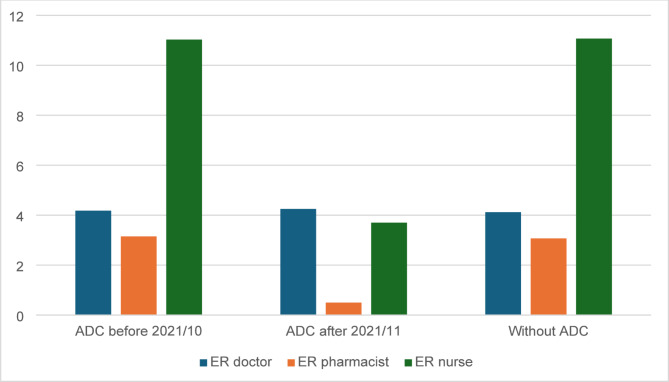
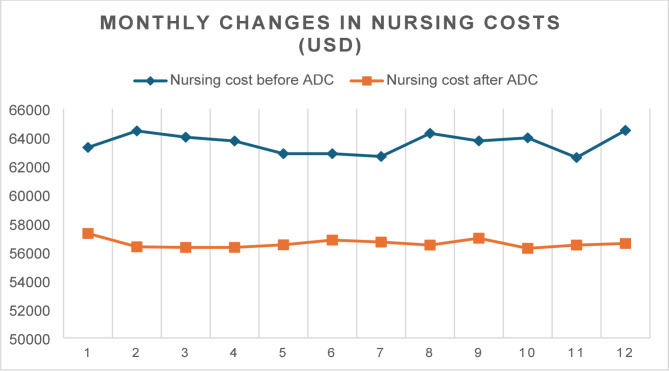
The implementation of ADCs significantly improved workflow efficiency by reducing the time required for drug preparation and administration, leading to an average time savings of 25.68 min per patient. Cost savings were realized through a 10.99% reduction in nursing activity costs, amounting to $83,326.25 annually. The ADCs also enhanced medication therapy management by improving drug tracking and availability. However, challenges such as manual errors in medication dispensing and system limitations were identified.
ADCs improve operational efficiency and cost-effectiveness in Emergency Departments, reducing healthcare professionals’ workload and enhancing medication management. Despite these benefits, ongoing training and system optimization are necessary to address remaining challenges and enhance overall performance.
The online version contains supplementary material available at 10.1186/s12913-025-12981-6.
本研究评估自动发药机(ADCs)对台湾某地区医院急诊科工作流程效率、成本节约及药物治疗管理的影响。自动发药机是医疗保健领域的一项关键技术,旨在提高药物管理流程的效率和效果。
从医院信息系统收集数据,比较自动发药机实施前一年和实施后一年的情况。该研究聚焦于大甲医院急诊科,并与沙鹿医院进行了对比。此外,还对护士和药剂师进行了半结构化访谈,以收集定性见解。
自动发药机的实施显著提高了工作流程效率,减少了药物准备和给药所需时间,每位患者平均节省时间25.68分钟。通过将护理活动成本降低10.99%实现了成本节约,每年节省83326.25美元。自动发药机还通过改善药物追踪和可及性增强了药物治疗管理。然而,也发现了诸如药物分发中的人为错误和系统限制等挑战。
自动发药机提高了急诊科的运营效率和成本效益,减轻了医护人员的工作量,增强了药物管理。尽管有这些好处,但仍需要持续培训和系统优化,以应对剩余挑战并提高整体绩效。
在线版本包含可在10.1186/s12913 - 025 - 12981 - 6获取的补充材料。