Li Xiaojuan, Zhang Mengxin, Wang Xiaolin, Ma Ping, Song Yu
School of Pharmacy, Fujian University of Traditional Chinese Medicine, Fuzhou, 350122, People's Republic of China.
Research and Development, Hikma Pharmaceuticals USA Inc., Bedford, OH, USA.
Int J Nanomedicine. 2025 Jun 27;20:8291-8304. doi: 10.2147/IJN.S516921. eCollection 2025.
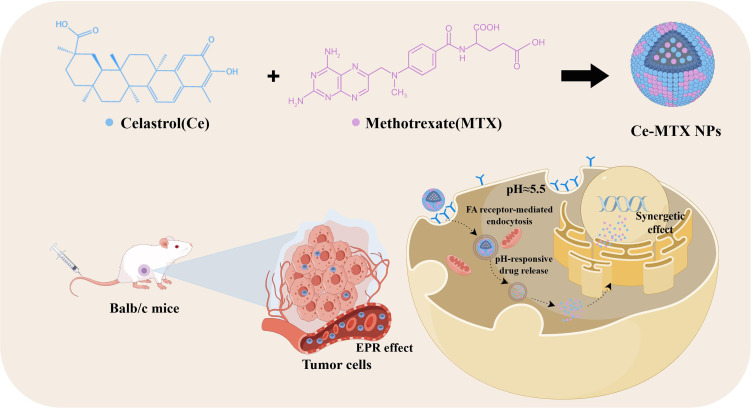
To address celastrol(Ce)'s efficacy and toxicity challenges in breast cancer, we first developed a carrier-free, self-targeting nanosystem with synergistic anti-tumor action by leveraging methotrexate (MTX)'s intrinsic folate moiety for active tumor targeting.
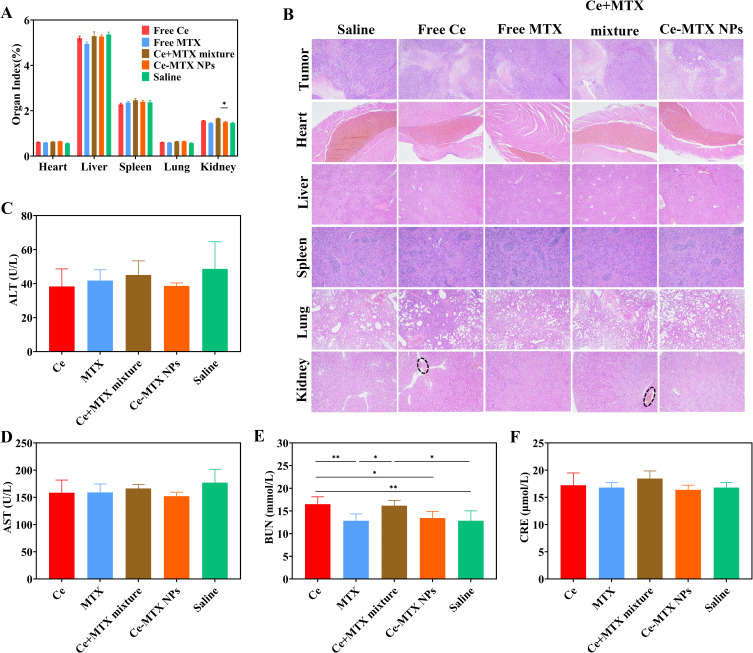
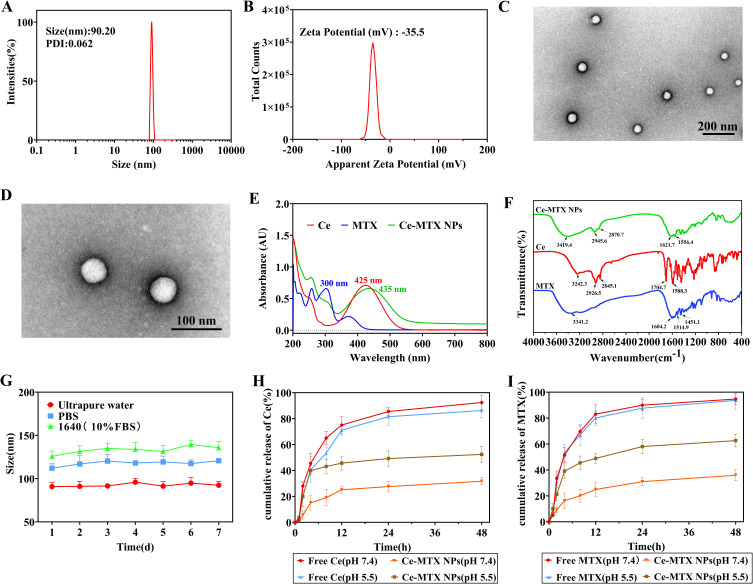
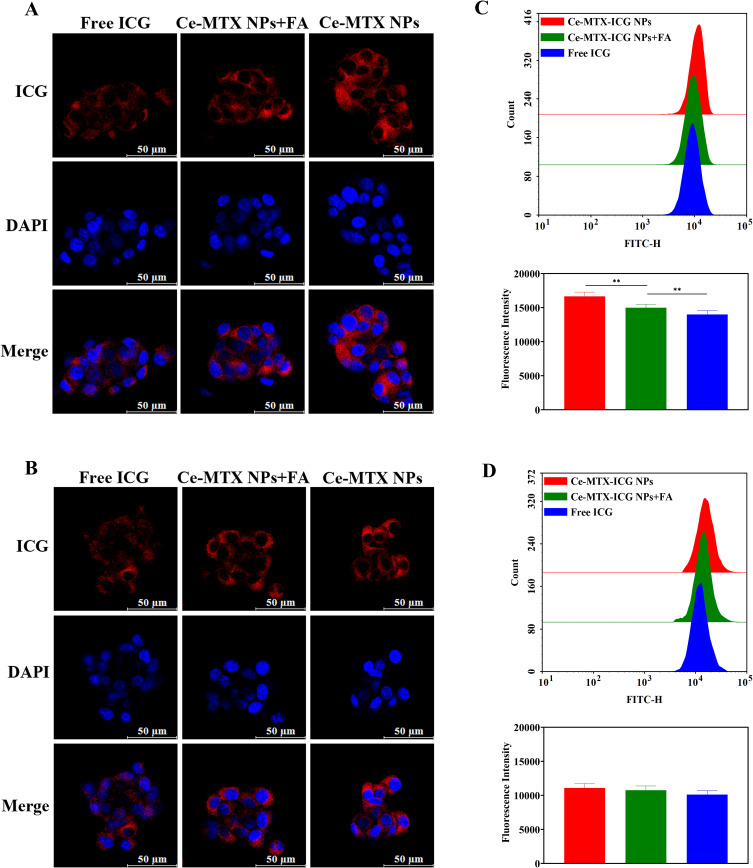
Ce-MTX nanoparticles (NPs) were prepared using a solvent precipitation method, with formulation parameters optimized. Characterization included particle size, polydispersity index (PDI), encapsulation efficiency (EE), loading efficiency (LE), and TEM. Drug release was investigated under physiological and tumor-mimetic conditions via a dialysis method. Cellular uptake and in vitro anti-tumor effects were evaluated in A549 and 4T1 cell lines. In vivo, tumor distribution and normal tissue accumulation were analyzed in 4T1 tumor-bearing mice. Anti-tumor efficacy and biosafety were evaluated through tumor growth curves, tumor inhibition rates, body weight changes, organ indices, histological analysis, and serum biochemistry.
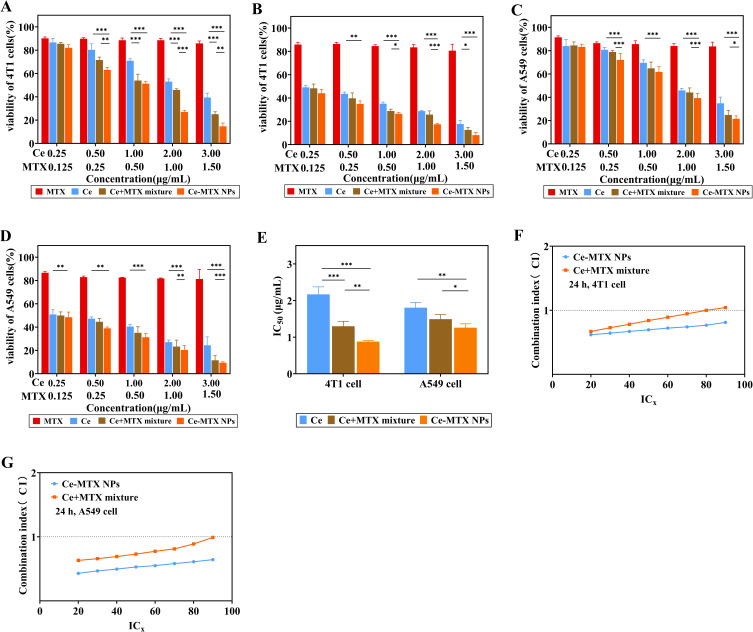
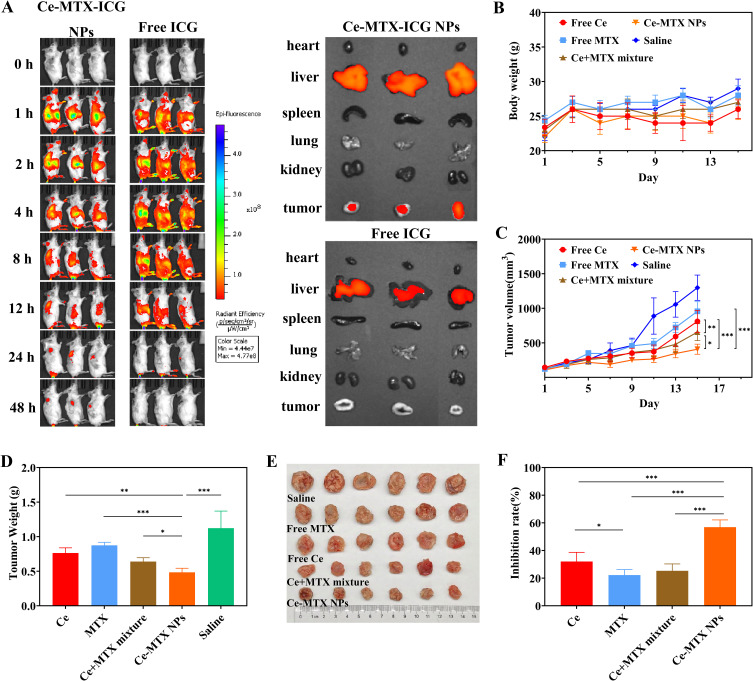
The optimized Ce-MTX NPs exhibited a particle size of 90.20 nm, PDI of 0.062, and spherical morphology. The EE and LE were 95.15% and 66.53% for Ce, and 95.74% and 33.6% for MTX, respectively. The NPs demonstrated excellent stability over 7 days. Notably, Ce-MTX NPs exhibited pH-dependent drug release, with accelerated release at pH 5.5. Qualitative and quantitative cellular uptake assays revealed significantly higher uptake of Ce-MTX NPs compared to the free drugs, with enhanced folate receptor-targeting in 4T1 cells. Cytotoxicity assays showed stronger anti-tumor activity of Ce-MTX NPs in 4T1 cells compared to the free drug mixture, thus demonstrating the superior synergistic anti-cancer effects achieved by the nanoparticle formulation. Importantly, in vivo studies confirmed substantial tumor growth inhibition and an excellent biosafety profile.
The carrier-free Ce-MTX NPs demonstrated enhanced stability, tumor targeting, and rapid drug release within tumor cells, significantly improving the efficacy and biosafety of breast tumor treatment. These nanoparticles offer a promising strategy for combined cancer therapy and hold great potential for further development in nanomedicine.
为了解决雷公藤红素(Ce)在乳腺癌治疗中的疗效和毒性挑战,我们首先通过利用甲氨蝶呤(MTX)固有的叶酸部分实现主动肿瘤靶向,开发了一种具有协同抗肿瘤作用的无载体、自靶向纳米系统。
采用溶剂沉淀法制备Ce-MTX纳米颗粒(NPs),并对配方参数进行优化。表征包括粒径、多分散指数(PDI)、包封率(EE)、负载率(LE)和透射电子显微镜(TEM)。通过透析法在生理和模拟肿瘤条件下研究药物释放。在A549和4T1细胞系中评估细胞摄取和体外抗肿瘤作用。在体内,对4T1荷瘤小鼠的肿瘤分布和正常组织蓄积进行分析。通过肿瘤生长曲线、肿瘤抑制率、体重变化、器官指数、组织学分析和血清生化评估抗肿瘤疗效和生物安全性。
优化后的Ce-MTX NPs粒径为90.20 nm,PDI为0.062,呈球形形态。Ce的EE和LE分别为95.15%和66.53%,MTX的EE和LE分别为95.74%和33.6%。NPs在7天内表现出优异的稳定性。值得注意的是,Ce-MTX NPs表现出pH依赖性药物释放,在pH 5.5时释放加速。定性和定量细胞摄取试验表明,与游离药物相比,Ce-MTX NPs的摄取显著更高,在4T1细胞中叶酸受体靶向性增强。细胞毒性试验表明,与游离药物混合物相比,Ce-MTX NPs在4T1细胞中具有更强的抗肿瘤活性,从而证明了纳米颗粒制剂实现了卓越的协同抗癌效果。重要的是,体内研究证实了显著的肿瘤生长抑制和优异的生物安全性。
无载体的Ce-MTX NPs表现出增强的稳定性、肿瘤靶向性和在肿瘤细胞内的快速药物释放,显著提高了乳腺肿瘤治疗的疗效和生物安全性。这些纳米颗粒为联合癌症治疗提供了一种有前景的策略,在纳米医学领域具有巨大的进一步发展潜力。