Lin Xiaoting, Qi Guoyan, Liu Peng
Department of Oncology, Hebei Medical University, Shijiazhuang, Hebei, China.
Treatment Center of Myasthenia Gravis, People's Hospital of Shijiazhuang, Shijiazhuang, Hebei, China.
Front Immunol. 2025 Jun 17;16:1580219. doi: 10.3389/fimmu.2025.1580219. eCollection 2025.
Thymoma is often associated with myasthenia gravis (MG), and the resection of thymoma improves myasthenic symptoms in patients with thymoma and MG (TMG), but some patients still have no relief. Through proteomic analysis, we examined preoperative serum samples from patients with TMG to identify key prognostic proteins that could serve as a foundation for clinically predicting postoperative efficacy and guiding treatment selection.
According to the Clinical Research Guidelines of the Myasthenia Gravis Foundation of America (MGFA) for Post-Intervention Status (PIS), 20 patients with TMG were divided into an effective group (T1) [the PIS was minimal manifestation status (MMS) and above] and an ineffective group (T2) (the PIS did not reach MMS and above), with 10 cases each, and a healthy control group (C) with nine cases. Blood samples from the three groups were collected through data-independent acquisition (DIA) proteomic analysis performed by mass spectrometry to identify differentially expressed proteins and search for key proteins associated with myasthenia prognosis. Finally, the target proteins were validated through the utilization of enzyme-linked immunosorbent assay (ELISA).
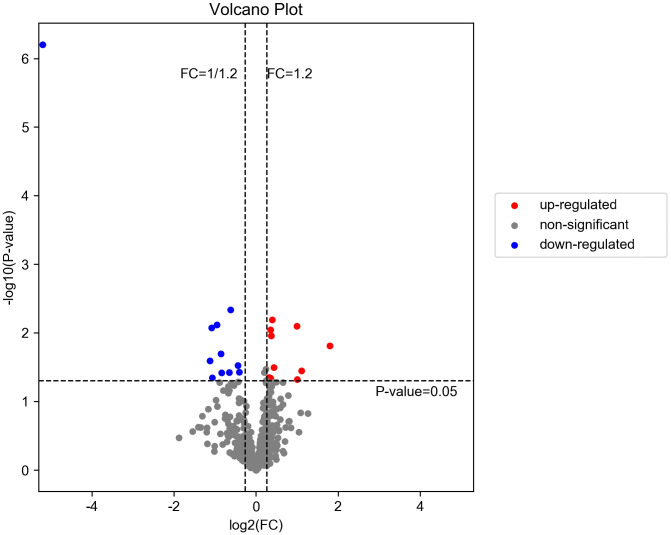
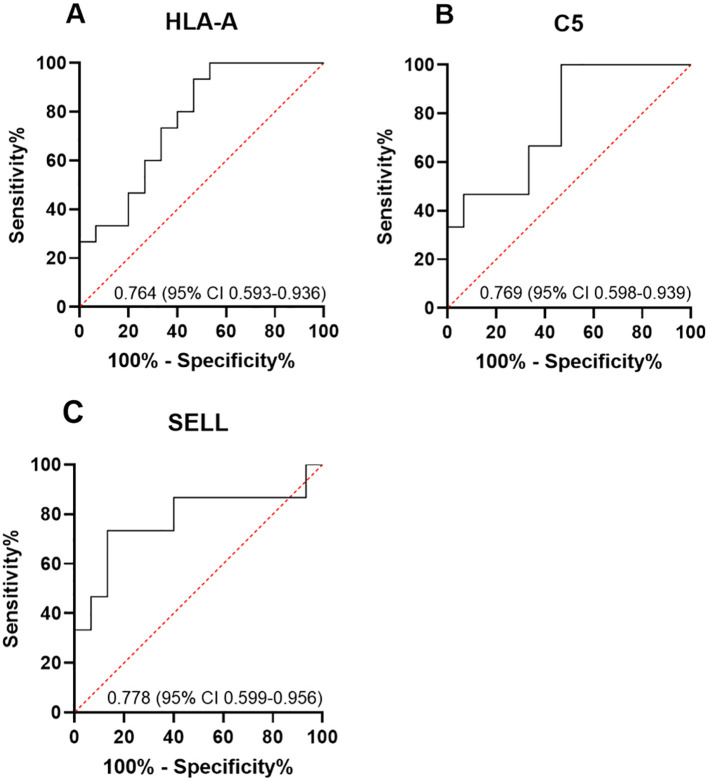
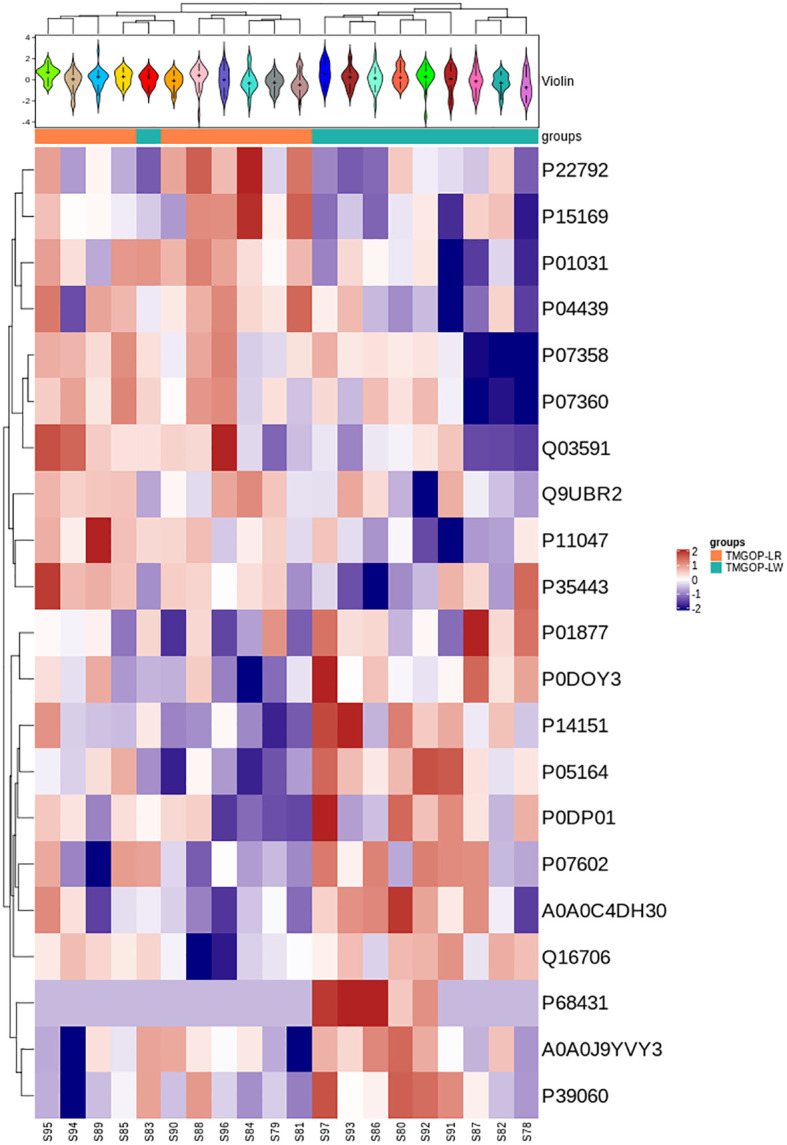
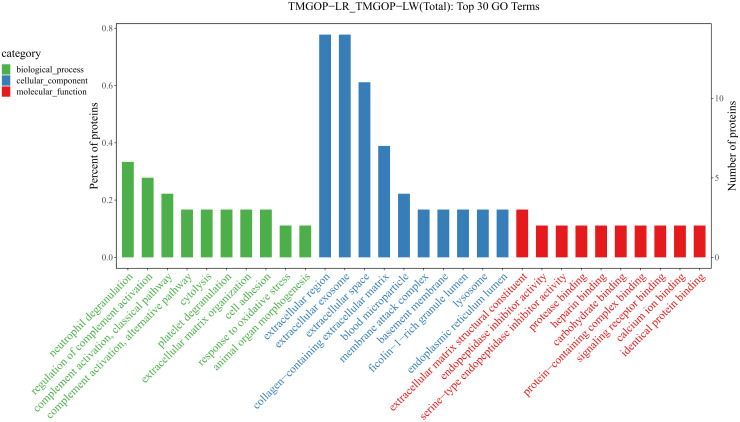
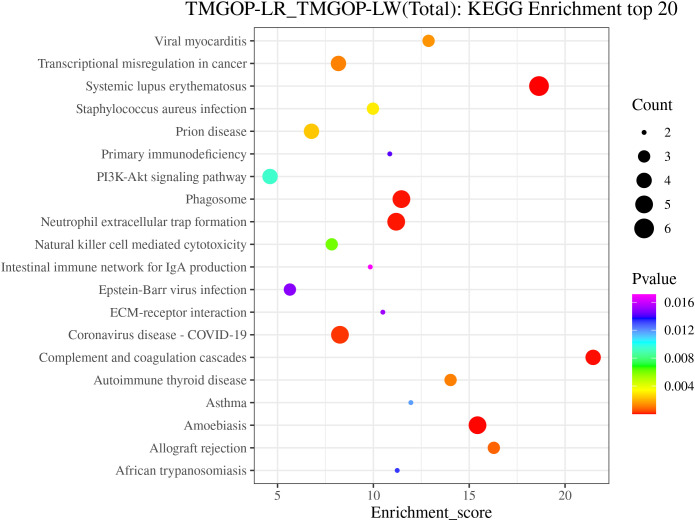
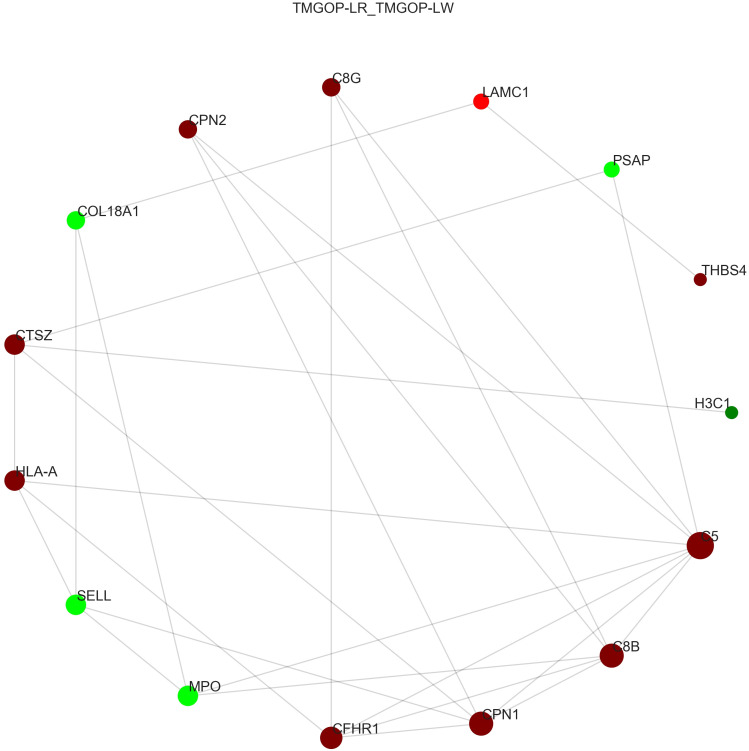
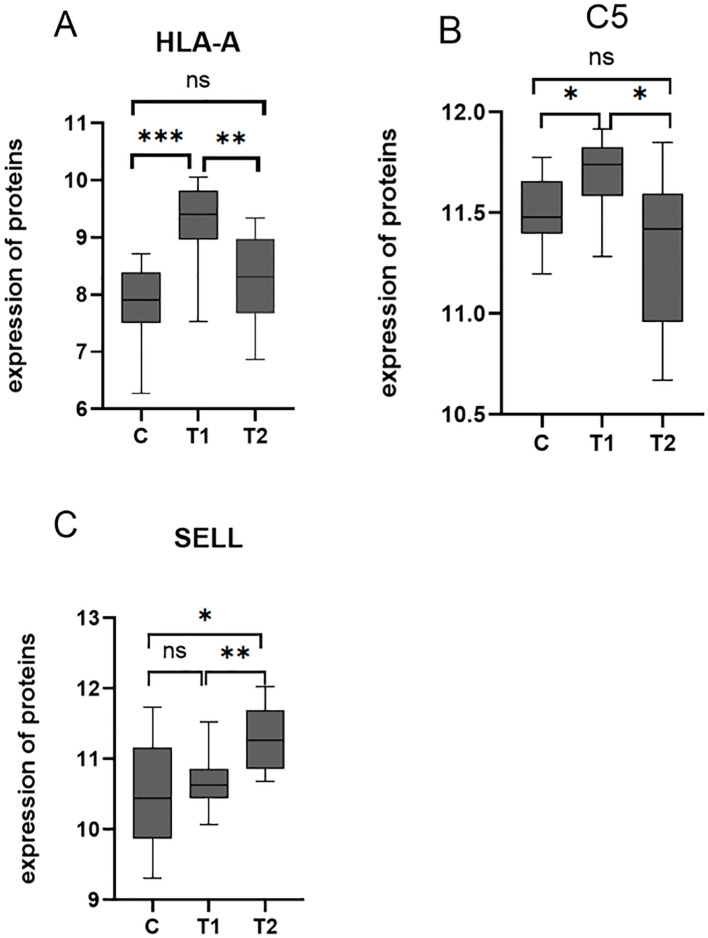
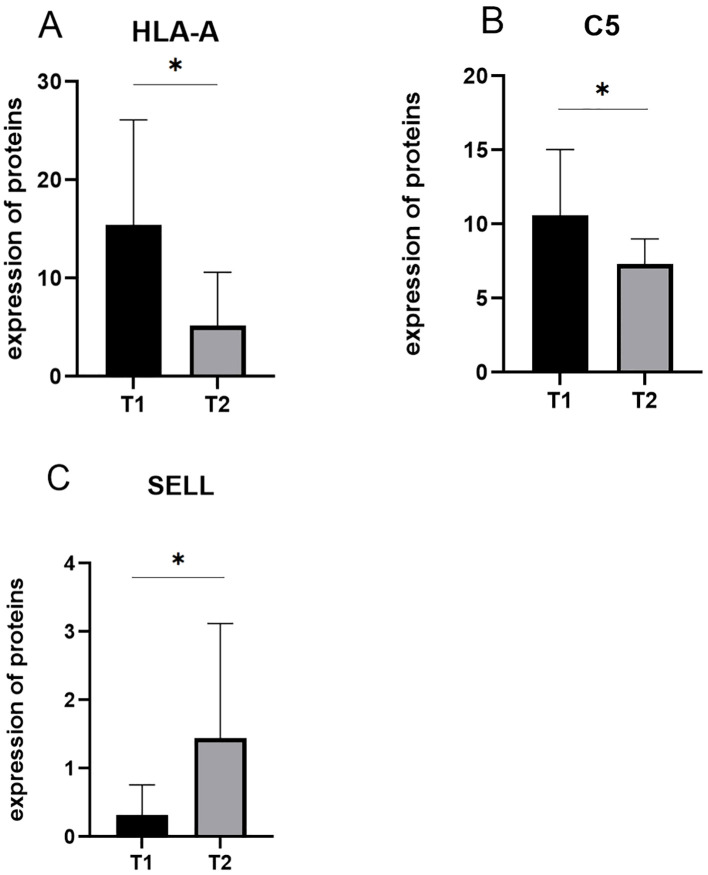
A total of 514 proteins were identified in this research. Between the T1 and T2 groups, there were 20 proteins that exhibited differential expression, with 10 showing upregulation and 10 displaying downregulation. The Kyoto Encyclopedia of Genes and Genomes (KEGG) functional annotation indicated that these proteins were mainly involved in signaling pathways such as complement and coagulation cascade, prion disease, systemic lupus erythematosus, neutrophil extracellular trap formation, and transcription dysregulation in cancer. Three proteins were discovered to have a significant correlation with the prognosis of TMG: L-selectin (SELL) was downregulated, and human leukocyte antigen (HLA) class I histocompatibility antigen (HLA-A) and complement 5 (C5) were upregulated. ELISA results confirmed the proteomic results.
HLA-A, C5, and SELL may be potential prognostic biomarkers of TMG. This study may provide a more accurate prognostic risk assessment of TMG patients to help clinicians better individualize the initial treatment regimen for patients with different risk stratification, plan a more reasonable frequency of follow-up visits, and make more precise maintenance treatment decisions, thereby improving the overall prognosis of TMG patients.
胸腺瘤常与重症肌无力(MG)相关,切除胸腺瘤可改善胸腺瘤合并重症肌无力(TMG)患者的肌无力症状,但部分患者仍无缓解。通过蛋白质组学分析,我们检测了TMG患者的术前血清样本,以鉴定关键的预后蛋白,为临床预测术后疗效及指导治疗选择奠定基础。
根据美国重症肌无力基金会(MGFA)关于干预后状态(PIS)的临床研究指南,将20例TMG患者分为有效组(T1)[PIS为最小表现状态(MMS)及以上]和无效组(T2)(PIS未达到MMS及以上),每组10例,另设健康对照组(C)9例。通过质谱进行的数据非依赖采集(DIA)蛋白质组学分析收集三组血液样本,以鉴定差异表达蛋白并寻找与重症肌无力预后相关的关键蛋白。最后,通过酶联免疫吸附测定(ELISA)对目标蛋白进行验证。
本研究共鉴定出514种蛋白质。T1组和T2组之间有20种蛋白质表现出差异表达,其中10种上调,10种下调。京都基因与基因组百科全书(KEGG)功能注释表明,这些蛋白质主要参与补体和凝血级联、朊病毒病、系统性红斑狼疮、中性粒细胞胞外陷阱形成以及癌症中的转录失调等信号通路。发现三种蛋白质与TMG的预后显著相关:淋巴细胞功能相关抗原1(SELL)下调,人类白细胞抗原(HLA)I类组织相容性抗原(HLA - A)和补体5(C5)上调。ELISA结果证实了蛋白质组学结果。
HLA - A、C5和SELL可能是TMG潜在的预后生物标志物。本研究可为TMG患者提供更准确的预后风险评估,帮助临床医生更好地针对不同风险分层的患者个体化制定初始治疗方案,规划更合理的随访频率,并做出更精确的维持治疗决策,从而改善TMG患者的总体预后。