Chung Yang Jo, Bertoli Ryan, Cao Dengchao, Walker Robert L, Zhu Yuelin Jack, Meltzer Paul, Aplan Peter D
Genetics Branch, Center for Cancer Research, National Cancer Institute, National Institutes of Health, Bethesda, MD, USA.
Genetics Branch, Center for Cancer Research, National Cancer Institute, National Institutes of Health, Bethesda, MD, USA; Myeloid Malignancies Program, National Institutes of Health, Bethesda, MD, USA.
Stem Cell Reports. 2025 Aug 12;20(8):102571. doi: 10.1016/j.stemcr.2025.102571. Epub 2025 Jul 3.
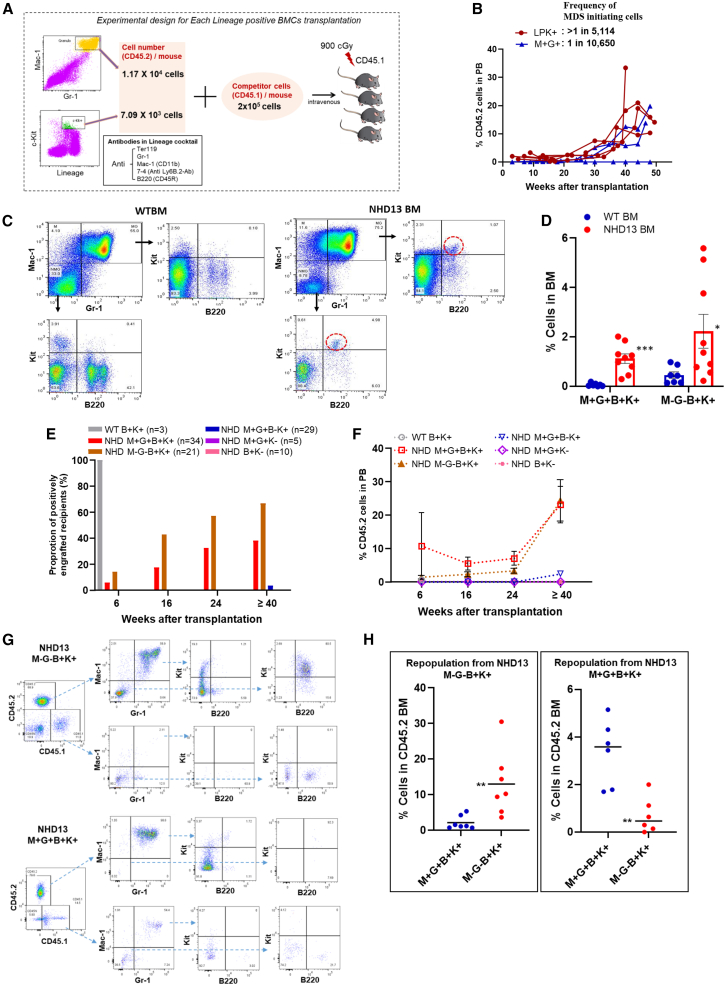
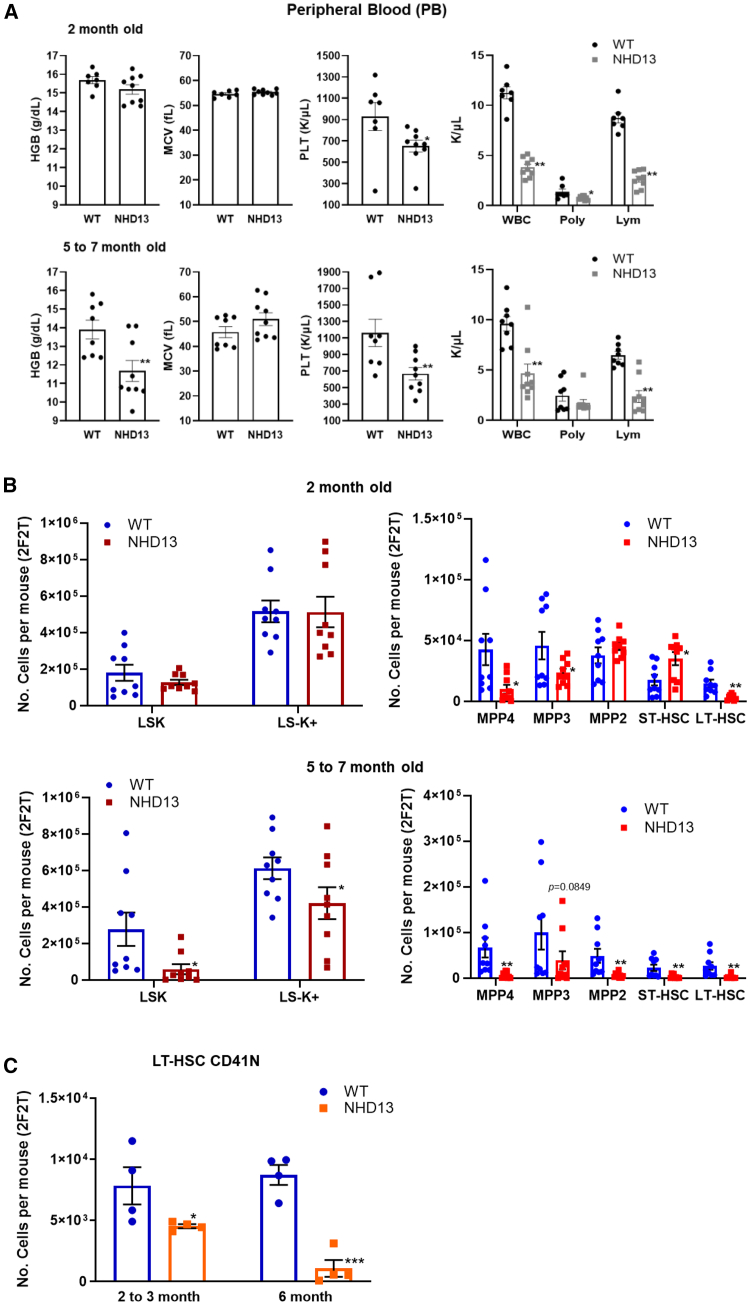
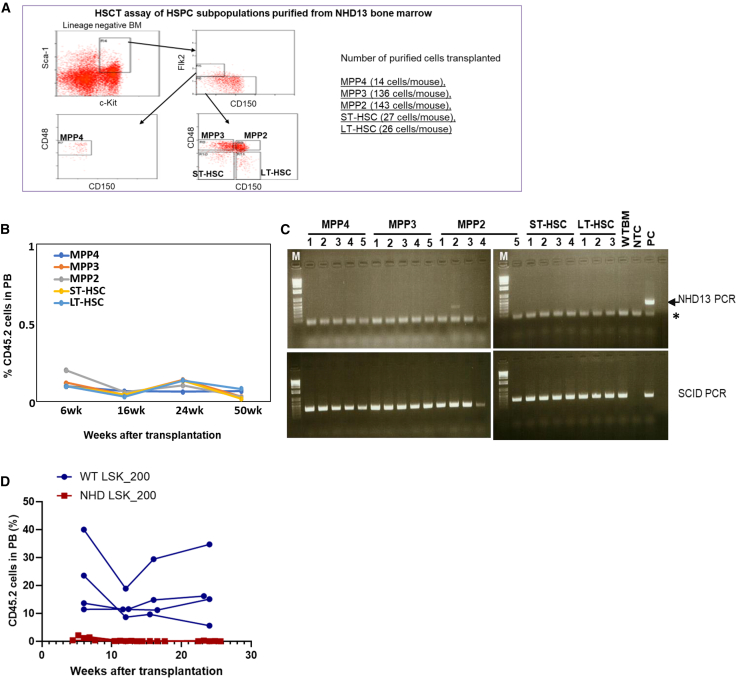
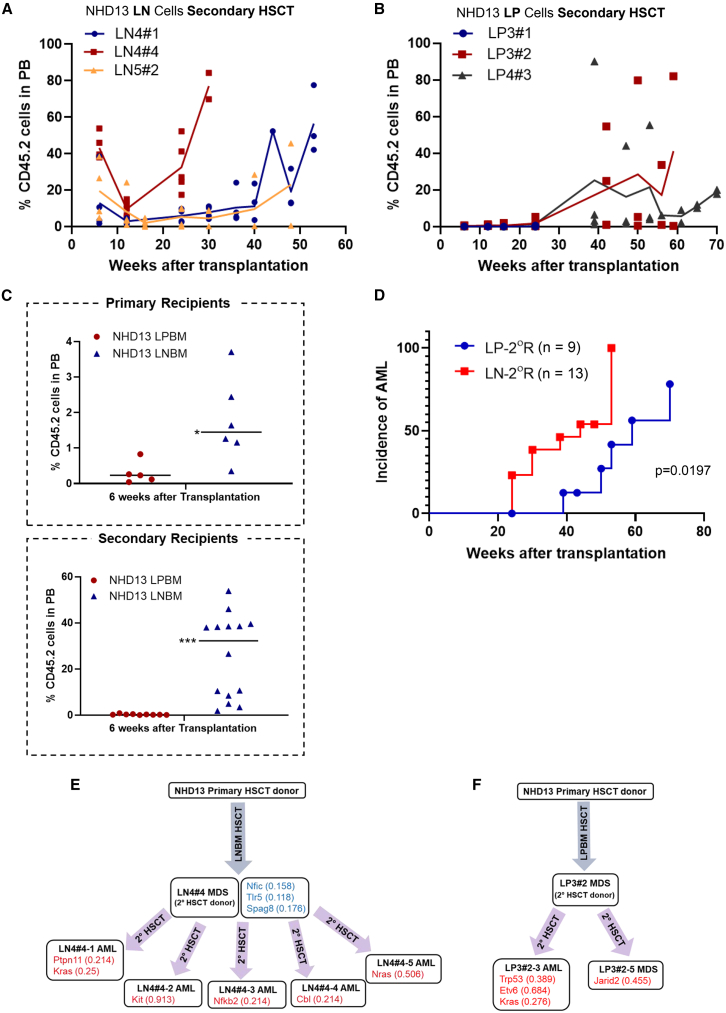
The ineffective hematopoiesis of myelodysplastic syndrome (MDS) suggests that hematopoietic stem and progenitor cells (HSPCs) are defective. Here, we demonstrate that NUP98::HOXD13 (NHD13) MDS mice have significantly decreased functional HSPCs. Moreover, in contrast to wild-type (WT) bone marrow (BM), lineage-positive (Lin) BM cells from NHD13 mice have self-renewal potential. Specific subsets of NHD13 Lin cells that express B220 and Kit antigens were able to self-renew and generate MDS in WT recipients. Although this unique B220Kit phenotype could be found in WT as well as NHD13 BM, the population was markedly increased in NHD13 BM. Further characterization using Mac1 and Gr1 markers revealed that both Mac1Gr1B220Kit and Mac1Gr1 B220Kit populations showed self-renewal and led to an MDS phenotype in WT recipients. Taken together, these findings demonstrate that as normal hematopoiesis derived from typical HSPCs decreases in NHD13 mice, committed hematopoietic progenitor cells proliferate, self-renew, and initiate MDS.
骨髓增生异常综合征(MDS)中无效造血表明造血干细胞和祖细胞(HSPCs)存在缺陷。在此,我们证明NUP98::HOXD13(NHD13)MDS小鼠的功能性HSPCs显著减少。此外,与野生型(WT)骨髓(BM)不同,NHD13小鼠的谱系阳性(Lin)BM细胞具有自我更新潜力。表达B220和Kit抗原的NHD13 Lin细胞的特定亚群能够自我更新并在WT受体中引发MDS。尽管在WT以及NHD13 BM中均可发现这种独特的B220Kit表型,但该群体在NHD13 BM中显著增加。使用Mac1和Gr1标记进行的进一步表征显示,Mac1Gr1B220Kit和Mac1Gr1 B220Kit群体均表现出自我更新能力,并在WT受体中导致MDS表型。综上所述,这些发现表明,随着NHD13小鼠中源自典型HSPCs的正常造血减少,定向造血祖细胞增殖、自我更新并引发MDS。